Frontlines of the Faith: Fr Andrew Campbell, SVD — Mercy Without Distance
On the edge of Accra, in Weija, Ghana, stands a community most of the world prefers not to see It is a leprosarium: a place of exile that has become, through decades of priestly fidelity, a place of belonging. At its heart is Andrew Campbell, an Irish-born missionary of the Society of the Divine Word whose life has been dedicated to those living with leprosy and to children who once called the streets their home.
For many in the West, leprosy belongs to Scripture or to medieval history. We recall the ten who were healed and move on. But Hansen’s disease has never vanished; it has simply retreated from our sight. In parts of West Africa, India, Brazil, and elsewhere, it still disfigures bodies and fractures families. Its greater wound, however, is social: exclusion, stigma, the quiet sentence of being untouchable. The disease isolates. It marginalises. It taunts its victims that they are forgotten.
Fr Andrew has built his priesthood in defiance of those taunts.
A Priest Who Stayed
Ordained for mission and sent to Ghana decades ago, Fr Andrew did not choose the leprosarium as a temporary assignment. He chose to remain. Over the years he has overseen the care of hundreds of men and women who were once banished from their villages because of leprosy. Many arrived physically broken, but even more were spiritually wounded by rejection. He provided medical assistance where possible, coordinated treatment, and ensured access to the therapies that render the disease non-infectious and curable. Yet medicine alone was never the only part of his mission: his mission was and remains to bring the healing that only Christ can give.
In Weija, those once called “lepers” are called by name. They pray together. They work where they can. They celebrate feast days. They bury their dead with dignity. The priest is not an occasional visitor; he is a father who knows their stories. His vocation is incarnational in the most literal sense: to draw near to and call by name what others fear and hate.
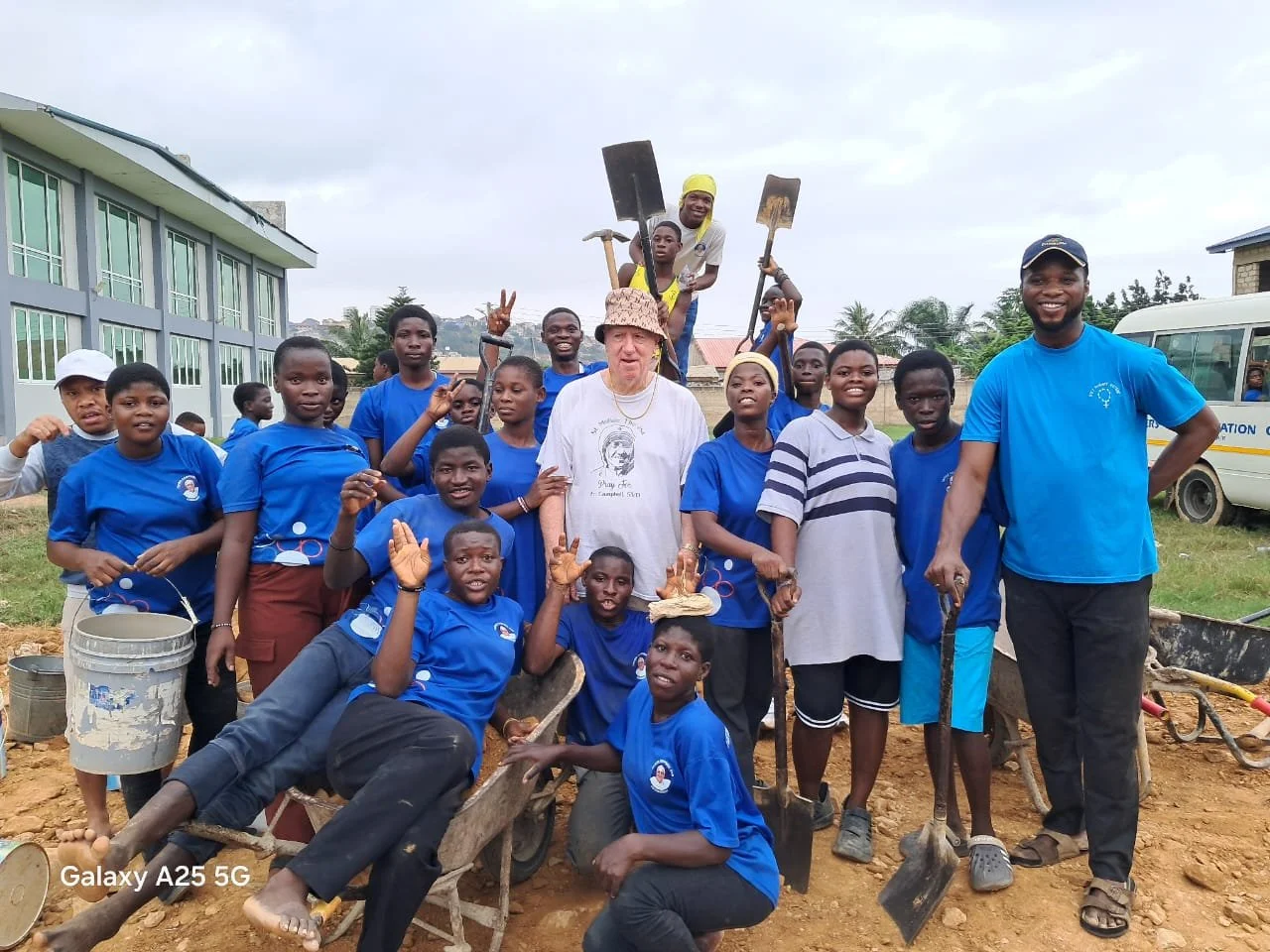
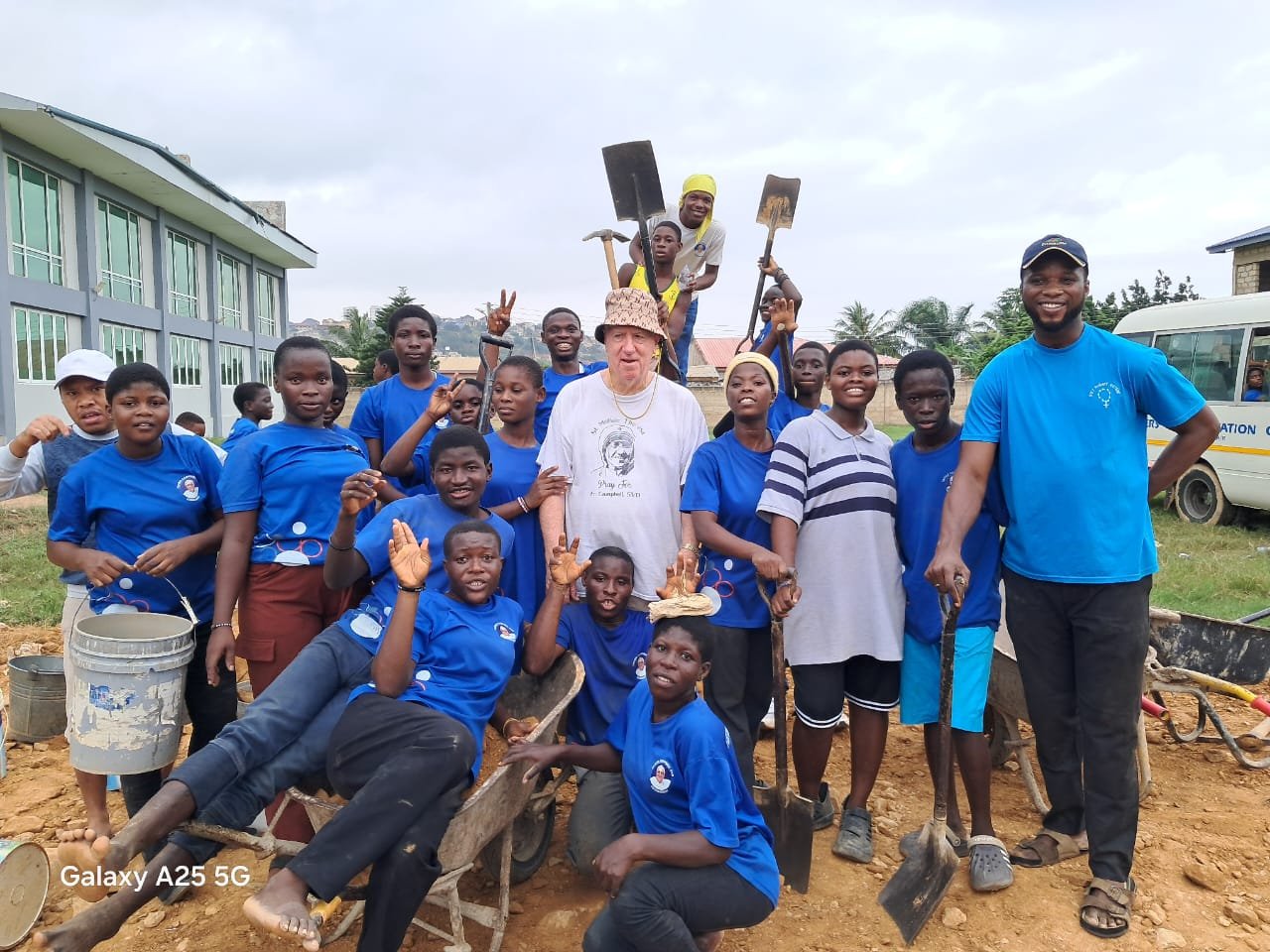
In recent years, that same mission of proximity has expanded to include street children — boys and girls who have known hunger, exploitation, and the instability of life without guardianship. At Weija they are “learners,” not statistics. They attend school. They eat daily meals. They grow up in an environment where discipline and affection coexist. Many have been given a trajectory that would otherwise have been unthinkable.
Yet the work is also administrative, exhausting, and relentless: it requires fundraising, oversight of construction projects, medical coordination, and negotiation with local authorities. It requires a priest who can move seamlessly from altar to building site, and from confessional to clinic!
The Kitchen That Feeds More Than Bodies
At present, a new kitchen and dining hall is nearing completion at the leprosarium. To an outsider, it may seem an ordinary infrastructure project. In reality, it is sacramental in the broad sense: it is a visible sign of invisible grace.
Food is not incidental at Weija. Many residents are elderly; some bear disabilities as a result of advanced disease. Nutrition sustains treatment. For the children, shared meals create rhythm and normalcy. A proper kitchen is not a luxury — it is a cornerstone of health, education, and community life.
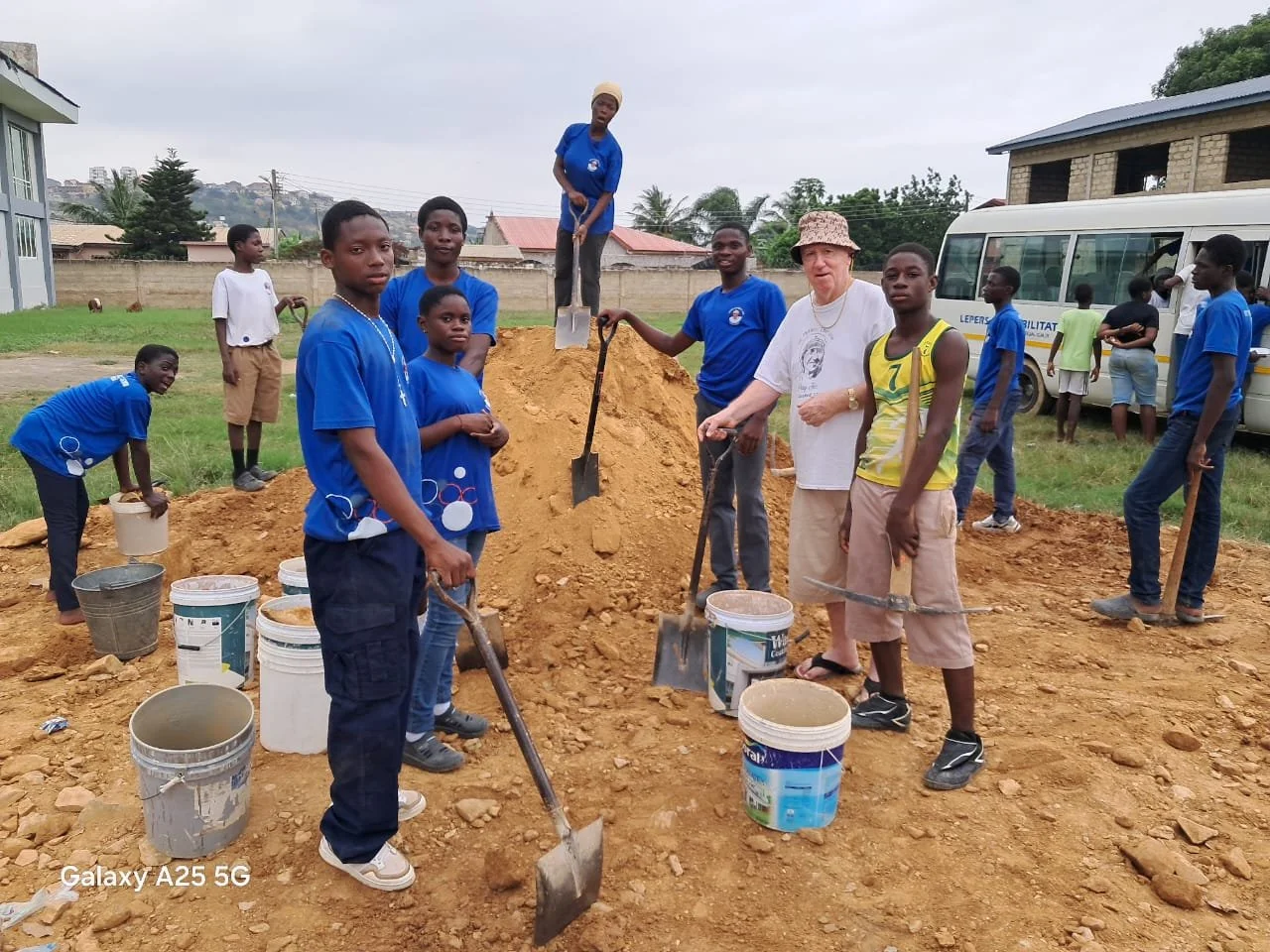
The building of that kitchen represents something else as well: solidarity. It is a tangible declaration that those who suffer from leprosy are not an embarrassment to be hidden, but neighbours to be befriended and served.
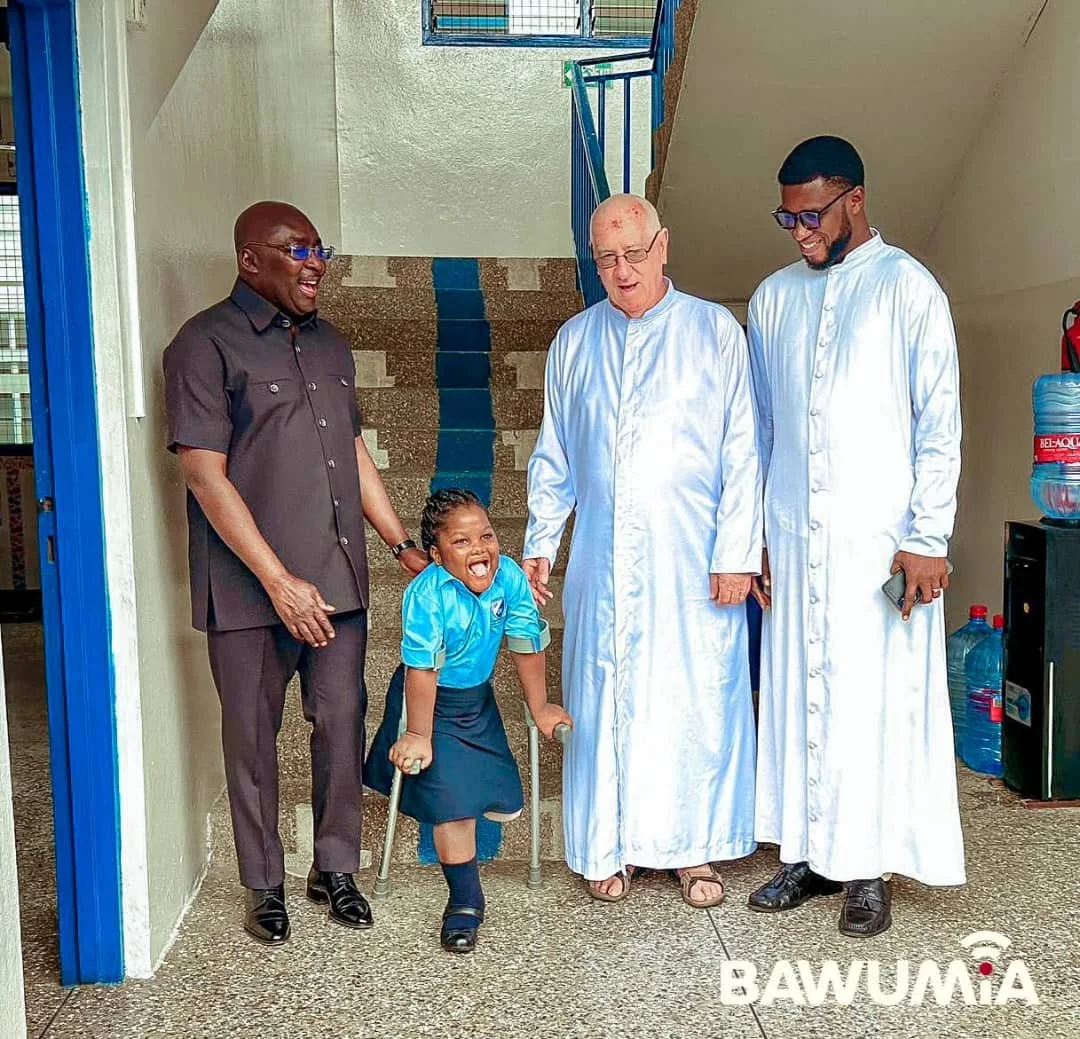
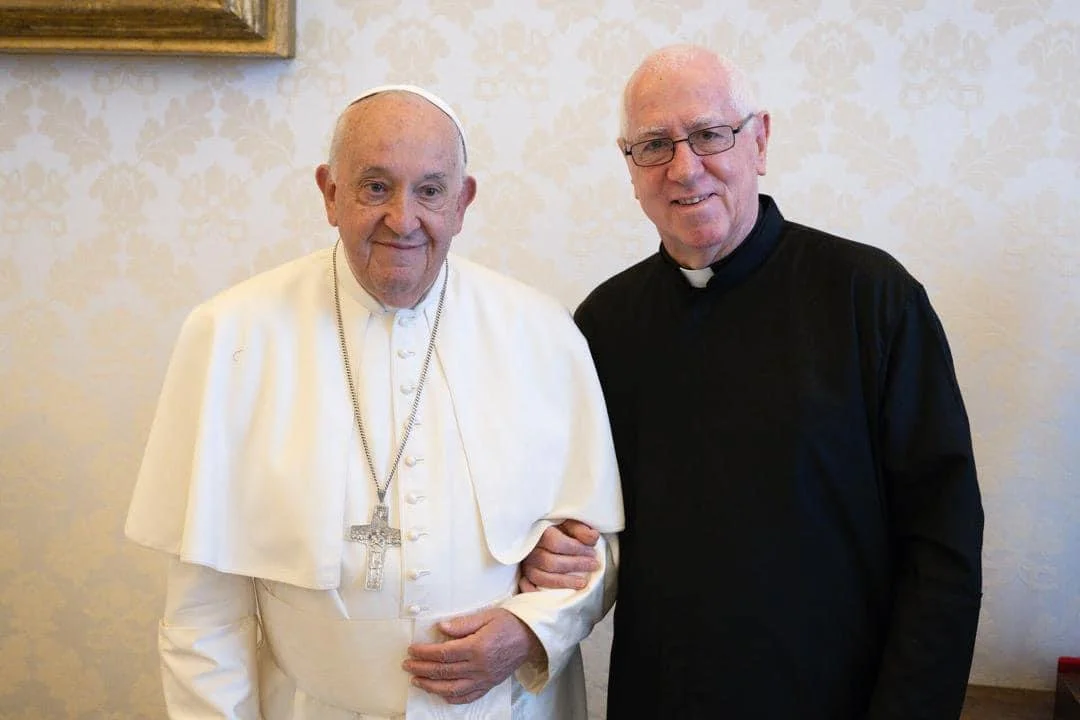
World Leprosy Day, recently marked at Weija, made this clear. Civil authorities stood alongside Church leaders. The Apostolic Nuncio to Ghana offered words of encouragement. The local Member of Parliament pledged support. Former patients, cured and dignified, gathered with children whose futures are being reclaimed. The symbolism was powerful: those once cast out now stand publicly affirmed.
Healing Beyond the Skin
Leprosy in the Gospel is more than pathology; it is a metaphor for social death. To be healed is not only to regain physical integrity but to be restored to communion. That dynamic plays out daily in Weija.
Modern multidrug therapy can cure Hansen’s disease. What it cannot cure is shame. That requires encounter. It requires someone who will cross the invisible barrier and remain there.
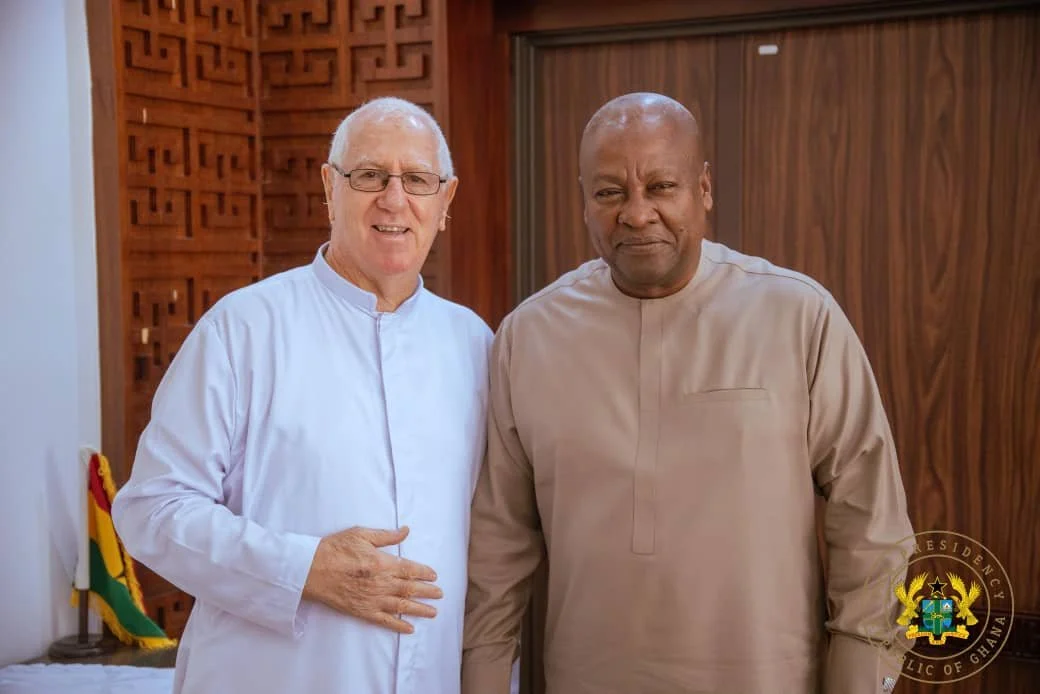
Fr Andrew’s work has always straddled that threshold: medical coordination and pastoral care; humanitarian aid and sacramental ministry. He celebrates Mass with people whose bodies may be deformed but whose faith is luminous. He baptises children rescued from the street. He buries residents who die reconciled and accompanied.
It is a ministry of mercy in its classical sense: to enter into the misery of another and remain until it is transformed.
The Ongoing Need
There is a temptation to imagine that such work belongs to an earlier missionary era. It does not. The needs are urgently, ongoing, and concrete. Buildings age. Medical costs rise. Children require uniforms, books, and tuition. Elderly residents require ongoing treatment and care.
This is where partnerships matter.
Restore God’s Kingdom exists precisely to stand with priests on the front lines — men who are administering sacraments in places of poverty or persecution and who, by necessity, become providers of humanitarian support. Our work is not abstract. It is relational. We work with priests whose fidelity is proven, whose communities are vulnerable, and whose projects are life and faith sustaining.
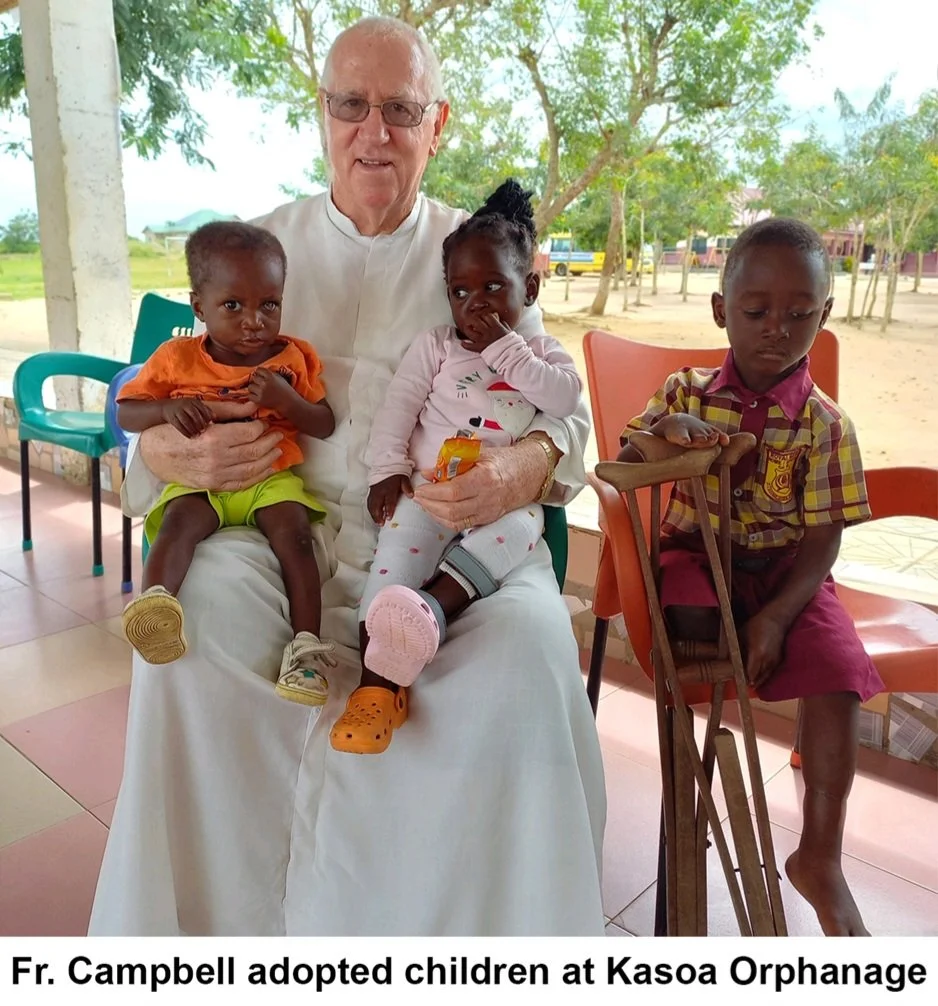
Fr Andrew Campbell is one such priest.
When Restore God’s Kingdom assists in projects such as the Weija kitchen, it is not engaging in distant philanthropy. It is strengthening a living mission. It is ensuring that the Eucharist celebrated at a modest altar is accompanied by food in the dining hall. It is helping a missionary remain free to be a priest, rather than overwhelmed by material deficits that could otherwise halt his work.
Faith Without Distance
"Frontlines of the Faith" is not a metaphor when applied to leprosy. The disease still carries stigma. It still marks bodies. It still isolates. To minister there is to step into a space many instinctively avoid.
Yet the Church has always gone precisely where the world abandons the most vulnerable.
Fr Andrew’s life is not without trial, his cross is a heavy one: all missionary vocations are. But measured over decades, it forms a coherent witness: stay with the abandoned; build what is needed; pray with those who suffer; refuse to allow the margins to become permanent.
If you would like to support Fr Andrew’s vital work at Weija — the care of residents affected by leprosy, the education and nourishment of former street children, the completion and maintenance of essential facilities — we invite you to contact us. Your support will not vanish into abstraction. It will translate into meals served, medicines provided, and sacraments celebrated in a place the world overlooks. RGK will ensure that every one of our brothers and sisters in Faith receive their daily bread and the Bread of Life.
-------------------------------------------------------------
Restore God’s Kingdom is an Irish voluntary charity, Catholic in principle and action. We provide pastoral care, sacramental ministry, and humanitarian aid by supporting priests and nuns who serve impoverished and marginalised communities across the globe. Through collaboration, accountability, and fidelity to the Church’s mission, we seek to ensure that the Kingdom of God is made visible — especially where it is suffering and persecuted most.