Look Before You Leap

Just Sayin’ #6 by George Knight

‘Look Before You Leap’

Obviously we should all need to watch where we put our feet and look where we are going and this applies both literally and metaphorically.

The metaphor however becomes particularly apt when we are in a life- changing situation and/or about to make what could turn out to be a life-changing situation: situations which we will look back upon in subsequent years as ‘Defining Moments’ in our lives.

Now as it happens not all such ‘Defining Moments’ can be anticipated and in some way ‘pre-planned’. More often than not they simply appear sometimes shockingly as a threat, fortuitously as an opportunity or quietly as a wager that offers both risk and reward.

The truth of course is that we live our lives under conditions of great uncertainty and limited information. And most often it is under conditions of extreme uncertainty and inadequate information that we are required to take a decision which will significantly affect the rest of our own lives and seriously impact upon the lives of others.

Essentially we have here a serious situation where we need to look, we look, we don’t see much of anything and yet we have to decide to stay put or to push ahead, to jump or not jump.

Not all of Life’s ‘Defining Moments’ are ‘Hobson’s choices’ where one is ‘damned if one does or damned if one does not’, either stay or go, jump or not.

Sometimes one gets to choose between a number of great options and one is required to choose between what is good, what is better and what is great.

Sometimes also the choice is clearly something which is good for you and something which is not. Most times, of course we know none of this ahead of time, these are all only revealed in retrospect.

Pause for a moment and think about some of your major life decisions.

Think particularly of those bitter disappointments you felt when you failed to achieve what you struggled so hard for.

Think too about those successes you attained somewhat against the odds.

Now, years later, even decades later, with the benefit of hindsight reconsider your failures: were they actually failures or essential life lessons?

Similarly with your successes, did your successes prevent you from learning something you should have learned earlier in life?

In both cases consider too how both your putative failures and putative successes may both have helped you ‘dodge’ more than a ‘bullet or two’.

My point here, for what it is worth, is yes, that when we have to take life- changing decisions we must LOOK AROUND, as best we can, gather as much evidence as we believe we need, while paying particular attention to all the ‘Red Flags’ that signal clear or hidden dangers in our decision situation, but that is not enough.

Indeed when it comes to the most important decisions which we will and must make during the course of our lives, it is far from being enough: we must LOOK WITHIN, we must look within ourselves, this is the sine qua non for living a full and happy life, a life that is not haunted by regrets and bitterness but a heroic drama of which you are the co- author and in which you are the protagonist.

It does not matter what one’s age or life’s circumstances we all get to co-author our own movie which we then fully screen in our own heads and partially screen in the heads of others.

‘All the World is a stage and every man must play his part’ and so it seems a good idea that before we leap onto it we would do well to decide what part do we choose to play, Good Guy, Bad Guy or Useful Idiot.

As for me, every day I struggle to be a Good Guy. Maybe someday I will, as for the moment, I live in Hope. Just Sayin’.

Until next Thursday,

God bless,

George K

Restore God’s Kingdom

www.restoregodskingdom.ie

Frontlines of the Faith, Mercy Without Distance

Frontlines of the Faith: Fr Andrew Campbell, SVD — Mercy Without Distance

On the edge of Accra, in Weija, Ghana, stands a community most of the world prefers not to see It is a leprosarium: a place of exile that has become, through decades of priestly fidelity, a place of belonging. At its heart is Andrew Campbell, an Irish-born missionary of the Society of the Divine Word whose life has been dedicated to those living with leprosy and to children who once called the streets their home.

For many in the West, leprosy belongs to Scripture or to medieval history. We recall the ten who were healed and move on. But Hansen’s disease has never vanished; it has simply retreated from our sight. In parts of West Africa, India, Brazil, and elsewhere, it still disfigures bodies and fractures families. Its greater wound, however, is social: exclusion, stigma, the quiet sentence of being untouchable. The disease isolates. It marginalises. It taunts its victims that they are forgotten.

Fr Andrew has built his priesthood in defiance of those taunts.

A Priest Who Stayed

Ordained for mission and sent to Ghana decades ago, Fr Andrew did not choose the leprosarium as a temporary assignment. He chose to remain. Over the years he has overseen the care of hundreds of men and women who were once banished from their villages because of leprosy. Many arrived physically broken, but even more were spiritually wounded by rejection. He provided medical assistance where possible, coordinated treatment, and ensured access to the therapies that render the disease non-infectious and curable. Yet medicine alone was never the only part of his mission: his mission was and remains to bring the healing that only Christ can give.

In Weija, those once called “lepers” are called by name. They pray together. They work where they can. They celebrate feast days. They bury their dead with dignity. The priest is not an occasional visitor; he is a father who knows their stories. His vocation is incarnational in the most literal sense: to draw near to and call by name what others fear and hate. 

In recent years, that same mission of proximity has expanded to include street children — boys and girls who have known hunger, exploitation, and the instability of life without guardianship. At Weija they are “learners,” not statistics. They attend school. They eat daily meals. They grow up in an environment where discipline and affection coexist. Many have been given a trajectory that would otherwise have been unthinkable.

Yet the work is also administrative, exhausting, and relentless: it requires fundraising, oversight of construction projects, medical coordination, and negotiation with local authorities. It requires a priest who can move seamlessly from altar to building site, and from confessional to clinic!

The Kitchen That Feeds More Than Bodies

At present, a new kitchen and dining hall is nearing completion at the leprosarium. To an outsider, it may seem an ordinary infrastructure project. In reality, it is sacramental in the broad sense: it is a visible sign of invisible grace.

Food is not incidental at Weija. Many residents are elderly; some bear disabilities as a result of advanced disease. Nutrition sustains treatment. For the children, shared meals create rhythm and normalcy. A proper kitchen is not a luxury — it is a cornerstone of health, education, and community life.

The building of that kitchen represents something else as well: solidarity. It is a tangible declaration that those who suffer from leprosy are not an embarrassment to be hidden, but neighbours to be befriended and served.

World Leprosy Day, recently marked at Weija, made this clear. Civil authorities stood alongside Church leaders. The Apostolic Nuncio to Ghana offered words of encouragement. The local Member of Parliament pledged support. Former patients, cured and dignified, gathered with children whose futures are being reclaimed. The symbolism was powerful: those once cast out now stand publicly affirmed.

Healing Beyond the Skin

Leprosy in the Gospel is more than pathology; it is a metaphor for social death. To be healed is not only to regain physical integrity but to be restored to communion. That dynamic plays out daily in Weija.

Modern multidrug therapy can cure Hansen’s disease. What it cannot cure is shame. That requires encounter. It requires someone who will cross the invisible barrier and remain there.

Fr Andrew’s work has always straddled that threshold: medical coordination and pastoral care; humanitarian aid and sacramental ministry. He celebrates Mass with people whose bodies may be deformed but whose faith is luminous. He baptises children rescued from the street. He buries residents who die reconciled and accompanied.

It is a ministry of mercy in its classical sense: to enter into the misery of another and remain until it is transformed.

The Ongoing Need

There is a temptation to imagine that such work belongs to an earlier missionary era. It does not. The needs are urgently, ongoing,  and concrete. Buildings age. Medical costs rise. Children require uniforms, books, and tuition. Elderly residents require ongoing treatment and care.

This is where partnerships matter.

Restore God’s Kingdom exists precisely to stand with priests on the front lines — men who are administering sacraments in places of poverty or persecution and who, by necessity, become providers of humanitarian support. Our work is not abstract. It is relational. We work with priests whose fidelity is proven, whose communities are vulnerable, and whose projects are life and faith sustaining.

Fr Andrew Campbell is one such priest.

When Restore God’s Kingdom assists in projects such as the Weija kitchen, it is not engaging in distant philanthropy. It is strengthening a living mission. It is ensuring that the Eucharist celebrated at a modest altar is accompanied by food in the dining hall. It is helping a missionary remain free to be a priest, rather than overwhelmed by material deficits that could otherwise halt his work.

Faith Without Distance

"Frontlines of the Faith" is not a metaphor when applied to leprosy. The disease still carries stigma. It still marks bodies. It still isolates. To minister there is to step into a space many instinctively avoid.

Yet the Church has always gone precisely where the world abandons the most vulnerable.

Fr Andrew’s life is not without trial, his cross is a heavy one: all missionary vocations are. But measured over decades, it forms a coherent witness: stay with the abandoned; build what is needed; pray with those who suffer; refuse to allow the margins to become permanent.

If you would like to support Fr Andrew’s vital work at Weija — the care of residents affected by leprosy, the education and nourishment of former street children, the completion and maintenance of essential facilities — we invite you to contact us. Your support will not vanish into abstraction. It will translate into meals served, medicines provided, and sacraments celebrated in a place the world overlooks. RGK will ensure that every one of our brothers and sisters in Faith receive their daily bread and the Bread of Life.

-------------------------------------------------------------

Restore God’s Kingdom is an Irish voluntary charity, Catholic in principle and action. We provide pastoral care, sacramental ministry, and humanitarian aid by supporting priests and nuns who serve impoverished and marginalised communities across the globe. Through collaboration, accountability, and fidelity to the Church’s mission, we seek to ensure that the Kingdom of God is made visible — especially where it is suffering and persecuted most.

Frontlines of Faith: Modimong

Restoring God’s Kingdom in Modimong: Fr. Lawrence Otieno Dominic and the Quiet Work of Mission

As part of our ongoing series highlighting priests serving on the 'Frontlines of the Faith', Restore God’s Kingdom is honoured to introduce Fr. Lawrence Otieno Dominic — a missionary whose daily work unfolds far from headlines, but very close to the heart of the Church.

Fr. Lawrence is a member of the Mill Hill Missionaries, originally from Kenya. He now serves in Modimong Parish in the Roman Catholic Diocese of Rustenburg, in South Africa. His parish consists of sixteen small churches scattered across remote villages, connected by rough roads that become nearly impassable during the rainy season.

Some of these chapels have only three parishioners. The largest has sixty-seven. It's vital to note that this not a declining parish, it's a missionary one.

A Parish Spread Across Distance

To understand some of the challenges of Fr. Lawrence’s ministry, one must first understand the geography in which he works. Modimong is not a compact parish where parishioners walk to a central church. It is a wide rural expanse, stretching across approximately 176 kilometres of uneven roads that, in dry or wet weather, are always challenging.

Each village has its own small chapel — simple structures, often modestly built, sometimes maintained by the elderly who form the backbone of the community. There is no substantial local income. Most families struggle to meet basic needs. It is often pensioners who contribute what little they can at Sunday Mass.

The offertory cannot sustain the parish’s operational needs. Yet the sacramental and pastoral needs remain constant.

Fr. Lawrence’s responsibility is not symbolic. He must physically reach these communities in order to celebrate Mass, hear confessions, anoint the sick, visit the elderly, encourage young people, and support families living in material hardship. If he cannot travel, they simply go without sacramental, pastoral, & humanitarian care.

Primary Evangelization in Real Time

In many parts of the world, Catholic life is inherited. In Modimong, it is being planted.

This is primary evangelization — the patient, personal work of nurturing small Christian communities where the Faith is still taking root. It requires consistency, presence, and perseverance.

Imagine driving hours to celebrate Mass for three faithful Catholics. Where the world would.give up, Christ sees fidelity - for these are our brothers and sisters in the Faith, the scattered sheep of His beloved flock.

Imagine arriving in a village where an elderly woman has been waiting weeks for the sacraments. Imagine young people asking quiet questions about faith in a place where Catholicism is still unfamiliar.

This is the daily ministry of Fr Lawrence.

The Church grows in such soil — slowly, often unseen.

Fr. Lawrence’s work involves regular travel between villages, catechesis for small groups, preparing couples for marriage, baptizing children, burying the dead, and strengthening communities that could easily disappear without sustained pastoral presence.

He does this not because it is convenient, but because it is necessary.

Where Practical Support Matters

Restore God’s Kingdom was founded precisely to support priests in situations like this — priests whose work is vital but whose resources are limited.

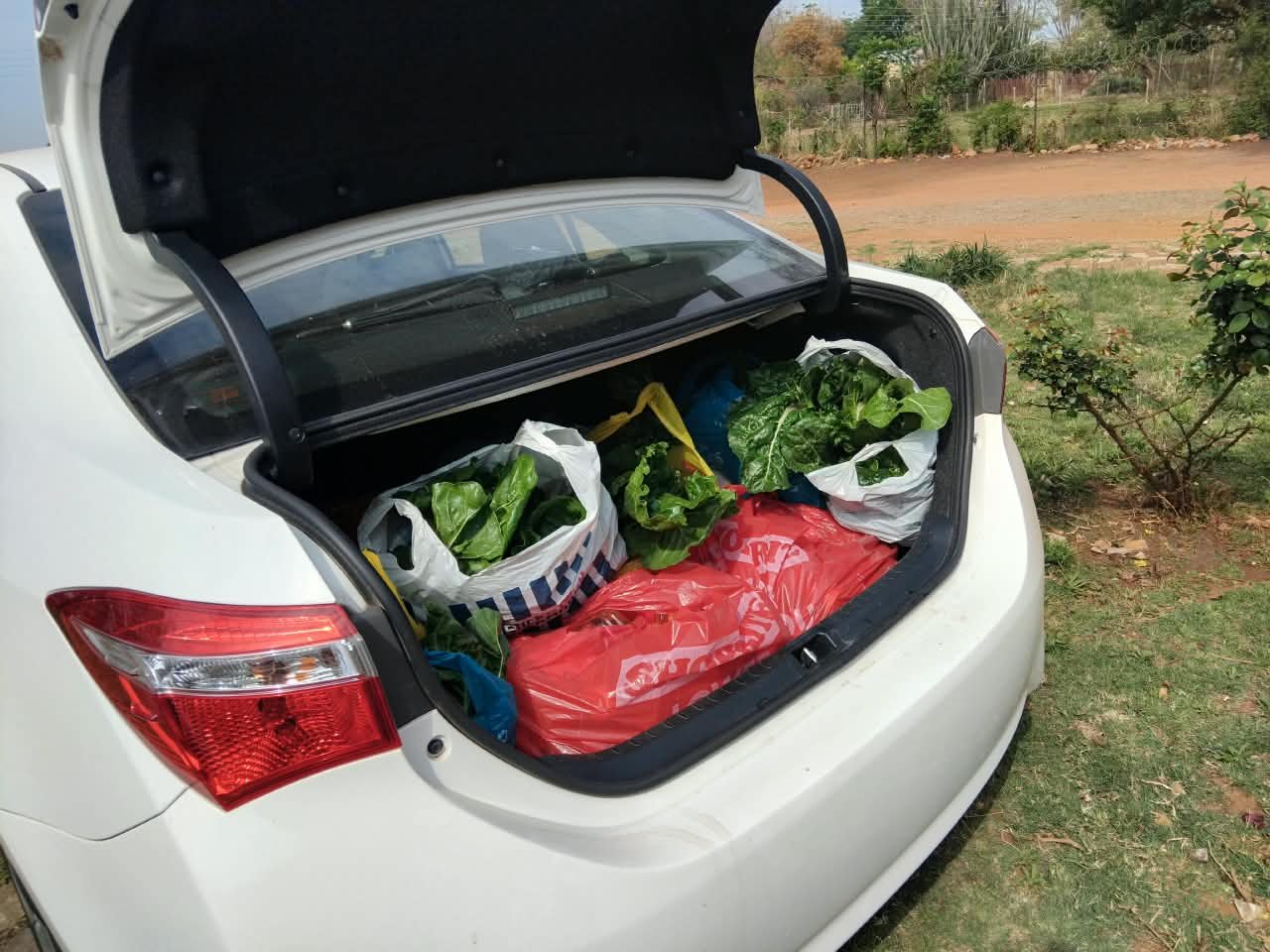
In Modimong, one of the most immediate and practical needs is assistance with the costs associated with pastoral travel. Reaching scattered communities requires maintaining a vehicle and covering fuel expenses. Without this, visits become less frequent, and already fragile communities weaken.

It is not that grace depends on logistics. But priests do.

And when a priest is enabled to travel, communities are strengthened. When communities are strengthened, the faith endures.

Fr. Lawrence has humbly requested support through Mass offerings - and in this way the Irish faithfuls spiritual needs are met and help to provide for the South African faithfuls pastoral, sacramental, and humanitarian needs. Each Mass offering you send carries deep spiritual significance. At the same time, the stipend attached provides concrete assistance that allows Fr Lawrence to continue visiting remote villages regularly.

In this way, the generosity of benefactors becomes part of the missionary chain — prayer and practical support working together.

The Human Reality

One can picture the rhythm of parish life in Modimong.

A small group gathers under a corrugated roof chapel. Hymns are sung without instruments. Children sit quietly beside grandparents. After Mass, conversations continue outside — news of illness, worries about work, requests for prayer.

In another village, Fr. Lawrence visits a sick parishioner in a modest home. There is no hospital nearby. The presence of a priest brings not only the sacrament but reassurance that the Church has not forgotten them.

Elsewhere, catechism is taught to a handful of children who may be the future of the parish.

All of this work is essential for the salvation of souls.

A Shared Responsibility

The Church has always depended on mutual support across distances. The early Christian communities sustained missionaries through prayer and material aid. That pattern continues today.

When benefactors offer a Mass intention through Restore God’s Kingdom, they are not making an abstract donation. They are helping ensure that a priest can continue to serve communities who would otherwise see him less frequently — or not at all.

For readers of Catholic Arena, the invitation is simple:

Please remember Fr. Lawrence in prayer.

Please consider offering a Mass for a loved one through RGK.

Please support the missionary work of priests serving in materially poor but spiritually hungry regions.

...and please share his story so that others may become aware of the realities facing the Church in rural mission territories.

By helping RGK help priests such as Fr Lawrence, you really can make a positive difference in the most challenging of circumstances. You can be a conduit for God's grace and love in a world that so often rejects both.

God bless and keep you!

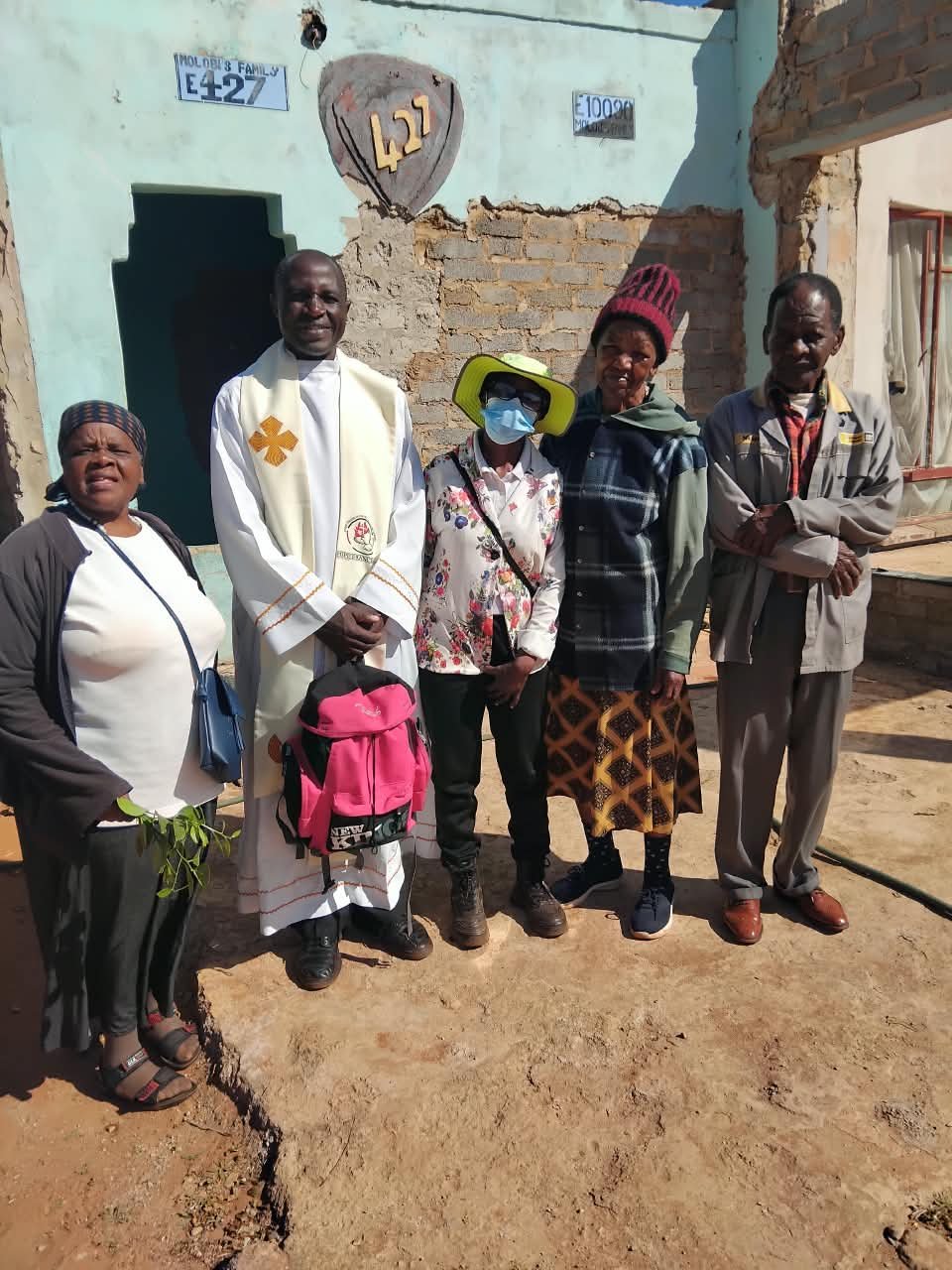
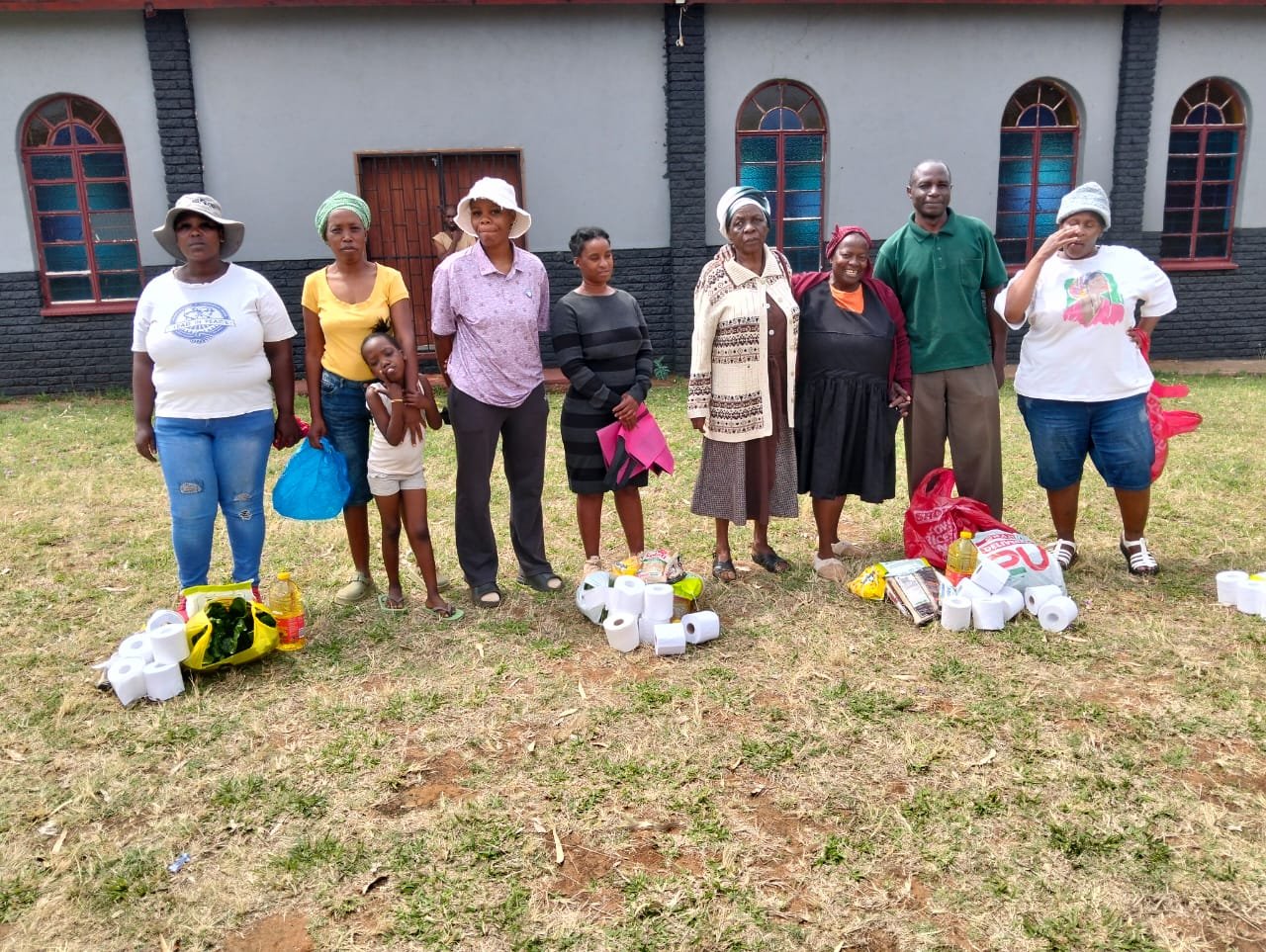
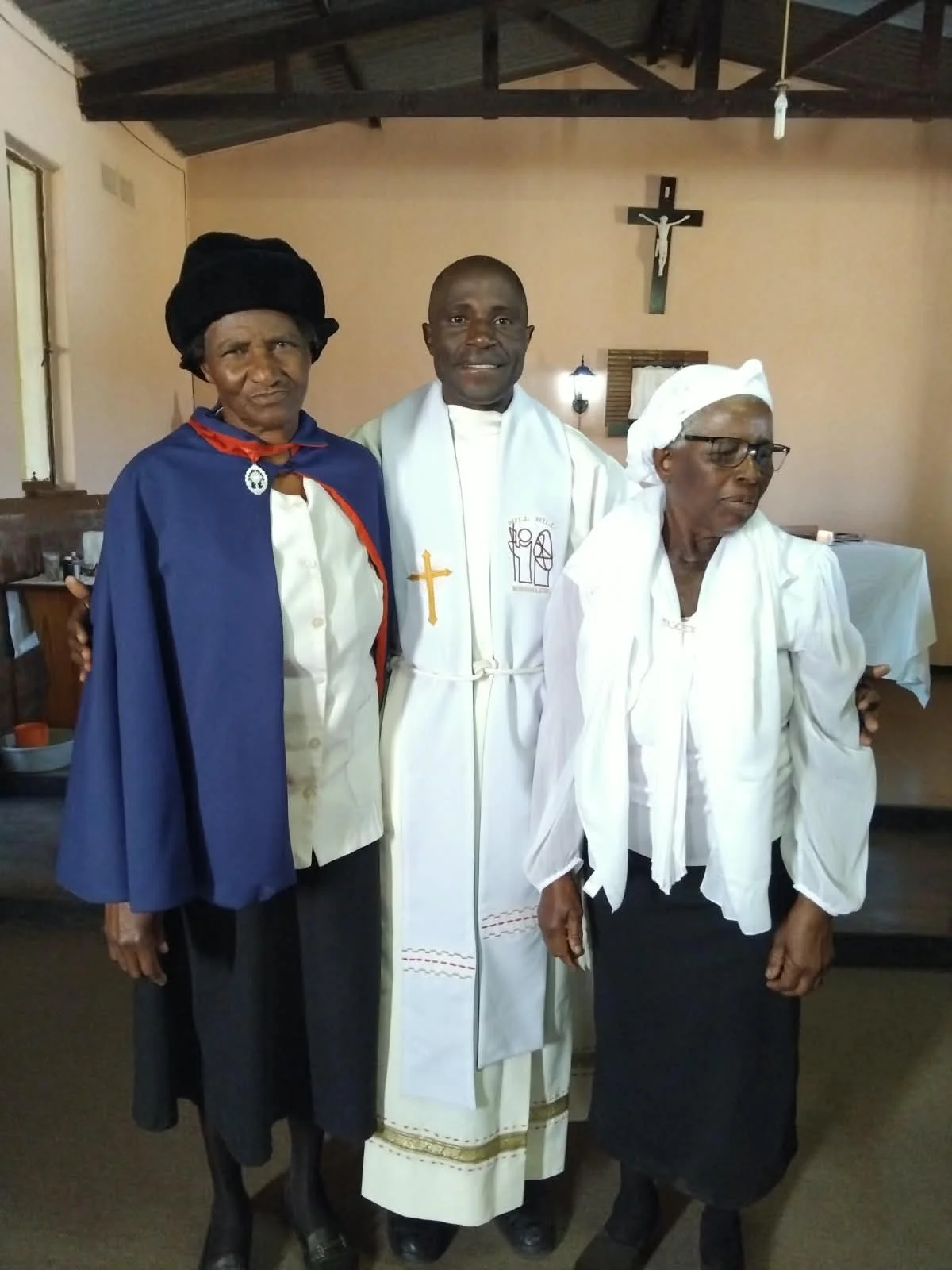
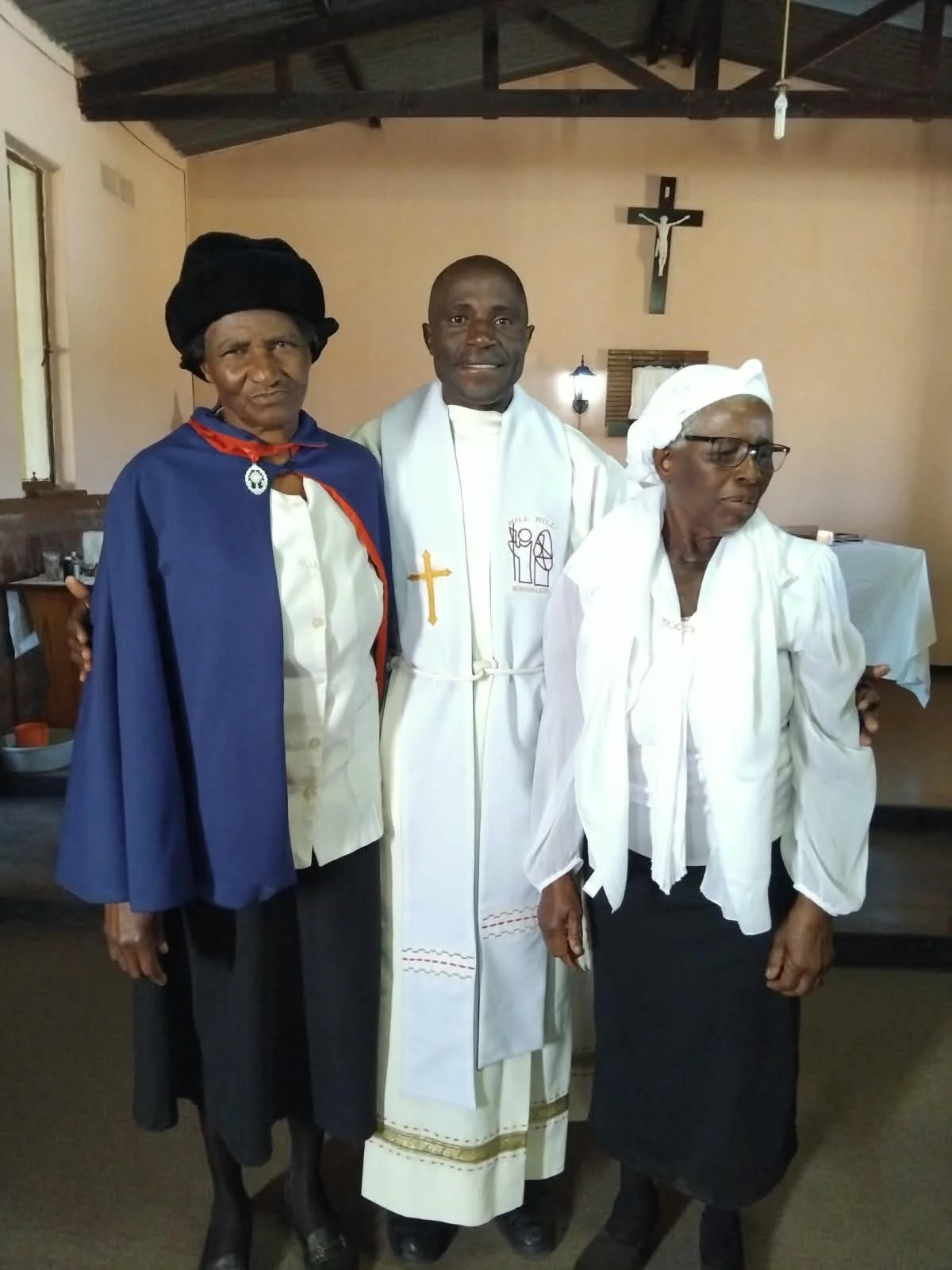
The photos above are of Fr Lawrence ministering to the sick, crippled, & disabled (he's delivering a Bible in braille to one person, some cooking oil for a family of 10 children in another, giving ashes for Ash Wednesday, and distributing Holy Communion)

Dr. Michael Kinsella

Chief Executive Officer (C.E.O.)

Restore God’s Kingdom

Beauty is in the Eye of the Beholder

Just Sayin’ #4 by George Knight


"Beauty is in the Eye of the Beholder”


“Beauty is the Eye of the Beholder” is true but it is only partially true because Beauty is not only in the Eye, it’s in the Ear and it’s in the Heart.

Now there are different kinds of Beauty. There is …

The Beauty that fades,

The Beauty that’s fake and then there’s…

The Beauty that endures; Timeless Beauty.

And it is this Timeless Beauty that exists independently of our sight, our senses and our reason.


Consider ‘The Beauty of Truth’ / Splendor Veritatis.

  • What is ‘The Beauty of Truth’?

  • Is Truth actually Beautiful?

  • Is it necessarily Beautiful? Or

  • Is Truth just some terrible ugly reality wherein all of Humanity is   fated to suffer tragedy and live meaninglessly in a Universe that does not care.


The Beauty of Truth however is that:


There is an Almighty God who so loves the World that He gave us His Only Son to redeem and protect us from the ugliness that originates from the Prince of Lies and his evil minions. (cf. John 3:16)


There is a Blessed Life to come and that we can live today in the Joyous Hope for The Coming of God’s Kingdom and


We have only to open our eyes, our ears and our hearts to receive and accept God’s Great Invitation to come follow Him: He WHO IS ‘The Way, The Truth and The Life’. (cf. John 14:6)


The Beauty of Truth is that God fully revealed Himself to all of History through the Life, Death and Resurrection of His Only Son, the God-Man and Our Saviour, Jesus Christ


Sadly not everyone is willing to accept God’s Revelation and open their hearts to the Timeless Beauty of this Ultimate Truth. On the contrary there are many who actively seek to negate and mock it.

Ultimately, dear friends,  if want we want to see Beauty and live in Truth we must will ourselves to see Beauty and choose to live in The Truth of Christ, The Word of God.

It is in this sense that Beauty is in the eye of the Beholder. In very large measure we see what we allow ourselves to see and God wants it that way.

We are placed here on earth and given free will to choose between accepting and rejecting God and His Gift of Eternal Life.

We need to choose wisely as our future happiness depends upon it.


Till next Tuesday, In friendship,

GK

www.restoregodskingdom.ie

What You See is What You Get

Just Sayin’ #3 by George Knight

"What You See  Is What You Get"


Dear Friends,

 "What you see is what you get" carries more truth than we often admit.

 Look at this scene below from the Masai Mara in Kenya: three Thomson’s gazelles stand in sunlit grass. What do you see?

 Now, what if I told you something else hides in plain view?

  • Would you believe me?

  • Would you linger to search, or dismiss it with a quick “Who cares?” if the answer isn’t instant?

Suppose I assure you a cheetah lurks—would you look again?

 Many would, yet most might miss it, giving up with “I don’t care” or “I don’t believe you.

 This moment hints at a broader truth… Most of us, most days, fail to see what’s right before us—threats or opportunities that are masked by habit or haste. The gazelles, unaware, mirror our own vulnerability.

  • Why do we miss so much?

  • Could it be that our minds, overwhelmed, filter out the Sacred amid all the secular noise?

This isn’t just about the plains—it’s about life’s journey. What we choose to see—danger or grace—defines our path.

In a world where Spiritual forces, both light and dark, shape our days, this power matters.
The Art of Living  calls us to

SCAN BEYOND THE OBVIOUS,

SENSE WHAT IS HIDDEN and

GUARD OUR VERY EXISTENCE with quiet and dignified grace.

Post Scriptum: Did you see?

When looking at this scene from the Masai Mara in Kenya, did you see the Cheetah hiding? Yes /No?

Is it not often the case that if we don’t go looking for something we won’t see it / find it?

Similarly is it not often the case when we do go looking for something we still don’t find it … even if it right in front of our eyes?

The truth is that are our eyes are not perfect and our minds plays tricks. But imperfect as they are we must use them as best we can.

Until next Thursday,

God bless,

George K


Restore God’s Kingdom

www.restoregodskingdom.ie

Tucker Carlson Shines Light on Holy Land Christians

Christians in the Holy Land have been in the spotlight for the past year, given the situation in Gaza and tensions involving Israeli Settlers in the West Bank.

A new video from Tucker Carlson puts the spotlight on what is happening.


Fr. James Martin Appears on Stephen Colbert

Late night talk show host Stephen Colbert has never been shy about his Catholic upbringing or his adult faith.

Colbert’s long running show is set to end in May of this year.

In recent years, talk show hosts have become increasingly partisan in their politics, exclusively pro Democratic Party in doing so, which has left many viewers feeling alienated.

His guest this week, was Father James Martin SJ, who spoke about his own work and something of his thoughts on Pope Leo XIV.


Cardinal Newman Added to General Roman Calendar

Saint John Henry Newman has been added to the General Roman Calendar as an optional memorial.

Cardinal Newman was declared a Doctor of the Church last November.

His Feast Day is October 9th.

A statement on the Vatican’s website reads:

The kindly light of God’s grace, which came into this world to enlighten the gentiles (cf. Lk 2: 32), led John Henry Newman to find peace in the Catholic Church and gave him such strength that he was able to say “God has created me to do Him some definite service … I have a part in this great work; I am a link in a chain, a bond of connexion between persons. He has not created me for naught”. Throughout his long life Cardinal Newman was unstinting in this service to which he had been called. The service of intellectual enquiry; the service of preaching and teaching; as well as service to the poor and the least.

His lively mind has left us enduring monuments of great importance in the fields of theology and ecclesiology, as well as poetic and devotional compositions. His constant search to be led out of shadows and images into the fullness of the truth has become an example for every disciple of the Risen One. Thus, in a special way, Saint John Henry, having been recognized as a radiant light for the Church on pilgrimage through history, may rightly be numbered among the other saintly Doctors inscribed in the General Roman Calendar.

For this reason, considering the recent declaration of the title of Doctor of the Church which has been conferred upon a saintly pastor of such outstanding significance for the entire community of the faithful, the Supreme Pontiff Pope LEO XIV has decreed that Saint John Henry Newman, Priest and Doctor of the Church, be inscribed in the General Roman Calendar, and that his Optional Memorial be celebrated by all on 9 October.

This new Memorial is to be inserted into all Calendars and Liturgical Books for the celebration of Mass and the Liturgy of the Hours, adopting the liturgical texts attached to the present decree, which are to be translated, approved, and—after confirmation by this Dicastery—published by the Conferences of Bishops.

Epstein Mocked Catholics in Released Files

There are many common themes to be analysed in the newly released files belonging to Jeffrey Epstein.

One of the most common is his contempt for Christians and Catholics, though with occasional interest in church affairs, particularly concerning the hierarchy and politics.

In one email, he lambasts the church for believing that ‘All lives are equal’.

Others include jokes about Catholics.

In another, he is offered a viewing of the anti Catholic artwork ‘Piss Christ’.


SSPX and Vatican Talks 'Ongoing' to 'Avoid Rupture'

Yesterday, the internet exploded with astonishment after the Society of Saint Pius X (SSPX) announced that they intended to consecrate new bishops in July.

In a statement, the SSPX said that they had appealed to the Holy Father Pope Leo XIV for a meeting in August but that that had not been granted, with a recent communication from the Holy See leading to them seeking to consecrate bishops in Switzerland during the summer.

In an update today, veteran Vatican journalist Diane Montagna has offered further insight, suggesting that talks are continuing:


This Too Shall Pass

Dear Friends,

‘This too shall pass’, reminds us that joy and sorrow pass through our lives like clouds.

Rooted in 13th-century Persian Sufi poetry, this saying, linked to poets like Rumi, has spread across cultures, offering a serene trust in life’s ebb and flow. It lifts our eyes beyond the moment, promising that today’s burdens will soften with time.

Historians recall its use in a medieval court, where a King sought a truth for all seasons. Advised with ‘This too shall pass’, he learned to balance highs and lows—a lesson echoing into our restless world.

Abraham Lincoln, when asked for a universal truth, is said to have offered these words, underscoring their enduring power—a thread connecting ancient wisdom to our lives.

Picture Caspar David Friedrich’s ‘Wanderer above the Sea of Fog’: a solitary figure standing amid swirling mists, as depicted below. This image mirrors the saying’s essence—whether it’s a spilled coffee, a family rift, or a career setback, the fog lifts.

Modern life, with its frantic pace, finds solace in this wisdom, reflected in meditative practices that echo Stoic wisdom, building on last week’s ‘It is what it is’.

Yet, it’s more than mere waiting. ‘This too shall pass’; invites Grace in endurance, then action when clarity returns. It’s the quiet strength to acknowledge a lost opportunity or a tech glitch, then step forward with hope. This timeless insight builds resilience for today’s uncertainties.

As you read this post, take a moment. What storms have you seen fade—a health scare, a tough year—that now feel distant?

Let those memories ease your heart.

Until next Thursday,

God bless,

George K

Restore God’s Kingdom

www.restoregodskingdom.ie


Nigeria Players Wear Christian Wristbands at AFCON

Nigerian Christians have been in the news for all the wrong reasons lately, thanks to the growing tragedy of persecution against them.

At the AFCON football tournament, their national team recorded a 2-0 win over Algeria in the Quarter Finals.

Two of their players, Victor Osimhen and Akor Adams, wore wristbands with Crosses on them.

The move has earned praise from many online, who see it as a move of solidarity with the Christians in Nigeria.


Bible Sales SOAR in England and Wales

There have been numerous studies over the last few years that claim that a ‘quiet revival’ of Christianity is taking place in England and Wales.

This mostly relates to surveys and anecdotes of young people attending church in higher numbers, specifically in London and other metropolitan areas.

Now, new statistics point to a very clear and tangible proof that something interesting is happening.

A study by Christian publisher SPCK Group, using Nielsen Bookscan, showed Bible sales up 11% in 2025.

This follows a continuous trend since 2019, with Bible sales rising 134% since then.

What is to explain this?

Lockdown may have played a part, a reaction to woke and relativist culture also but perhaps maybe, it is simply the grace of God at work.

Long may it continue.