Saint Michael Prayer

Prayer to St Michael the Archangel and Novena: A Complete Catholic Guide

St Michael the Archangel is the great defender of the Church and the leader of the heavenly host in the battle against Satan.

For centuries, Catholics have invoked St Michael for protection against temptation and evil, for the defence of the Church, for assistance at the hour of death, and for perseverance in the Faith.

One of the best-known Catholic prayers addressed to him is the Prayer to St Michael the Archangel, associated with Pope Leo XIII and formerly recited throughout the Catholic world as part of the prayers after Low Mass.

This guide contains the traditional Prayer to St Michael, its Latin text, its history and meaning, and a complete nine-day Novena to St Michael the Archangel.

Prayer to St Michael the Archangel

St Michael the Archangel,
defend us in battle;
be our protection against the wickedness and snares of the devil.

May God rebuke him, we humbly pray;
and do thou, O Prince of the heavenly host,
by the power of God,
thrust into hell Satan and all the evil spirits
who wander through the world
for the ruin of souls. Amen.

Prayer to St Michael in Latin

Sancte Michael Archangele,
defende nos in proelio;
contra nequitiam et insidias diaboli esto praesidium.

Imperet illi Deus, supplices deprecamur:
tuque, Princeps militiae caelestis,
Satanam aliosque spiritus malignos,
qui ad perditionem animarum pervagantur in mundo,
divina virtute, in infernum detrude. Amen.

Who Is St Michael the Archangel?

St Michael is one of the three Archangels named in Sacred Scripture, together with St Gabriel and St Raphael.

His name, Michael, comes from the Hebrew and means:

“Who is like God?”

It is a fitting battle cry against the pride of Satan.

The answer is obvious:

No one is like God.

St Michael appears repeatedly in Sacred Scripture as a defender of God's people and an adversary of the devil.

St Michael in the Book of Daniel

In the Book of Daniel, Michael is described as one of the chief princes and as a special protector of God's people.

He is presented as a heavenly warrior engaged in a spiritual conflict beyond what can be seen with human eyes.

St Michael in the Epistle of St Jude

St Jude explicitly calls Michael an Archangel and describes his dispute with the devil.

Significantly, Michael relies upon the authority of God rather than acting through his own power.

This same principle appears in the traditional prayer:

“May God rebuke him, we humbly pray.”

St Michael in the Apocalypse

The most famous biblical image of St Michael appears in the Apocalypse of St John:

“And there was a great battle in heaven: Michael and his angels fought with the dragon.”

The dragon is identified with Satan.

St Michael therefore became one of the great symbols of the Church's warfare against the devil and the powers of darkness.

What Does St Michael Protect Us From?

Catholic tradition particularly invokes St Michael against:

  • Satan and the fallen angels

  • temptation

  • spiritual deception

  • attacks upon the Faith

  • dangers to the Church

  • despair

  • dangers at the hour of death

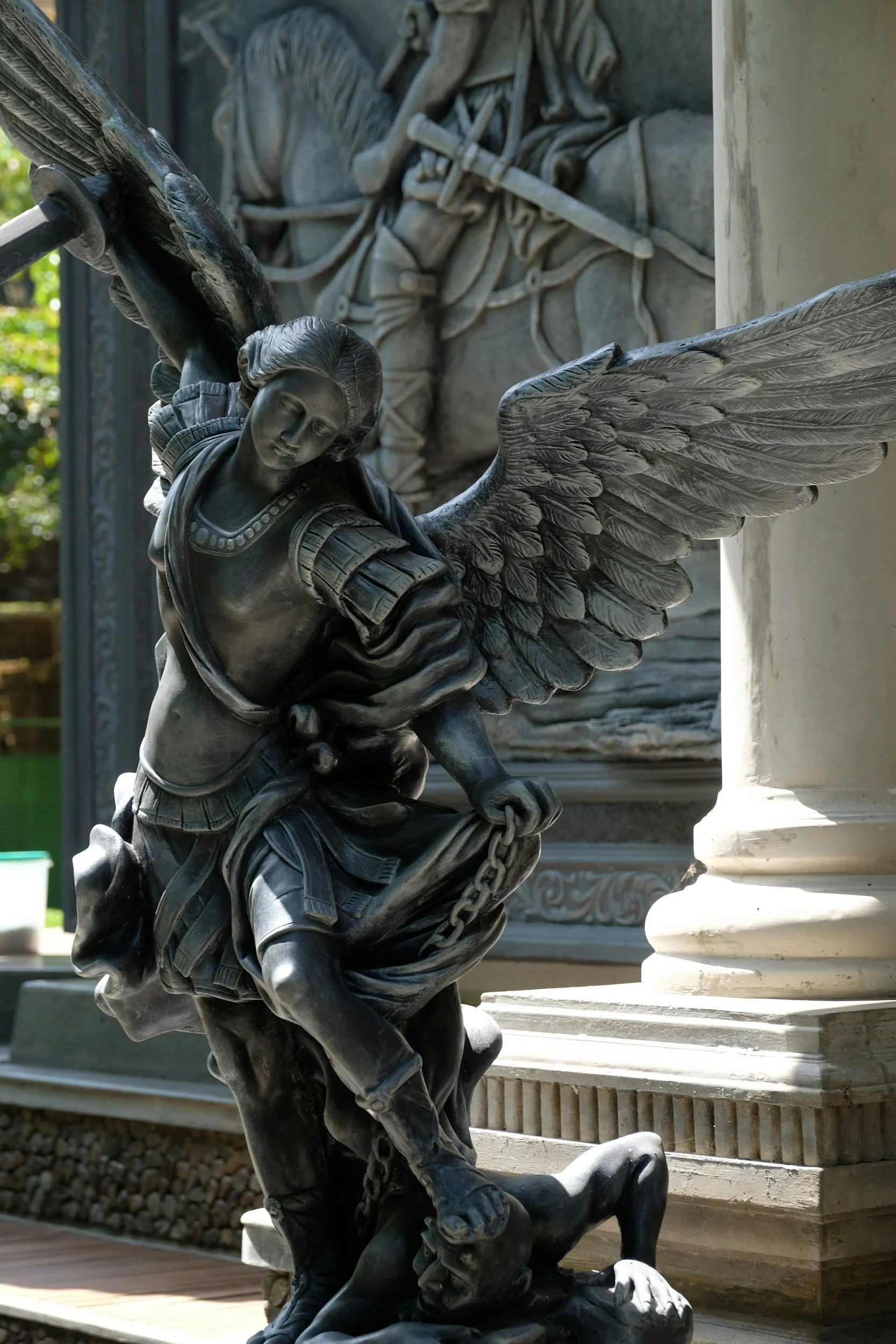
He is commonly depicted wearing armour, carrying a sword or spear, and crushing the dragon beneath his feet.

The image is not merely decorative.

It expresses the reality of spiritual warfare.

St Michael and the Traditional Catholic Faith

Devotion to St Michael has a particularly strong place in traditional Catholic spirituality.

He is invoked as the defender of the Church, the guardian of Christian souls and the prince of the heavenly armies.

The traditional Roman liturgy repeatedly invokes the angels and recognises their place within the worship and government of God's creation.

The Confiteor traditionally invokes St Michael:

“Therefore I beseech blessed Mary ever Virgin, blessed Michael the Archangel...”

St Michael is also named in prayers connected with the dying and the departed.

Traditional Catholic imagery frequently depicts him accompanying souls at judgment and defending them against the attacks of the enemy.

When Is the Feast of St Michael?

September 29 has been associated with St Michael for centuries and is traditionally known as Michaelmas.

In the traditional Roman calendar, September 29 is the feast of the Dedication of St Michael the Archangel.

St Gabriel and St Raphael have their own separate feast days in the older calendar.

In the current Roman calendar, Michael, Gabriel and Raphael are celebrated together on September 29. The Holy See continues to identify September 29 with the celebration of the three named Archangels.

For Catholics following the traditional calendar, a Novena to St Michael in preparation for Michaelmas may therefore begin on:

September 20

and conclude on:

September 28

with the feast celebrated on September 29.

History of the Prayer to St Michael

The short Prayer to St Michael is associated with Pope Leo XIII.

Leo XIII had already ordered a series of prayers to be recited after Low Mass. In 1886, the Prayer to St Michael was added to these prayers, which became commonly known as the Leonine Prayers.

Generations of Catholics therefore became accustomed to hearing:

“Sancte Michael Archangele, defende nos in proelio...”

at the conclusion of Low Mass.

The Leonine Prayers eventually ceased to be obligatory in 1964, but the St Michael prayer itself did not disappear from Catholic devotion.

Indeed, in 1994 Pope St John Paul II encouraged Catholics to continue using it in the spiritual battle against the forces of darkness.

Pope Francis has likewise publicly encouraged Catholics to invoke St Michael, and in 2018 specifically asked Catholics to pray the St Michael prayer during a month dedicated to prayer for the protection of the Church.

Did Pope Leo XIII Write the Prayer After a Vision?

A famous story holds that Pope Leo XIII experienced a terrifying vision or supernatural encounter involving Satan and the future trials of the Church.

Numerous versions of the story circulate.

Some say that Leo XIII heard a conversation between God and Satan.

Others say that he saw demons attacking the Church.

Some versions claim Satan requested a period of 75 or 100 years in which to attempt to destroy the Church.

The story has become deeply embedded in Catholic devotional culture.

However, the detailed version of the vision should be distinguished from what can be established historically.

The connection between Leo XIII, the Leonine Prayers and the Prayer to St Michael is certain. The precise details of the supposed vision are much more difficult to document, and accounts vary considerably.

Catholics are therefore free to regard the traditional story with pious interest, but the power and orthodoxy of the Prayer to St Michael do not depend upon accepting any particular version of that story.

What Does the St Michael Prayer Mean?

The prayer is short, but every line expresses an important Catholic belief.

“St Michael the Archangel, defend us in battle”

The Christian life involves warfare.

St Paul speaks of Christians struggling not merely against flesh and blood but against spiritual powers.

The Church therefore does not treat Satan as a symbol for human wickedness alone.

The devil is real.

The fallen angels are real.

Temptation is real.

But their power is limited by God.

We ask St Michael to assist us in this battle.

“Be Our Protection Against the Wickedness and Snares of the Devil”

A snare is a trap.

The devil rarely presents sin honestly.

Temptation disguises evil as:

  • pleasure,

  • freedom,

  • necessity,

  • harmless curiosity,

  • resentment presented as justice,

  • pride presented as courage,

  • or compromise presented as prudence.

We therefore ask St Michael to protect us not merely from obvious evil but from the deceptions and snares of the enemy.

“May God Rebuke Him, We Humbly Pray”

This line is essential.

The prayer does not treat St Michael as possessing some independent supernatural power apart from God.

God alone is Almighty.

Michael is powerful because he is a faithful servant of God.

His victory over Satan is the victory of obedience over rebellion and humility over pride.

“O Prince of the Heavenly Host”

The word host here means an army.

St Michael is traditionally regarded as the prince or leader of the heavenly armies.

The image comes especially from the Apocalypse, where Michael and his angels fight against the dragon.

“By the Power of God”

Again, St Michael acts through God's power.

Catholic devotion to angels is always subordinate to the worship of Almighty God.

Catholics do not worship St Michael.

We ask for his intercession and assistance.

“Thrust Into Hell Satan and All the Evil Spirits”

The prayer acknowledges the existence of the fallen angels.

Catholicism does not teach that evil is merely an abstract idea.

Satan and the demons are creatures who rebelled against God.

We ask that their influence be restrained and that souls be protected from their attacks.

“Who Wander Through the World for the Ruin of Souls”

The ultimate danger posed by the devil is not material inconvenience.

It is the loss of souls.

This is why Catholic spiritual warfare must always be understood in relation to salvation.

The greatest protection against Satan is therefore not fascination with demons.

It is a Catholic life centred upon:

  • the state of grace,

  • Holy Mass,

  • worthy reception of Holy Communion,

  • frequent Confession,

  • prayer,

  • fasting,

  • penance,

  • the Rosary,

  • Sacred Scripture,

  • sacramentals,

  • and avoidance of the near occasions of sin.

The St Michael prayer belongs within this larger sacramental and devotional life.

When Should You Pray the St Michael Prayer?

The prayer may be said at any time.

Catholics commonly pray it:

  • after Mass

  • after the Rosary

  • during morning prayers

  • during evening prayers

  • during temptation

  • when praying for the Church

  • when praying for one's family

  • during periods of spiritual difficulty

  • before travel

  • when praying for the dying

Because the prayer takes less than a minute, it is easy to memorise and incorporate into daily prayer.

Can You Pray the St Michael Prayer Every Day?

Yes.

It is an excellent daily Catholic devotion.

A simple daily routine might be:

Morning:
Sign of the Cross → Our Father → Hail Mary → St Michael Prayer

Evening:
Examination of Conscience → Act of Contrition → St Michael Prayer

The prayer may also be added after the Rosary.

Is the St Michael Prayer an Exorcism?

The familiar short Prayer to St Michael is a prayer of protection and intercession.

It should not be confused with the Church's solemn rite of major exorcism.

A formal major exorcism is performed only by a priest who has received the necessary authority from his bishop.

Ordinary Catholics should not attempt to imitate solemn exorcism rites.

The faithful may, however, confidently ask God for protection and invoke St Michael's intercession.

Traditional Catholic spiritual warfare should remain rooted in humility, prayer and the sacramental life, rather than curiosity about extraordinary demonic phenomena.

The Novena to St Michael the Archangel

A novena consists of nine days of prayer.

There are several forms of novena to St Michael. The following provides a simple traditional-style nine-day devotion that may be offered for:

  • protection,

  • perseverance,

  • freedom from temptation,

  • the defence of one's family,

  • the Church,

  • priests,

  • the dying,

  • the Holy Souls,

  • or another suitable intention.

It may be prayed at any time.

To prepare specifically for Michaelmas on September 29, begin on September 20 and finish on September 28.

How to Pray the St Michael Novena

Each day:

  1. Make the Sign of the Cross.

  2. Pray the Opening Prayer.

  3. State your intention.

  4. Pray the petition for that day.

  5. Pray the traditional Prayer to St Michael.

  6. Pray one Our Father.

  7. Pray one Hail Mary.

  8. Pray one Glory Be.

  9. Conclude with the Sign of the Cross.

Opening Prayer for Each Day

O glorious St Michael the Archangel, Prince of the heavenly host and defender of the Church, obtain for us from Almighty God protection against the assaults of the enemy.

Guard our souls, preserve us in the true Faith, strengthen us in temptation, and assist us especially at the hour of death.

Through thy powerful intercession, may we live and die in the grace and friendship of God and attain at last to the happiness of Heaven.

I particularly ask thy intercession for:

[Mention your intention.]

Amen.

Day One: For Protection Against the Devil

O glorious St Michael, who didst fight against the dragon and the rebellious angels, defend me in the spiritual combat.

Protect me from the snares of Satan, from deception and from every temptation that would separate my soul from Almighty God.

Obtain for me vigilance, humility and confidence in divine grace. Amen.

Then pray:

St Michael the Archangel, defend us in battle...

Our Father. Hail Mary. Glory Be.

Day Two: For Perseverance in the Faith

O glorious St Michael, faithful servant of Almighty God, obtain for me the grace never to abandon the Catholic Faith.

Strengthen me against doubt, cowardice and human respect. Help me to profess the Faith courageously and to persevere in it until death. Amen.

St Michael the Archangel, defend us in battle...

Our Father. Hail Mary. Glory Be.

Day Three: For the Catholic Church

O glorious St Michael, defender of God's people, protect the Holy Catholic Church against every enemy, visible and invisible.

Defend her bishops and priests, strengthen those who suffer persecution for the Faith, preserve the faithful from error and obtain the conversion of those who have fallen away. Amen.

St Michael the Archangel, defend us in battle...

Our Father. Hail Mary. Glory Be.

Day Four: For Priests

O glorious St Michael, protect the priests of Jesus Christ.

Strengthen them against temptation, preserve them in purity and fidelity, defend them from discouragement, and obtain for them courage to preach the truth and administer the Sacraments faithfully.

Raise up holy priests for the Church and protect those who labour for the salvation of souls. Amen.

St Michael the Archangel, defend us in battle...

Our Father. Hail Mary. Glory Be.

Day Five: For Our Families

O glorious St Michael, place my family beneath thy protection.

Defend our home from sin, division and the attacks of the enemy. Preserve our faith, strengthen charity between us, protect our children and lead every member of our family closer to Jesus Christ. Amen.

St Michael the Archangel, defend us in battle...

Our Father. Hail Mary. Glory Be.

Day Six: For Strength Against Temptation

O glorious St Michael, come to my assistance when I am tempted.

Obtain for me the grace to recognise the snares of the devil, to flee the near occasions of sin and to resist every temptation that threatens my soul.

May I prefer death to mortal sin and remain always faithful to God. Amen.

St Michael the Archangel, defend us in battle...

Our Father. Hail Mary. Glory Be.

Day Seven: For the Holy Souls in Purgatory

O glorious St Michael, remember the souls of the faithful departed who await the fullness of heavenly glory.

Through thy intercession, obtain for them relief and the speedy enjoyment of the Beatific Vision, especially for the souls most abandoned and those for whom I am bound to pray. Amen.

St Michael the Archangel, defend us in battle...

Our Father. Hail Mary. Glory Be.

You may add:

Eternal rest grant unto them, O Lord,
and let perpetual light shine upon them.
May they rest in peace. Amen.

Day Eight: For the Dying

O glorious St Michael, protector of Christian souls, assist all those who will die this day, especially those who are unprepared for death.

Defend them against the final assaults of the enemy. Obtain for them repentance, confidence in the mercy of God, the grace of the Sacraments where possible, and a holy death. Amen.

St Michael the Archangel, defend us in battle...

Our Father. Hail Mary. Glory Be.

Day Nine: For a Holy Death and Final Perseverance

O glorious St Michael, I ask thee especially for thy assistance at the hour of my death.

When my earthly life comes to its end, defend me against the enemy, obtain for me perfect contrition for my sins and preserve me in the grace of God.

May I die fortified by the Sacraments of Holy Mother Church and enter at last into the presence of Almighty God. Amen.

St Michael the Archangel, defend us in battle...

Our Father. Hail Mary. Glory Be.

Closing Prayer for the Novena

After the prayers on the ninth day, conclude:

O glorious Prince St Michael, chief and commander of the heavenly hosts, guardian of souls and vanquisher of rebellious spirits, be pleased to deliver us from every evil who turn to thee with confidence.

By thy protection, may we daily serve our God faithfully; may we resist the world, the flesh and the devil; and may we persevere in grace until the hour of our death.

Then, through the mercy of Jesus Christ and the intercession of the Blessed Virgin Mary, may we be admitted to the company of the angels and saints and praise the Most Holy Trinity for ever. Amen.

In the name of the Father, and of the Son, and of the Holy Ghost. Amen.

A Short Prayer to St Michael for Protection

For a brief invocation during temptation or danger:

St Michael the Archangel, defend me in battle. Protect me against the wickedness and snares of the devil, and obtain for me the grace to remain faithful to Almighty God. Amen.

Even simply saying:

“St Michael, defend us in battle.”

is a fitting invocation.

Prayer to St Michael for the Church

O glorious St Michael the Archangel, defend Holy Mother Church against her enemies, visible and invisible.

Protect the Pope, bishops and priests; strengthen those who suffer for the Faith; confound error; convert sinners; and preserve the faithful in the truth handed down from the Apostles.

By the power of God, drive far from the Church every work of Satan and obtain for us fidelity to Christ until death. Amen.

Prayer to St Michael for the Dying

St Michael the Archangel, glorious defender of souls, assist all who are approaching death.

Protect them from the attacks and deceptions of the enemy. Obtain for them sincere repentance, confidence in the Precious Blood of Jesus Christ, and the grace to die reconciled to God.

Conduct the souls of the faithful departed into the peace of Christ and everlasting life. Amen.

Prayer to St Michael for Your Family

St Michael the Archangel, I entrust my family to thy protection.

Defend our home against the influence of evil. Preserve us from mortal sin, strengthen us in temptation, protect our children, guard our marriages and keep the Catholic Faith alive in our home.

May Jesus Christ reign over this family, and may Our Blessed Lady keep us always beneath her mantle. Amen.

St Michael and Spiritual Warfare

Devotion to St Michael should make Catholics more sacramental, not more superstitious.

The normal means by which Catholics fight the spiritual battle are not secret prayers or fascination with demons.

They are the ordinary weapons given by Christ and His Church:

  • Holy Mass

  • Confession

  • Holy Communion worthily received

  • the Rosary

  • prayer and fasting

  • the Sign of the Cross

  • holy water and other sacramentals

  • spiritual reading

  • avoidance of occasions of sin

  • acts of faith, hope and charity

  • devotion to the Blessed Virgin Mary

  • trust in Jesus Christ

The devil's principal objective is sin.

Therefore, one of the greatest victories over Satan is simply to make a good Confession, return to the state of grace and remain there.

Can Catholics Keep a St Michael Medal or Image?

Yes.

Images, statues and medals of St Michael are common Catholic sacramentals.

They are not magical objects.

A blessed medal does not operate as a charm.

Rather, sacramentals turn the mind towards God and dispose the faithful to receive grace.

An image of St Michael defeating the dragon can serve as a powerful daily reminder that:

God has already won the victory.

Can I Pray the St Michael Prayer for Someone Else?

Yes.

You may pray it for:

  • your spouse,

  • children,

  • relatives,

  • friends,

  • priests,

  • bishops,

  • those struggling with temptation,

  • those who have abandoned the Faith,

  • or anyone in spiritual need.

Can Non-Catholics Pray the St Michael Prayer?

Yes.

Anyone may ask St Michael for his intercession.

The prayer ultimately asks for protection through the power of Almighty God.

Is the St Michael Prayer Dangerous to Pray?

No.

The traditional Prayer to St Michael is an ordinary Catholic devotional prayer.

It is not the solemn rite of exorcism.

There is no reason for a Catholic to fear invoking St Michael humbly for protection.

At the same time, Catholics should avoid becoming preoccupied with demons or attempting rites that properly belong to authorised clergy.

What If I Miss a Day of the St Michael Novena?

Simply continue.

A novena is a devotion, not a magical formula.

If you forget a day, there is no reason to become scrupulous.

You may make up the missed prayers if you wish or simply continue with the next day.

The efficacy of prayer does not depend upon satisfying a superstition.

When Should I Start the St Michael Novena?

You may begin it at any time.

For the traditional feast of St Michael on September 29, begin the novena on:

September 20

and conclude it on:

September 28.

You may then celebrate Michaelmas on September 29.

Frequently Asked Questions About St Michael the Archangel

What does the name Michael mean?

Michael means “Who is like God?”

The name expresses the absolute supremacy of Almighty God over every creature.

Is St Michael mentioned in the Bible?

Yes.

St Michael appears in the books of Daniel, Jude and Revelation.

Is Michael an Archangel?

Yes.

The Epistle of St Jude explicitly calls Michael the Archangel.

What is St Michael the patron saint of?

He is particularly associated with soldiers, police officers and others who protect society, and more broadly is invoked as a protector of the Church and Christian souls.

Why does St Michael fight Satan?

Sacred Scripture presents Michael as the leader of the faithful angels in the battle against the dragon, who is identified as Satan.

When is St Michael's feast day?

The traditional feast of St Michael, Michaelmas, is September 29.

When does the St Michael Novena begin?

To finish immediately before Michaelmas, begin on September 20 and pray through September 28.

Can the St Michael prayer be said after Mass?

Yes.

It was historically recited after Low Mass as part of the Leonine Prayers and remains a popular private devotion after Mass.

Is the St Michael Prayer an exorcism?

The familiar short St Michael Prayer is a prayer asking for protection and intercession. It is not the Church's solemn rite of major exorcism.

Can I pray it every day?

Yes.

Many Catholics pray it daily.

The St Michael Prayer at a Glance

If you remember nothing else, remember these words:

St Michael the Archangel,
defend us in battle;
be our protection against the wickedness and snares of the devil.

The prayer reminds Catholics of three truths:

The spiritual battle is real.

God is infinitely more powerful than Satan.

The angels of God assist the faithful in the struggle for salvation.

For Catholics facing temptation, confusion or spiritual trial, devotion to St Michael should lead not to fear but to greater confidence in Almighty God, the Sacraments and the victory of Jesus Christ.

St Michael the Archangel, defend us in battle.
How to Pray the Stations of the Cross

Stations of the Cross: How to Pray the 14 Stations

The Stations of the Cross, also known as the Way of the Cross or Via Crucis, are a traditional Catholic devotion commemorating the Passion and death of Our Lord Jesus Christ.

Through fourteen stations, the faithful spiritually accompany Christ from His condemnation by Pontius Pilate to His burial in the tomb.

The Stations may be prayed at any time of year, but they are especially associated with Fridays in Lent and Good Friday.

At each station, Catholics traditionally announce the station, adore Christ, and offer prayers such as the Our Father, Hail Mary and Glory Be.

The 14 Stations of the Cross

StationEventIJesus is condemned to deathIIJesus takes up His CrossIIIJesus falls the first timeIVJesus meets His sorrowful MotherVSimon of Cyrene helps Jesus carry the CrossVIVeronica wipes the face of JesusVIIJesus falls the second timeVIIIJesus meets the women of JerusalemIXJesus falls the third timeXJesus is stripped of His garmentsXIJesus is nailed to the CrossXIIJesus dies on the CrossXIIIJesus is taken down from the CrossXIVJesus is laid in the tomb

How to Pray the Stations of the Cross

There are many traditional forms of the Stations, and the exact prayers can vary.

A simple method is:

  1. Announce the Station.

  2. Genuflect or bow and pray:

    • V. We adore Thee, O Christ, and we praise Thee.

    • R. Because by Thy holy Cross, Thou hast redeemed the world.

  3. Pray the prayer for that Station.

  4. Pray an Our Father, Hail Mary and Glory Be.

  5. Move to the next Station.

In churches, the faithful traditionally move physically from one Station to another.

If you are praying at home, you may remain in one place and follow the Stations using a crucifix, images or a printed guide.

Opening Prayer

Begin with the Sign of the Cross:

In the name of the Father, and of the Son, and of the Holy Ghost. Amen.

It is fitting to make an Act of Contrition before beginning.

Act of Contrition

O my God, I am heartily sorry for having offended Thee,
and I detest all my sins because I dread the loss of Heaven and the pains of hell;
but most of all because they offend Thee, my God,
Who art all-good and deserving of all my love.

I firmly resolve, with the help of Thy grace,
to confess my sins,
to do penance,
and to amend my life. Amen.

You may then pray:

My Lord Jesus Christ, Thou didst make this sorrowful journey for love of me. Grant that I may accompany Thee with a contrite heart and learn to carry my own cross in union with Thee. Amen.

First Station: Jesus Is Condemned to Death

V. We adore Thee, O Christ, and we praise Thee.
R. Because by Thy holy Cross, Thou hast redeemed the world.

Prayer:
O Jesus, Thou wast condemned unjustly for my sake. Forgive me for the times I have preferred human respect to Thy holy will. Give me courage to remain faithful to Thee, whatever the cost. Amen.

Our Father. Hail Mary. Glory Be.

Second Station: Jesus Takes Up His Cross

V. We adore Thee, O Christ, and we praise Thee.
R. Because by Thy holy Cross, Thou hast redeemed the world.

Prayer:
O Jesus, Thou didst willingly take up Thy Cross for love of me. Teach me to accept the crosses permitted by Thy Providence and to carry them patiently in union with Thee. Amen.

Our Father. Hail Mary. Glory Be.

Third Station: Jesus Falls the First Time

V. We adore Thee, O Christ, and we praise Thee.
R. Because by Thy holy Cross, Thou hast redeemed the world.

Prayer:
O Jesus, when I fall into sin or discouragement, preserve me from despair. Give me the humility to repent, rise again and continue faithfully on the road to Heaven. Amen.

Our Father. Hail Mary. Glory Be.

Fourth Station: Jesus Meets His Sorrowful Mother

V. We adore Thee, O Christ, and we praise Thee.
R. Because by Thy holy Cross, Thou hast redeemed the world.

Prayer:
O sorrowful Mother, obtain for me the grace never to abandon thy Divine Son. Teach me to remain close to Jesus in suffering and to unite my sorrows with His Passion. Amen.

Our Father. Hail Mary. Glory Be.

Fifth Station: Simon of Cyrene Helps Jesus Carry the Cross

V. We adore Thee, O Christ, and we praise Thee.
R. Because by Thy holy Cross, Thou hast redeemed the world.

Prayer:
O Jesus, make me willing to help others carry their crosses. Keep me from selfishness when charity demands sacrifice, and grant that I may recognise Thee in those who suffer. Amen.

Our Father. Hail Mary. Glory Be.

Sixth Station: Veronica Wipes the Face of Jesus

V. We adore Thee, O Christ, and we praise Thee.
R. Because by Thy holy Cross, Thou hast redeemed the world.

Prayer:
O Jesus, imprint Thy holy image upon my heart. Give me the courage to serve Thee when others are indifferent and to comfort those who suffer for Thy sake. Amen.

Our Father. Hail Mary. Glory Be.

Seventh Station: Jesus Falls the Second Time

V. We adore Thee, O Christ, and we praise Thee.
R. Because by Thy holy Cross, Thou hast redeemed the world.

Prayer:
O Jesus, when I fall repeatedly through weakness, give me the grace to rise again. Strengthen me against temptation and teach me never to despair of Thy mercy. Amen.

Our Father. Hail Mary. Glory Be.

Eighth Station: Jesus Meets the Women of Jerusalem

V. We adore Thee, O Christ, and we praise Thee.
R. Because by Thy holy Cross, Thou hast redeemed the world.

Prayer:
O Jesus, give me true sorrow for my sins. Let Thy Passion lead me to conversion, amendment of life and greater love for Thee. Amen.

Our Father. Hail Mary. Glory Be.

Ninth Station: Jesus Falls the Third Time

V. We adore Thee, O Christ, and we praise Thee.
R. Because by Thy holy Cross, Thou hast redeemed the world.

Prayer:
O Jesus, support me when I am weak. Grant that I may persevere in the true Faith until death and never abandon Thee because the road becomes difficult. Amen.

Our Father. Hail Mary. Glory Be.

Tenth Station: Jesus Is Stripped of His Garments

V. We adore Thee, O Christ, and we praise Thee.
R. Because by Thy holy Cross, Thou hast redeemed the world.

Prayer:
O Jesus, Thou wast stripped of everything for love of me. Free my heart from sinful attachments, vanity and excessive love of worldly things. May I desire above all to possess Thee. Amen.

Our Father. Hail Mary. Glory Be.

Eleventh Station: Jesus Is Nailed to the Cross

V. We adore Thee, O Christ, and we praise Thee.
R. Because by Thy holy Cross, Thou hast redeemed the world.

Prayer:
O Jesus, nailed to the Cross for my sins, forgive me for the wounds my sins have caused Thee. Teach me to forgive those who injure me and to crucify everything within me that separates me from Thee. Amen.

Our Father. Hail Mary. Glory Be.

Twelfth Station: Jesus Dies on the Cross

V. We adore Thee, O Christ, and we praise Thee.
R. Because by Thy holy Cross, Thou hast redeemed the world.

It is fitting to kneel and spend a few moments in silence at this Station.

Prayer:
O Jesus, Thou didst die upon the Cross for love of me. Grant that I may hate sin, love Thee above all things and live so that I may one day die in Thy grace and friendship. Amen.

Our Father. Hail Mary. Glory Be.

Thirteenth Station: Jesus Is Taken Down from the Cross

V. We adore Thee, O Christ, and we praise Thee.
R. Because by Thy holy Cross, Thou hast redeemed the world.

Prayer:
O Mother of Sorrows, by the grief thou didst suffer beneath the Cross, obtain for me a profound love of Jesus Crucified and the grace to remain faithful to Him until death. Amen.

Our Father. Hail Mary. Glory Be.

Fourteenth Station: Jesus Is Laid in the Tomb

V. We adore Thee, O Christ, and we praise Thee.
R. Because by Thy holy Cross, Thou hast redeemed the world.

Prayer:
O Jesus, laid in the tomb, prepare me for the hour of my death. Grant that I may die fortified by Thy grace and rise with Thee to eternal life. Amen.

Our Father. Hail Mary. Glory Be.

Closing Prayer

After the Fourteenth Station, you may pray:

O Lord Jesus Christ, I adore Thee and thank Thee for Thy bitter Passion and Death. Through the merits of Thy holy wounds, forgive my sins, strengthen me against temptation, give me grace to carry my cross faithfully, and bring me at last to eternal life. Amen.

You may also pray an Our Father, Hail Mary and Glory Be for the intentions of the Holy Father.

Finish with the Sign of the Cross:

In the name of the Father, and of the Son, and of the Holy Ghost. Amen.

The Stations of the Cross at a Glance

At every Station:

Announce the Station

We adore Thee, O Christ, and we praise Thee.
Because by Thy holy Cross, Thou hast redeemed the world.

Prayer

Our Father → Hail Mary → Glory Be

Move to the next Station

Repeat until you have completed all fourteen.

Where Did the Stations of the Cross Come From?

The devotion developed from the desire of Christians to follow spiritually in the footsteps of Christ's Passion in Jerusalem.

Pilgrims to the Holy Land visited places associated with the final journey of Jesus to Calvary.

Over time, Catholics who could not travel to Jerusalem began reproducing this spiritual pilgrimage in their own countries.

The Franciscans played an especially important role in spreading devotion to the Way of the Cross.

Eventually, the familiar fourteen-Station form became established throughout the Catholic world.

Today, representations of the fourteen Stations can be found on the walls of Catholic churches throughout the world.

Are All 14 Stations Found in the Bible?

Not every traditional Station is described explicitly in Sacred Scripture.

Several are directly recorded in the Gospel accounts, including:

  • Jesus being condemned

  • Simon of Cyrene carrying the Cross

  • the women of Jerusalem

  • Jesus being stripped

  • the Crucifixion

  • Christ's death

  • His removal from the Cross

  • His burial

Others, such as the three falls of Jesus, His meeting with His Mother and Veronica wiping His face, come from Christian devotional tradition.

The Stations are a devotion, not a claim that every individual scene is explicitly narrated in the Gospel text.

What Is the Stabat Mater?

A longstanding custom is to sing or recite verses of the Stabat Mater while moving between Stations.

The hymn meditates on the sorrow of the Blessed Virgin Mary as she stands at the Cross of her Son.

It is particularly appropriate during the Stations because it helps the faithful accompany the Passion in union with Our Lady.

Do You Have to Walk Between the Stations?

No.

Moving physically from one Station to another is traditional and especially appropriate when praying in a church where the fourteen Stations are displayed.

But someone who cannot walk between them may remain seated or kneeling.

The Stations can also be prayed at home.

Can You Pray the Stations of the Cross at Home?

Yes.

You do not need to be inside a church to pray the Stations.

At home you can:

  • pray before a crucifix,

  • use images of the fourteen Stations,

  • follow a printed guide,

  • or simply announce each Station and pray the prayers in turn.

Families can also pray the Stations together.

When Should Catholics Pray the Stations of the Cross?

The Stations may be prayed throughout the year.

They are particularly associated with:

  • Fridays

  • Lent

  • Good Friday

  • retreats and days of recollection

  • periods of suffering or penance

Many Catholic parishes publicly pray the Stations on Fridays during Lent.

Do You Have to Pray an Our Father, Hail Mary and Glory Be at Every Station?

No single formula is required for every form of the Stations.

The Our Father, Hail Mary and Glory Be form a simple and traditional method, but different versions contain different prayers.

Why Do Catholics Pray the Stations of the Cross?

The Stations help Catholics contemplate the Passion and death of Christ and remember:

  • the seriousness of sin,

  • the price of our Redemption,

  • the love of Christ,

  • the sorrow of Our Lady,

  • the necessity of repentance,

  • the value of carrying our crosses,

  • and the reality of death and eternity.

They are therefore particularly suited to Lent, when the Church calls the faithful to prayer, fasting and penance.

Is There a Fifteenth Station?

Some modern forms add a Fifteenth Station commemorating the Resurrection.

The Resurrection is, of course, essential to the Catholic Faith and the culmination of the Paschal Mystery.

However, the traditional Way of the Cross consists of fourteen Stations and ends with Christ being laid in the tomb.

Those wishing to follow the traditional form therefore conclude at the Fourteenth Station.

Frequently Asked Questions About the Stations of the Cross

How many Stations of the Cross are there?

The traditional Stations of the Cross contain fourteen Stations.

What is another name for the Stations of the Cross?

They are also called the Way of the Cross or, in Latin, the Via Crucis.

How long does it take to pray the Stations of the Cross?

A typical devotion takes around 20 to 45 minutes, depending on the prayers used and the time spent in silence.

Can I pray the Stations outside Lent?

Yes. They may be prayed throughout the year, especially on Fridays.

Can I pray the Stations alone?

Yes. They may be prayed privately, with a family or publicly in a parish.

Do I need pictures of the Stations?

No, although images can help keep track of each Station.

Do the Stations have to be prayed inside a church?

No. They may also be prayed at home or outdoors.

Why are there fourteen Stations?

Fourteen became the established traditional form of the devotion, tracing Christ's journey from His condemnation to His burial.

Are all fourteen Stations directly in the Bible?

No. Some come directly from the Gospel accounts, while others belong to longstanding Christian devotional tradition.

A Simple Guide for Beginners

If you have never prayed the Stations before, simply begin:

In the name of the Father, and of the Son, and of the Holy Ghost. Amen.

At each Station say:

“We adore Thee, O Christ, and we praise Thee.”

“Because by Thy holy Cross, Thou hast redeemed the world.”

Then pray the prayer for that Station, followed by:

Our Father.
Hail Mary.
Glory Be.

Move to the next Station.

Continue until you reach the tomb.

The Stations are a simple way to accompany Our Lord Jesus Christ on the road to Calvary and to honour His Passion and death for our salvation.

We adore Thee, O Christ, and we praise Thee, because by Thy holy Cross, Thou hast redeemed the world.

How to Make a Good Confession

How to Make a Good Confession: A Step-by-Step Catholic Guide

Going to Confession can feel daunting—especially if it has been years, or if you have never been before. But the Sacrament of Reconciliation is not an interrogation or a moment of humiliation. It is an encounter with the mercy of Jesus Christ, who forgives sins and restores us to friendship with God.

This guide explains how to prepare, what to say in the confessional, how to make an examination of conscience, and what to do afterward.

What Is Confession?

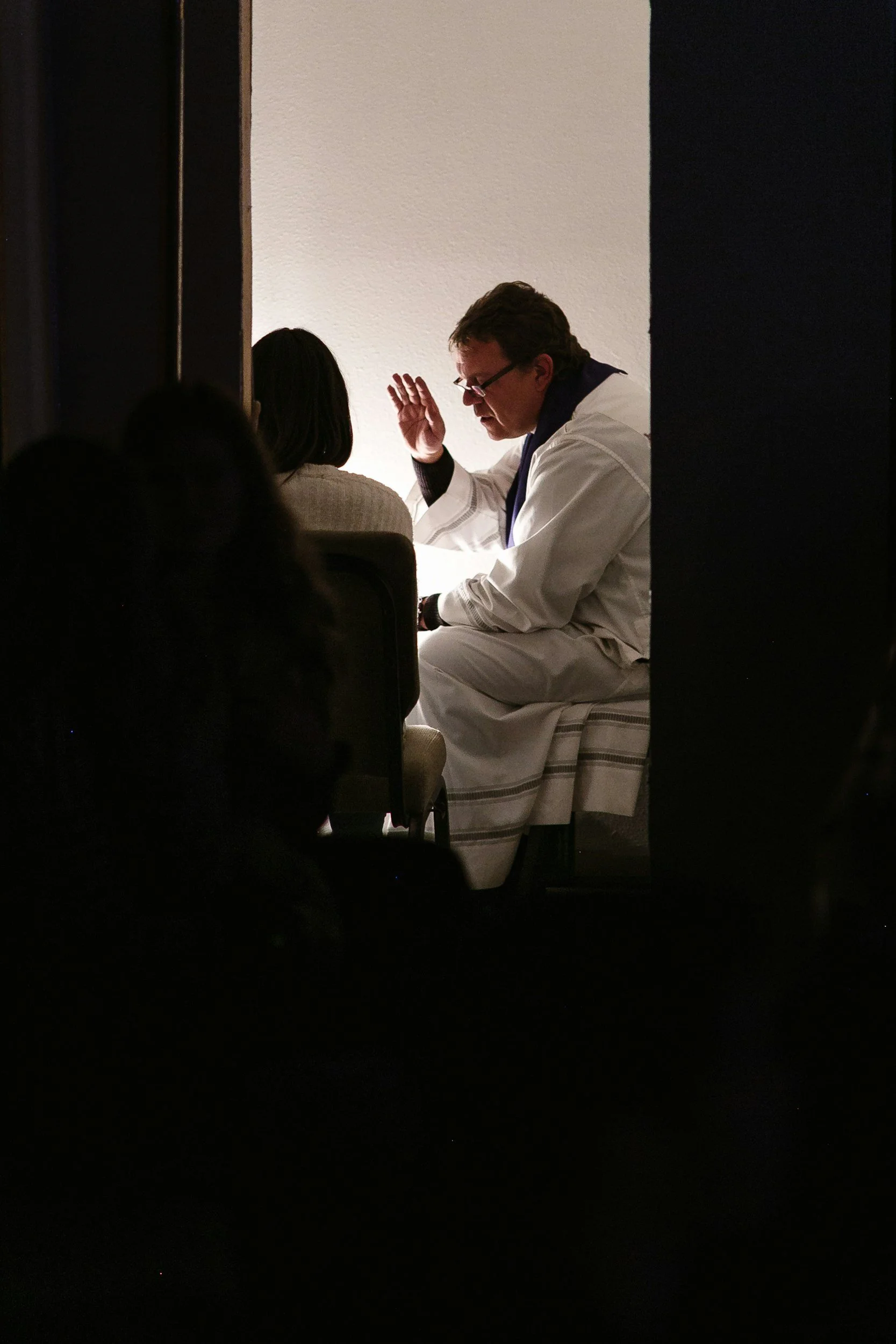
Confession is the sacrament in which a Catholic confesses sins to a priest, expresses genuine sorrow, receives absolution in Christ's name, and undertakes a penance. It is also called the Sacrament of Reconciliation or Penance because God reconciles the repentant sinner to Himself and to the Church.

The priest is bound by the sacramental seal: he may never reveal what is said in Confession. You may go anonymously behind a screen or face-to-face, according to what is available and what helps you confess sincerely.

The Five Steps of a Good Confession

A good confession has five basic parts:

  1. Examine your conscience — honestly review your sins since your last confession.

  2. Be sorry for your sins — have real contrition, sorrow for having offended God.

  3. Resolve to avoid sin — intend, with God's grace, not to commit those sins again.

  4. Confess your sins to a priest — state them simply, honestly, and without excuses.

  5. Do your penance — complete the prayer or good work assigned by the priest as soon as reasonably possible.

Before You Go

Pray for honesty and courage

Spend a few quiet minutes asking the Holy Spirit to help you see your sins clearly, without either minimizing them or falling into despair. God already knows everything about your life. Confession is an act of truth, humility, and trust in His mercy.

You might pray:

Come, Holy Spirit. Help me to know my sins, to be sincerely sorry for them, and to confess them honestly. Give me the grace to turn away from sin and to follow Jesus more faithfully. Amen.

Make an examination of conscience

An examination of conscience is a prayerful review of your thoughts, words, actions, and omissions since your last confession. Do not merely ask, “Did I break rules?” Ask instead: “How have I loved God? How have I loved my neighbour? Where have I refused grace?”

It can help to write short private notes, particularly if it has been a long time. Destroy them afterward so that your sins remain private.

Know what must be confessed

Catholics must confess all mortal sins they remember after a careful examination of conscience. Mortal sin requires grave matter, full knowledge that the act was seriously wrong, and deliberate consent. State the kind of mortal sin and the approximate number of times it was committed.

Venial sins do not need to be confessed for absolution, but confessing them is strongly recommended. It forms the conscience, helps break sinful habits, and opens the heart to grace.

If you are unsure whether something was mortal or venial, simply tell the priest what happened and ask for guidance. Do not let uncertainty keep you away from Confession.

Examination of Conscience

The following questions are prompts, not a checklist to rush through. Read them slowly. Notice where your heart needs God's mercy.

Love of God

First Commandment: I am the Lord your God; you shall not have strange gods before me.

  • Have I neglected prayer, Sunday Mass, or my relationship with God?

  • Have I put money, status, politics, pleasure, work, or another person above God?

  • Have I doubted God's mercy, despaired of salvation, or presumed I could sin without consequence?

  • Have I sought fortune-telling, occult practices, superstition, or anything contrary to trust in God?

Second Commandment: You shall not take the name of the Lord your God in vain.

  • Have I used God's name carelessly, angrily, or irreverently?

  • Have I made false promises or vows in God's name?

  • Have I mocked sacred things, blasphemed, or spoken disrespectfully about the Church or the saints?

Third Commandment: Keep holy the Lord's Day.

  • Have I deliberately missed Sunday Mass or a holy day of obligation without a serious reason?

  • Have I failed to make Sunday a day for worship, rest, family, and works of mercy where possible?

Love of Neighbour

Fourth Commandment: Honour your father and mother.

  • Have I been disrespectful, resentful, ungrateful, or disobedient toward my parents or rightful authorities?

  • Have I neglected my responsibilities to my spouse, children, family members, or those entrusted to my care?

  • Have I failed to show patience and charity at home?

Fifth Commandment: You shall not kill.

  • Have I harmed others through violence, cruelty, reckless behaviour, rage, or a refusal to forgive?

  • Have I encouraged hatred, revenge, bullying, or contempt for another person?

  • Have I neglected my health through serious excess, substance abuse, or dangerous choices?

  • Have I refused help to someone in serious need when I could reasonably have helped?

Sixth and Ninth Commandments: You shall not commit adultery; you shall not covet your neighbour's wife.

  • Have I been unfaithful in marriage, encouraged unfaithfulness, or treated another person as an object?

  • Have I sought out pornography, entertained impure thoughts deliberately, or engaged in sexual activity outside God's plan for marriage?

  • Have I failed to respect my own dignity or the dignity of others in speech, dress, entertainment, or conduct?

Seventh and Tenth Commandments: You shall not steal; you shall not covet your neighbour's goods.

  • Have I stolen, cheated, defrauded, damaged property, or failed to repay what I owe?

  • Have I been dishonest at work, in business, with taxes, or in using another person's property or time?

  • Have I been consumed by envy, greed, materialism, or resentment of another person's possessions or success?

Eighth Commandment: You shall not bear false witness.

  • Have I lied, deceived, exaggerated, or deliberately concealed the truth when I had a duty to speak it?

  • Have I gossiped, spread rumours, damaged someone's reputation, or shared private information without a good reason?

  • Have I judged others harshly or entertained suspicions without sufficient evidence?

The Beatitudes and Works of Mercy

  • Have I been proud, selfish, impatient, vain, or unwilling to forgive?

  • Have I ignored the poor, lonely, sick, grieving, or vulnerable?

  • Have I failed to share my time, money, abilities, or faith when love called me to act?

  • Have I caused division rather than worked for peace?

  • Have I been ashamed of Christ or failed to witness to the faith when I reasonably could?

What to Say in Confession

You do not need a perfect script. The priest will guide you. If you are nervous, begin by saying, “Father, I have not been to Confession in a long time and I need help.” He will understand.

A common form is:

In the name of the Father, and of the Son, and of the Holy Spirit. Amen.

Bless me, Father, for I have sinned. It has been [state the time] since my last confession. These are my sins.

Then confess your sins plainly. For example:

“I have missed Sunday Mass twice through my own fault. I have been impatient and angry with my family several times a week. I have gossiped about a colleague. I have neglected prayer.”

State sins, not long stories. Give relevant circumstances only if they change the seriousness of what happened or if the priest needs them to understand. Do not blame other people, make excuses, or hide serious sins out of embarrassment.

For mortal sins, give the approximate number or frequency: “about five times,” “once a month for six months,” or “I do not know exactly, but regularly.” The priest is there to help you receive God's mercy, not to be shocked by your past.

When you have finished, you can say:

For these and all the sins of my past life, I am sorry.

What Happens Next

The priest may offer counsel, ask a brief clarifying question, or help you see a way forward. Listen with an open heart. He will then give you a penance—usually a prayer, act of charity, or another concrete spiritual act.

Next, the priest will invite you to make an Act of Contrition. There are several approved forms. If you do not know one, ask the priest or use the version printed in the confessional.

Act of Contrition

O my God, I am heartily sorry for having offended Thee, and I detest all my sins because I dread the loss of heaven and the pains of hell; but most of all because they offend Thee, my God, who art all-good and deserving of all my love. I firmly resolve, with the help of Thy grace, to confess my sins, to do penance, and to amend my life. Amen.

The priest then gives absolution. Make the Sign of the Cross when he blesses you. At that moment, if you have made a sincere confession and received absolution, your sins are forgiven.

The priest will dismiss you, often with words such as “Go in peace.” You may respond, “Thanks be to God.”

After Confession

Do your penance

Complete the penance as soon as possible. It does not earn forgiveness—the mercy of God does that—but it expresses repentance and helps repair the harm caused by sin.

Give thanks

Stay for a few minutes in church if you can. Thank Jesus for His mercy. Ask Him for the grace to follow through on the resolution you made.

A simple prayer after Confession:

Lord Jesus, thank You for forgiving me. Help me to live in the freedom You have given me, to avoid sin, to repair any harm I have caused, and to grow in love for You and for my neighbour. Amen.

Make practical changes

A firm purpose of amendment means you sincerely intend to turn from sin. It does not mean you can guarantee never to struggle again. Make one or two practical changes: remove a temptation, apologize to someone you have hurt, set a prayer time, seek accountability, or ask for pastoral help where needed.

Common Questions

What if I have forgotten how to go to Confession?

Tell the priest. You can simply say, “Father, it has been a long time; please help me.” He will guide you step by step.

Can I go face-to-face or behind a screen?

Either is normally possible. Confession may be anonymous behind a screen or face-to-face, depending on the church and your preference.

What if I forget a sin?

If you genuinely forgot a sin after making an honest examination of conscience, it is forgiven with the others. Mention it at your next Confession if it was serious. Never deliberately hide a mortal sin.

What if I am ashamed?

Shame can be a sign that you understand the seriousness of sin, but it must not become a reason to stay away from Christ. Priests hear confessions regularly, are bound by absolute confidentiality, and rejoice when someone returns to God.

How often should I go?

Catholics must confess serious sins before receiving Holy Communion and should confess at least once a year. Many Catholics find monthly confession, or confession every few weeks, a helpful rhythm for spiritual growth.

Can a priest refuse to forgive me?

The priest can grant absolution when he sees genuine repentance and a real intention to change. If a serious obstacle exists, he will explain what needs to be addressed and help you take the next step. Do not be afraid to seek his guidance.

A Final Encouragement

No sin is greater than the mercy of God when a person turns to Him with a contrite heart. Do not wait until you feel worthy to go to Confession—none of us is worthy on our own. Go because Christ is merciful, because He desires your freedom, and because He calls you home.

If it has been a long time, choose the next available confession time and go. Begin with the simple words: “Bless me, Father, for I have sinned.” The rest can follow.

For more Catholic prayers, practical guides, and news from the life of the Church, visit CatholicArena.com.

How to Pray the Rosary

How to Pray the Rosary: A Step-by-Step Guide

The Rosary is one of the most beloved prayers in the Catholic Church. It combines familiar prayers such as the Our Father and Hail Mary with meditation on the life, Passion, death and Resurrection of Jesus Christ, in union with the Blessed Virgin Mary.

Although the Rosary can look complicated at first, it follows a simple and repetitive structure.

Traditionally, the full Rosary consists of 15 decades, divided into three sets of Mysteries:

  • the Joyful Mysteries

  • the Sorrowful Mysteries

  • the Glorious Mysteries

It is very common to pray only five decades at a time, meditating on one of these sets of Mysteries.

In 2002, Pope St John Paul II proposed an additional, optional set of five Mysteries known as the Luminous Mysteries, or Mysteries of Light. Many Catholics now pray these on Thursdays, while others continue to use the traditional three sets of Mysteries.

Whichever form you follow, the basic method of praying the Rosary remains the same.

How to Pray the Rosary Step by Step

1. Begin on the Crucifix

Hold the crucifix and make the Sign of the Cross:

In the name of the Father, and of the Son, and of the Holy Spirit. Amen.

Then pray the Apostles' Creed.

The Apostles' Creed

I believe in God,
the Father almighty,
Creator of heaven and earth,
and in Jesus Christ, his only Son, our Lord,

who was conceived by the Holy Spirit,
born of the Virgin Mary,
suffered under Pontius Pilate,
was crucified, died and was buried;

he descended into hell;
on the third day he rose again from the dead;

he ascended into heaven,
and is seated at the right hand of God the Father almighty;

from there he will come to judge the living and the dead.

I believe in the Holy Spirit,
the holy Catholic Church,
the communion of saints,
the forgiveness of sins,
the resurrection of the body,
and life everlasting. Amen.

2. Pray the Opening Our Father

On the first large bead, pray one Our Father.

This prayer is traditionally offered for the intentions of the Pope.

The Our Father

Our Father, who art in heaven,
hallowed be thy name;
thy kingdom come;
thy will be done on earth as it is in heaven.

Give us this day our daily bread;
and forgive us our trespasses
as we forgive those who trespass against us;
and lead us not into temptation,
but deliver us from evil. Amen.

3. Pray Three Hail Marys

On the next three small beads, pray one Hail Mary on each bead.

These three Hail Marys are traditionally offered for an increase in the virtues of faith, hope and charity.

The Hail Mary

Hail Mary, full of grace,
the Lord is with thee.
Blessed art thou among women,
and blessed is the fruit of thy womb, Jesus.

Holy Mary, Mother of God,
pray for us sinners,
now and at the hour of our death. Amen.

4. Pray the Glory Be

After the three Hail Marys, pray the Glory Be.

The Glory Be

Glory be to the Father,
and to the Son,
and to the Holy Spirit,
as it was in the beginning,
is now, and ever shall be,
world without end. Amen.

You are now ready to begin the decades of the Rosary.

5. Pray the Five Decades

When praying the commonly used five-decade Rosary, each decade is dedicated to one Mystery from the life of Our Lord and Our Lady.

For each decade:

  1. Announce the Mystery.

  2. Pray one Our Father.

  3. Pray ten Hail Marys while meditating on the Mystery.

  4. Pray one Glory Be.

  5. The O My Jesus prayer may then be added.

Then move on to the next Mystery and repeat the same pattern.

For example:

“The First Joyful Mystery: The Annunciation.”

Take a moment to reflect on the Mystery before beginning the prayers.

The purpose of the Rosary is not merely the repetition of prayers. The vocal prayers provide a rhythm in which the mind can meditate upon the mysteries of the life of Christ.

The O My Jesus Prayer

Following the apparitions at Fatima, many Catholics adopted the custom of praying the following prayer after each decade:

O my Jesus,
forgive us our sins,
save us from the fires of hell,
lead all souls to Heaven,
especially those in most need of Thy mercy. Amen.

The Fatima Prayer is a common addition to the Rosary but is not part of its original structure.

What Are the Traditional Mysteries of the Rosary?

The traditional Rosary contains 15 Mysteries, divided into three groups of five.

These are the Joyful, Sorrowful and Glorious Mysteries.

The Joyful Mysteries

Traditionally prayed on Monday and Thursday, and also particularly appropriate during Advent and Christmastide.

  1. The Annunciation

  2. The Visitation

  3. The Nativity

  4. The Presentation of Jesus in the Temple

  5. The Finding of Jesus in the Temple

The Sorrowful Mysteries

Traditionally prayed on Tuesday and Friday, and especially during Lent.

  1. The Agony in the Garden

  2. The Scourging at the Pillar

  3. The Crowning with Thorns

  4. The Carrying of the Cross

  5. The Crucifixion and Death of Jesus

The Glorious Mysteries

Traditionally prayed on Wednesday, Saturday and Sunday, with seasonal variations sometimes observed on Sundays.

  1. The Resurrection

  2. The Ascension

  3. The Descent of the Holy Spirit

  4. The Assumption of the Blessed Virgin Mary

  5. The Coronation of the Blessed Virgin Mary

What Are the Luminous Mysteries?

The Luminous Mysteries, or Mysteries of Light, are an additional set of five Mysteries proposed by Pope St John Paul II in 2002.

They were not part of the traditional 15-decade Rosary and their use is optional.

Catholics who use the Luminous Mysteries generally pray them on Thursday, which alters the more traditional weekly arrangement of the other Mysteries.

The five Luminous Mysteries are:

  1. The Baptism of Jesus in the Jordan

  2. The Wedding Feast at Cana

  3. The Proclamation of the Kingdom of God

  4. The Transfiguration

  5. The Institution of the Eucharist

They meditate particularly on events from the public ministry of Christ.

Catholics are therefore free either to include the Luminous Mysteries in their devotional practice or to continue praying the Rosary according to the traditional three sets of Mysteries.

Which Mysteries of the Rosary Should I Pray Today?

There are two commonly encountered schedules.

Traditional Rosary Schedule

DayMysteriesMondayJoyfulTuesdaySorrowfulWednesdayGloriousThursdayJoyfulFridaySorrowfulSaturdayGloriousSundayGlorious, with traditional seasonal variations

Under the older traditional custom, Sunday may vary according to the liturgical season. The Joyful Mysteries may be prayed during Advent and Christmastide, the Sorrowful Mysteries during Lent, and the Glorious Mysteries during Eastertide and much of the remainder of the year.

Schedule Including the Luminous Mysteries

Catholics who choose to pray the Luminous Mysteries commonly follow this schedule:

DayMysteriesMondayJoyfulTuesdaySorrowfulWednesdayGloriousThursdayLuminousFridaySorrowfulSaturdayJoyfulSundayGlorious

Neither the use of the Luminous Mysteries nor this particular weekly arrangement is necessary in order to pray the Rosary.

6. Finish with the Hail Holy Queen

After completing the fifth decade, it is customary to pray the Hail Holy Queen, also known by its Latin name, the Salve Regina.

Hail Holy Queen

Hail, holy Queen, Mother of mercy,
our life, our sweetness and our hope.

To thee do we cry,
poor banished children of Eve.

To thee do we send up our sighs,
mourning and weeping in this valley of tears.

Turn then, most gracious advocate,
thine eyes of mercy toward us,
and after this our exile show unto us
the blessed fruit of thy womb, Jesus.

O clement, O loving,
O sweet Virgin Mary.

Pray for us, O holy Mother of God,
that we may be made worthy of the promises of Christ.

The Rosary may then be concluded with the Sign of the Cross:

In the name of the Father, and of the Son, and of the Holy Spirit. Amen.

The Rosary at a Glance

For beginners, the basic five-decade sequence is:

On the crucifix:
Sign of the Cross + Apostles' Creed

First large bead:
Our Father

Three small beads:
Three Hail Marys

Before the first decade:
Glory Be

For each of the five decades:
Mystery → Our Father → 10 Hail Marys → Glory Be → O My Jesus if desired

After the fifth decade:
Hail Holy Queen → Sign of the Cross

Once this pattern becomes familiar, the Rosary is very easy to follow.

Is the Rosary Five Decades or Fifteen Decades?

Strictly speaking, the traditional complete Rosary consists of 15 decades, corresponding to the 15 traditional Mysteries.

In ordinary Catholic usage, however, when someone says that they are going to "pray the Rosary," they often mean praying five decades—one complete set of Mysteries.

Historically, the 15-decade Rosary was sometimes referred to as the Psalter of the Blessed Virgin Mary, since its 150 Hail Marys corresponded to the 150 Psalms.

With the optional Luminous Mysteries, someone praying all four sets would pray 20 decades, but the Luminous Mysteries do not replace the traditional 15 Mysteries.

Do You Need Rosary Beads to Pray the Rosary?

No.

Rosary beads help you keep track of the prayers and Mysteries, but they are not necessary.

If you do not have a Rosary, you can count the prayers on your fingers or simply keep track mentally.

How Long Does It Take to Pray the Rosary?

A five-decade Rosary generally takes around 15 to 25 minutes, depending on the pace and the time spent meditating on each Mystery.

The full traditional 15-decade Rosary naturally takes longer.

There is no need to rush. The Rosary is intended as meditative prayer rather than a race to finish the words.

Why Do Catholics Pray the Rosary?

The Rosary is profoundly Christ-centred.

Its traditional Mysteries lead Catholics through the Incarnation and childhood of Christ, His Passion and death, His Resurrection and Ascension, Pentecost, and the glorification of His Blessed Mother.

The repeated Hail Marys do not distract from Christ. Rather, they provide the rhythm within which the Christian meditates upon the mysteries of Christ's life.

The Rosary therefore allows Catholics to contemplate Our Lord in union with the woman who knew and loved Him as His mother.

Frequently Asked Questions About the Rosary

How many Hail Marys are in a five-decade Rosary?

A commonly prayed five-decade Rosary contains 53 Hail Marys: three during the opening prayers and 50 during the five decades.

How many decades are in the traditional Rosary?

The traditional complete Rosary contains 15 decades, divided between the Joyful, Sorrowful and Glorious Mysteries.

It is common, however, to pray one set of five decades at a time.

Are the Luminous Mysteries mandatory?

No.

The Luminous Mysteries were proposed by Pope St John Paul II in 2002 as an additional set of Mysteries for meditation. Catholics may use them, but they remain an optional addition to the traditional Joyful, Sorrowful and Glorious Mysteries.

What is a decade of the Rosary?

A decade consists of ten Hail Marys centred on one Mystery.

It begins with an Our Father and ordinarily concludes with a Glory Be. Many Catholics also add the O My Jesus prayer.

Can you pray the Rosary without beads?

Yes. Rosary beads are a practical aid but are not required.

Can beginners pray the Rosary?

Absolutely.

You do not need to memorise every prayer before starting. Follow a written guide until the prayers and sequence become familiar.

If you lose your place or make a mistake, simply continue.

Do you have to be Catholic to pray the Rosary?

No. Anyone may pray the Rosary.

Can you pray the Rosary every day?

Yes. Daily recitation of the Rosary has long been encouraged as a Catholic devotional practice.

What should I think about while praying the Rosary?

Meditate upon the particular Mystery being prayed.

For example, during the First Joyful Mystery, contemplate the Annunciation: the Angel Gabriel's message, Our Lady's fiat, and the mystery of the Incarnation.

The vocal prayers provide a framework while the mind and heart contemplate the Mystery.

A Simple Way to Remember the Rosary

For beginners:

Start:
Creed → Our Father → 3 Hail Marys → Glory Be

Then five times:
Mystery → Our Father → 10 Hail Marys → Glory Be → O My Jesus if desired

Finish:
Hail Holy Queen → Sign of the Cross

For the traditional Rosary, meditate upon the Joyful, Sorrowful and Glorious Mysteries.

Those who wish may also incorporate the optional Luminous Mysteries proposed by Pope St John Paul II.

Practical Advice for Beginners

  • Start Small: If praying an entire five-decade Rosary (which takes 15–25 minutes) feels intimidating, start by praying just one decade a day (5 minutes).

  • Focus on Meditation over Speed: The point of the Rosary is contemplation, not racing through words. If your mind wanders, gently bring your focus back to the mystery.

  • Divide Your Day: You can pray one or two decades in the morning, during a commute, or before bed rather than all at once.

  • Don't Worry About Mistakes: God looks at the intention of your heart. If you skip a bead or lose count, simply keep going from where you are.

  • Non-Catholics Are Welcome: Anyone seeking a deeper connection with the Gospel scenes can pray the Rosary to reflect on the life of Christ.