Another Anti Catholic Terrorist Attack After Trudeau REFUSES To Condemn Terrorists

Mere hours after Canadian Prime Minister Justin Trudeau REFUSED to call on terrorists to stop attacking Catholics, yet another church was attacked by terrorists, this time near Bonnyville.

Our Lady of Mercy Church was ‘deliberately’ set on fire according to police, with the terrorist believed to be a youth.

The priest Fr Jhack Diaz, said that he was ‘sad’ at what had occurred. He stated: Kehewin is a beautiful community. People are welcoming and very friendly and religiously motivated. I really don’t understand why people are doing this.”

With no end in sight and indifference, interpreted as endorsement by terrorists, from Justin Trudeau and Gerald Butts, Catholics around the world must begin to put pressure on their governments to expel Canadian diplomats, as they would want other regime that tolerates terrorism in this manner.

Trudeau REFUSES To Condemn Terorrism As Goons Manhandle Journalist

The growing outrage over Canadian Prime Minister Justin Trudeau's failure to stop terrorism against Catholics looks set to be even more inflamed after a shocking incident today.

The controversial Prime Minister, who once dressed in blackface, has repeatedly refused to call on the terrorists to stop committing attacks against Catholics. Only this week, his former adviser and close friend Gerald Butts repeatedly tweeted that it was ‘understandable’ to target Catholics with such terror attacks.

In footage that emerged today, Trudeau has inflamed the situation even worse.

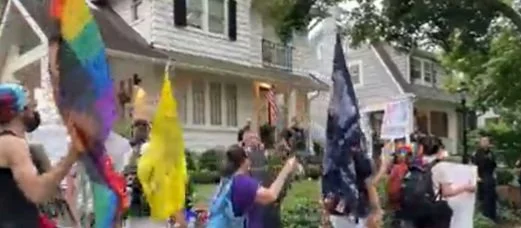
When asked about the terrorist attacks currently taking place, an irate Trudeau refused to answer questions before posing for a selfie. One of his goons then manhandled the female journalist for daring to call on Trudeau to speak against the terrorism that his state is seeing as condoning by means of their silence.

The video from Rebel News stoked disgust from people online, with Canada now appearing to become an extremist liberal regime, where violence against those perceived as non liberal is condoned by authorities.

How far is Trudeau willing to allow this violence to go?

Trudeau Ally Calls Anti Catholic Terrorism 'Understandable'

With international disgust growing in relation to the Canadian establishment’s failure to tackle anti Catholic terrorism, an ally of Prime Minister Justin Trudeau and the former Principal Secretary to him, Gerald Butts has referred to the terror attacks as ‘understandable’.

His comments on Twitter have added criticism to the Trudeau regime’s failure to confront anti Catholic terrorists, who blame the Catholic Church for the failures of Canadian society to take care of Indigenous Canadians.

He wrote:

Look buddy, I'm not going to break the Crash Davis rule, and will ignore the personal insult. But I was an altar boy in a small Atlantic Canadian parish in the early 1980s. I can understand why someone would want to burn down a church, though I do not condone it.

When asked if he was defending burning the churches, he stated:

No Terry, it is not. Though it may be understandable.

The sarcastic Butts also replied to others stating that he could understand why people think that the terror attacks against Catholics would be believed as acceptable.

The Ayatollah does not tweet like this.

Had he Twitter, even Kim Jong Un would not tweet like this.

Because Mr. Butts is bland and associated with the Dictatorship of Blandness that Justin Trudeau embodies he gets away with it?

Some of the limp replies state ‘Would he say this about a Mosque or a Synagogue?’ You already know the answer, so why ask?

Catholics in Canada are allowing terrorism against them to become normalised, it starts with the fires of the buildings, soon it will be with people inside them. With the 5th anniversary of Father Jacques Hamyl approaching, Catholics should be wary of how hatred fosters.

The first seven stages of genocide are: classification, symbolisation, discrimination, dehumanisation, organisation, polarisation, preparation. The church in Canada is now on the precipice of the eighth stage, persecution, where lists are drawn up and violence takes place. If someone told you a year ago that preachers would be having their churches invaded and Catholics would have their churches burnt down with allies of Trudeau calling it ‘understandable’, would you have believed it? If we said to you that in one year’s time, things will be much worse unless Catholics defend their churches, would you disagree?

Ken Moore

Von Der Leyen's Agression Betrays Schuman Vision

German extremist Ursula Von Der Leyen, has been misusing her position as EU Commission President to impose German cultural values on Poland and Hungary over the course of the past year.

Rather than applaud Poland and Hungary for their pro family initiatives, which have increased birth rates in those countries, she has repeatedly tried to admonish and isolate the two nations, evidently out of disgust for such policies. She constantly mischaracterises them as having ‘Anti LGBT Zones’ which are in reality, zones where graphic sexual education (homosexual and heterosexual) are not permitted in schools.

In a deranged and volatile new speech, the Lutheran warned Hungary that if it ‘does not set things right’ that it would be punished by the ‘powers’ of the EU.

The aggressive threats come only days after the European Union voted to recognise a declaration stating that intentionally killing an unborn child should be the ‘right’ of every parent in Europe.

The European Union is now less of a force for good than at any time in its history. Although the intention of the Union was noble, those who wish to destroy Europe and who wish to attack Christianity, are now in the ascendancy.

It was not always this way.

Only a number of weeks ago, Pope Francis declared Robert Schuman as ‘Venerable’. Schuman was the French Foreign Minister who proposed in 1950 to create a European Coal and Steel Community, which eventually became the European Union. His ‘Schuman Declaration’ stated: ‘Europe will not be made all at once, or according to a single plan. It will be built through concrete achievements which first create a de facto solidarity’.

Schuman was not the only EU visionary to incorporate a Catholic ethos, Arsène Heitz who designed the European Union flag, belonged to the Order of the Miraculous Medal, which served as the influence for the emblem that resembled Our Lady’s Crown of Stars.

That solidarity, not just with Europe but with the past, is now long gone under the tutelage of Merkel and Von Der Leyen, both from staunch Lutheran backgrounds. The European Union is now a sectarian outfit which allows German Protestants to bully and harass smaller Catholic countries, especially those who promote pro family policies.

Seosamh O’Caoimh

Read Schuman’s words in full:

World peace cannot be safeguarded without the making of creative efforts proportionate to the dangers which threaten it.

The contribution which an organized and living Europe can bring to civilization is indispensable to the maintenance of peaceful relations. In taking upon herself for more than 20 years the role of champion of a united Europe, France has always had as her essential aim the service of peace. A united Europe was not achieved and we had war.

Europe will not be made all at once, or according to a single plan. It will be built through concrete achievements which first create a de facto solidarity. The coming together of the nations of Europe requires the elimination of the age-old opposition of France and Germany. Any action taken must in the first place concern these two countries.

With this aim in view, the French Government proposes that action be taken immediately on one limited but decisive point.

It proposes that Franco-German production of coal and steel as a whole be placed under a common High Authority, within the framework of an organization open to the participation of the other countries of Europe. The pooling of coal and steel production should immediately provide for the setting up of common foundations for economic development as a first step in the federation of Europe, and will change the destinies of those regions which have long been devoted to the manufacture of munitions of war, of which they have been the most constant victims.

The solidarity in production thus established will make it plain that any war between France and Germany becomes not merely unthinkable, but materially impossible. The setting up of this powerful productive unit, open to all countries willing to take part and bound ultimately to provide all the member countries with the basic elements of industrial production on the same terms, will lay a true foundation for their economic unification.

This production will be offered to the world as a whole without distinction or exception, with the aim of contributing to raising living standards and to promoting peaceful achievements. With increased resources Europe will be able to pursue the achievement of one of its essential tasks, namely, the development of the African continent. In this way, there will be realised simply and speedily that fusion of interest which is indispensable to the establishment of a common economic system; it may be the leaven from which may grow a wider and deeper community between countries long opposed to one another by sanguinary divisions.

By pooling basic production and by instituting a new High Authority, whose decisions will bind France, Germany and other member countries, this proposal will lead to the realization of the first concrete foundation of a European federation indispensable to the preservation of peace.

To promote the realization of the objectives defined, the French Government is ready to open negotiations on the following bases.

The task with which this common High Authority will be charged will be that of securing in the shortest possible time the modernization of production and the improvement of its quality; the supply of coal and steel on identical terms to the French and German markets, as well as to the markets of other member countries; the development in common of exports to other countries; the equalization and improvement of the living conditions of workers in these industries.

To achieve these objectives, starting from the very different conditions in which the production of member countries is at present situated, it is proposed that certain transitional measures should be instituted, such as the application of a production and investment plan, the establishment of compensating machinery for equating prices, and the creation of a restructuring fund to facilitate the rationalization of production. The movement of coal and steel between member countries will immediately be freed from all customs duty, and will not be affected by differential transport rates. Conditions will gradually be created which will spontaneously provide for the more rational distribution of production at the highest level of productivity.

In contrast to international cartels, which tend to impose restrictive practices on distribution and the exploitation of national markets, and to maintain high profits, the organization will ensure the fusion of markets and the expansion of production.

The essential principles and undertakings defined above will be the subject of a treaty signed between the States and submitted for the ratification of their parliaments. The negotiations required to settle details of applications will be undertaken with the help of an arbitrator appointed by common agreement. He will be entrusted with the task of seeing that the agreements reached conform with the principles laid down, and, in the event of a deadlock, he will decide what solution is to be adopted.

The common High Authority entrusted with the management of the scheme will be composed of independent persons appointed by the governments, giving equal representation. A chairman will be chosen by common agreement between the governments. The Authority's decisions will be enforceable in France, Germany and other member countries. Appropriate measures will be provided for means of appeal against the decisions of the Authority.

A representative of the United Nations will be accredited to the Authority, and will be instructed to make a public report to the United Nations twice yearly, giving an account of the working of the new organization, particularly as concerns the safeguarding of its objectives.

The institution of the High Authority will in no way prejudge the methods of ownership of enterprises. In the exercise of its functions, the common High Authority will take into account the powers conferred upon the International Ruhr Authority and the obligations of all kinds imposed upon Germany, so long as these remain in force.

Sinners, Penitents and the Holy Eucharist

There is a hot theological debate raging in the United States of America as to whether or not Joe Biden should receive the Holy Eucharist and be considered to be in Communion with the Catholic Church.

The reason is that Joe is using his position as President of the United States of America to promote genocidal-levels of abortion: not just in America but throughout the world. The media and politicians are happy to stoke the fires but there are 2 main Catholic positions.

Liberal Catholics think that Joe should receive the Holy Eucharist because he is a “devout Catholic” and because receiving Communion is “a personal matter.”

Conservative Catholics — pejoratively dubbed as “traditional” Catholics — follow the Catechism and the Canon of the Catholic Church. They believe a Catholic should be penitent when presenting themselves for Communion. (Centrist Catholics are less involved in this debate because they want both a Pro-Life Church and a forgiving, inclusive Church.)

Lamb

Several articles on this topic have caught my eye. First was “What lies at the heart of the battle over Biden and communion” by Christopher Lamb (The Tablet, 24 June 2021.) Lamb, who is a Vatican affairs reporter, curiously notes “abortion rights” without any caveat:

“Even if it does not mention any names, it is expected to implicitly reprimand Catholic politicians, such as President Joe Biden, who support abortion rights.” 

He mentions the Catholic position:

“On the other hand, we have the belief that clear teaching guides who can and cannot receive Communion. The rules are black and white. If that makes it impossible for a politician to be a practising Catholic and to support abortion rights for women, then so be it.”

to immediately negate it so we can be “all-embracing and universal”!

“A Church of the “pure” runs counter to the definition of Catholicism as all-embracing and universal, and that faith is a journey where the starting point is not perfection.”

He goes on to imply that he has some specific knowledge of the Pope’s personal opinion on the matter!

“He [Pope Francis] wants the Church to pitch its tent among the messy realities of the world, and to build the Kingdom of God in the imperfect here and now, rather than to seek out islands of doctrinal purity.”

Lamb over represents the meaning of the sensible cautions sent by the Vatican through Archbishop Christophe Pierre and by doing so undermines their authority.

“We are not a Church of the perfect but a pilgrim church in need of the mercy offered generously by Christ.”

The cautions from the Vatican / the Congregation of the Doctrine of the Faith encourage the American Bishops to review all secular, religious and political consequences before considering a reprimand of any Head of State. I bet it would not go well for Catholics in China if the Church criticized Chairman Xi Jinping.

And Lamb finished with the outrageous question:

“Rather than Germany, isn’t the real threat to church unity coming from the Communion-denying bishops in the United States?”

Some of the American Bishops are looking to enforce existing parts of the Canon of the Catholic Church. Those are our rules.

O’Reilly

Then came “The Real Threat to American Catholicism” by Mollie Wilson O'Reilly (The Atlantic: June 27, 2021.) Sadly, the majority of Mollie’s argument pivoted on “whataboutisms” such as “What about Trump?” and “What about Bill Barr?”

“The fact that Trump is not a Catholic doesn’t make his policies any less a violation of human dignity. “

Her repeated comparisons highlight her severe case of Trump Derangement Syndrome! Like Lamb, she goes on to suggest that the ‘worthy observation’ of the requirements for Communion is a ‘private matter.’ 

“The Church has many rules about what Catholics should or should not do to receive Communion worthily, but observing them is typically a private matter. Denying Communion to Biden or other public figures as a means of correcting their errors would be claiming the right to overrule their conscience.”

O’Reilly seems to believe that the Church may not “overrule” anyone’s individual conscience. She does not even consider that there can be a poorly informed conscience — or a complete lack of conscience!  

O’Reilly repeatedly denigrates the American Bishops:

“But they [the American Bishops] are as diverse and divided as the rest of us Catholics, though they rarely admit it directly.”

“Disunity and disagreement are not the biggest obstacles to the Church’s moral leadership; unchallenged hypocrisy and blindness are.”

“In the aftermath of Trump, and of a deadly and demoralizing pandemic, I no longer look to America’s bishops expecting moral or ideological coherence.”

Then even links the American Bishops with her TDS and insults every single Trump-supporting Catholic — all in one sentence!

“They [American Bishops] have been particularly bad at reckoning honestly with the ugliness and devastation of President Trump’s four years in office and the scandal of Catholics who supported him.”

O’Reilly is correct saying every death is important, but she emphasizes 13 death penalties while avoiding the ~ 60 MILLION U.S. DEATHS from abortion since Roe v. Wade. She has lost all perspective  —  or is just partisan.   

Lewis

The third article was “When pro-lifers fight, rather than unite” by Mike Lewis, editor of Where Peter Is. (Where Peter Is: June 23, 2021)

The first third of Lewis’ long article rails against the diversity he perceives in the Pro-Life Movement. His antipathy taints his more insightful comments on the Biden/USCCB issue which are buried deep in this essay. [Please reference my article on the energetic Pro-Life Movement: “The Human Rights Movement of Our Time.”]  

Lewis used his view of the Pro-Life Movement to lead into the US Conference of Catholic Bishops (USCCB) and the question of Biden receiving Communion. He provided fascinating background information about a 2004 letter from (then) Cardinal Ratzinger to the USCCB via Cardinal McCarrick, who apparently selectively edited the letter before presenting it to the Bishops.

Lewis notes the relevant section of the Canon of the Catholic Church (Canon 915):

“Those who have been excommunicated or interdicted after the imposition or declaration of the penalty and others obstinately persevering in manifest grave sin are not to be admitted to holy communion”

Late in the article he confirms his personal view:

“I have no interest in defending President Biden’s decision to receive communion while supporting policies that increase access to abortion and fund abortion procedures”

but then provides Biden the usual “out” through the ‘personal-decision’ option, adding that the Church should “propose, rather than impose”:

“The real question at stake is whether the decision should be left to individual Catholics, or if Church authorities should make the decision for them. Since the second Vatican Council, the approach of the Church, even before Francis became pope, has been to propose, rather than impose.” 

“When someone is weak, a sinner, the approach of the Church is to accompany, to encourage, and to guide. While it might seem odd to describe the leader of the free world as weak, it seems that President Biden’s political evolution on the issue of abortion has been a manifestation of weakness.”

Lewis did remind us of the most important thing all of us should be doing for this situation:

“My prayer is for the restoration of his [Biden’s] conscience and confidence, and for a rediscovery of these principles he’s decided to ignore.”

Paulsen

A further article worth reading is about a case coming before the Supreme Court of the United States in the Fall which involves the original Roe v. Wade decision. The article highlights many of the fascinating legal questions involved. “Repudiating Roe (Part I): The Most Important Abortion Case in Thirty Years”  by Michael Stokes Paulsen (Public Discourse: June 28, 2021.) Watch for Part II!

 Serwach:  Communion and the Holy Eucharist

A very helpful and simple article on this concept is  “Who Gets Jesus? Meaning of Communion and Eucharist”  by Joseph Serwach (The Catholic Way Home: Dec 7, 2019)

“Communion is the verb (being a part of Communion or being in Communion with the saints) while the Eucharist is the noun (the person of Jesus Christ).

Communion refers to the Sacrament of Holy Communion, celebrated at every Mass. Communion comes from the Latin word “communionem,’’ meaning “fellowship’’ or sharing something together. We are in communion as a community joining with God. We believe the Church is His Body and He is the head.”

Even some Catholics miss the subtleties here. When a Catholic receives the Holy Eucharist they receive the Body & Blood of Our Lord Jesus Christ. When we “go to Communion” we are in communion with the Saints and the Church as a whole. Serwach explains:

“Because of that belief in the Real Presence, taking this portion of the Bible literally, Catholics don’t believe anyone is ready and able to experience the Eucharist unprepared.”

St. John (The Bible): Penitence

The Biden debate reminded me of the story of Jesus and the Woman caught in Adultery.

“Then Jesus straightened up and said to her, “Woman, where are they? Has no one condemned you?”  She replied, “No one, sir.”

Then Jesus said, “Neither do I condemn you. Go, [and] from now on do not sin anymore.”            

[John 8:10-11]

An essential component of receiving the Holy Eucharist / “going to Communion” is being penitent: that includes us doing our very best to “not sin anymore.” For many of us, that can be done privately. Biden openly supports genocide through abortion so it is nigh impossible for him to be truly penitent without doing something publicly to “not sin anymore.” That is on him.

God is forgiving if Biden’s extremism has arisen from some cognitive impairment or external manipulation. If it is indeed his own conscious decision, we must pray for his salvation. As Jesus said, it is not for us to condemn him (though we must still oppose abortion.) It does fall to the Magisterium to decide whether he may be “in Communion” with the Church while actively supporting the mass murder of innocents.

Forgive my paraphrasing of the Holy Father’s words:

“The Eucharist is not the reward of saints, but the bread of penitents.”


Dr. Kevin Hay.


Kevin is a UCD grad and a Family Doctor in rural Alberta, Canada.

You can follow him on Twitter @kevinhay77

Editor’s Note: We here at Catholic Arena would like to offer our sincere condolences to Mike Lewis on the recent loss of his sister, Katie. Please pray for Mike, Katie and the Lewis family.


Native Canadians Call for Stop to Anti Catholic Terror Attacks

Canada has become a hotbed of anti Catholic terrorism in 2021, with attacks on churches being cheered on by politicians, human rights groups and the media. None of that should make any sense, considering Canada’s longstanding image of being a beacon of tolerance and decency, yet it now an undeniable reality.

Liberals and Antifa have sought to conflate the high mortality rates of early 20th Century Residential Schools with conspiracies surrounding ‘mass murders’, allegedly by the Catholic Church. The short explanation for this, is that it has been merely a pretext to carry out terror attacks against Catholic churches.

Considering that they still make up 90% of Canadian homeless people and their men have a life expectancy of 64, the Indigenous peoples of Canada (commonly referred to as ‘First Nations’) have not been impressed by the feigned concern of Canadian lefties.

They are now speaking out.

One pointed out that many Residential School survivors are Catholic, it was their churches that were torched.

Another stated: ‘If you think you are out there burning churches down on our behalf. It isn't helping. That isn't allyship. It isn't support. It isn't the kind of support we need. What it is - is evil’.

The alleged altruism of the terrorists is easily disproved by the fact that they set fire to a church for African Refugees.

If Canada does not apprehend these terrorists, the international community should come under pressure to consider the appropriateness of allowing Canadian diplomats to remain until they acknowledge the severity of what is close to becoming a full blown terrorism crisis, with a persecution of people of faith that is no different from what is taking place in Nigeria, China or elsewhere.

The contrasts between how the international community responded to Poland and Hungary (even hijacking Euro 2020 to attack the two countries) and how they have turned a blind eye to Canada is very telling about its sincerity when it comes to how citizens are treated.

Ken Moore

14 Years of Summorum Pontificum

7th July 2007. 7/7/07.

On that date, Pope Benedict XVI’s Motu Proprio Summorum Pontificum was written. The document loosened many, but not all, of restrictions on the provision of the Latin Mass and what has followed has been a decade and a half of remarkable growth for the Traditionalist movement, often countered with resentment and jealousy from others.

Benedict XVI’s letter stated the following:

Art 1.  The Roman Missal promulgated by Pope Paul VI is the ordinary expression of the lex orandi (rule of prayer) of the Catholic Church of the Latin rite.  The Roman Missal promulgated by Saint Pius V and revised by Blessed John XXIII is nonetheless to be considered an extraordinary expression of the same lex orandi of the Church and duly honoured for its venerable and ancient usage.  These two expressions of the Church’s lex orandi will in no way lead to a division in the Church’s lex credendi (rule of faith); for they are two usages of the one Roman rite.

It is therefore permitted to celebrate the Sacrifice of the Mass following the typical edition of the Roman Missal, which was promulgated by Blessed John XXIII in 1962 and never abrogated, as an extraordinary form of the Church’s Liturgy.  The conditions for the use of this Missal laid down by the previous documents Quattuor Abhinc Annos and Ecclesia Dei are now replaced as follows:

Art. 2.  In Masses celebrated without a congregation, any Catholic priest of the Latin rite, whether secular or regular, may use either the Roman Missal published in 1962 by Blessed Pope John XXIII or the Roman Missal promulgated in 1970 by Pope Paul VI, and may do so on any day, with the exception of the Easter Triduum.  For such a celebration with either Missal, the priest needs no permission from the Apostolic See or from his own Ordinary.

Art. 3.  If communities of Institutes of Consecrated Life and Societies of Apostolic Life, whether of pontifical or diocesan right, wish to celebrate the conventual or community Mass in their own oratories according to the 1962 edition of the Roman Missal, they are permitted to do so.  If an individual community or an entire Institute or Society wishes to have such celebrations frequently, habitually or permanently, the matter is to be decided by the Major Superiors according to the norm of law and their particular laws and statutes.

Art. 4.  The celebrations of Holy Mass mentioned above in Art. 2 may be attended also by members of the lay faithful who spontaneously request to do so, with respect for the requirements of law.

Art. 5, §1  In parishes where a group of the faithful attached to the previous liturgical tradition stably exists, the parish priest should willingly accede to their requests to celebrate Holy Mass according to the rite of the 1962 Roman Missal.  He should ensure that the good of these members of the faithful is harmonized with the ordinary pastoral care of the parish, under the governance of the bishop in accordance with Canon 392, avoiding discord and favouring the unity of the whole Church.

§2  Celebration according to the Missal of Blessed John XXIII can take place on weekdays; on Sundays and feast days, however, such a celebration may also take place.

§3  For those faithful or priests who request it, the pastor should allow celebrations in this extraordinary form also in special circumstances such as marriages, funerals or occasional celebrations, e.g. pilgrimages.

§4  Priests using the Missal of Blessed John XXIII must be qualified (idonei) and not prevented by law.

§5  In churches other than parish or conventual churches, it is for the rector of the church to grant the above permission.

Art. 6.  In Masses with a congregation celebrated according to the Missal of Blessed John XXIII, the readings may be proclaimed also in the vernacular, using editions approved by the Apostolic See.

Art. 7.  If a group of the lay faithful, as mentioned in Art. 5, §1, has not been granted its requests by the parish priest, it should inform the diocesan bishop.  The bishop is earnestly requested to satisfy their desire.  If he does not wish to provide for such celebration, the matter should be referred to the Pontifical Commission Ecclesia Dei.

Art. 8.  A bishop who wishes to provide for such requests of the lay faithful, but is prevented by various reasons from doing so, can refer the matter to the Pontifical Commission Ecclesia Dei, which will offer him counsel and assistance.

Art. 9, §1  The parish priest, after careful consideration, can also grant permission to use the older ritual in the administration of the sacraments of Baptism, Marriage, Penance and Anointing of the Sick, if advantageous for the good of souls.

§2  Ordinaries are granted the faculty of celebrating the sacrament of Confirmation using the old Roman Pontifical, if advantageous for the good of souls.

§3  Ordained clerics may also use the Roman Breviary promulgated in 1962 by Blessed John XXIII.

Art. 10.  The local Ordinary, should he judge it opportune, may erect a personal parish in accordance with the norm of Canon 518 for celebrations according to the older form of the Roman rite, or appoint a rector or chaplain, with respect for the requirements of law.

Art. 11.  The Pontifical Commission Ecclesia Dei, established in 1988 by Pope John Paul II [5], continues to exercise its function.  The Commission is to have the form, duties and regulations that the Roman Pontiff will choose to assign to it.

Art. 12.  The same Commission, in addition to the faculties which it presently enjoys, will exercise the authority of the Holy See in ensuring the observance and application of these norms.

We order that all that we have decreed in this Apostolic Letter given Motu Proprio take effect and be observed from the fourteenth day of September, the Feast of the Exaltation of the Holy Cross, in the present year, all things to the contrary notwithstanding.

Where once the Traditional Latin Mass was denied by bishops and priests, it was now relatively free to be allowed into the open, with no legitimacy rendered to those who claimed that the church had ‘moved on’, since the rite had not been abrogated.

Since then, Latin Mass groups such as the FSSP and Institute of Christ the King have grown exponentially. Many Diocesan priests now learn both forms of the Mass also. In France, it has been estimated that newly ordained priests saying the Latin Mass will be in the majority by decade’s end.

The document also vastly improved relations between the Holy See and the Society of Saint Pius X, accompanied by Benedict’s 2009 lifting of the excommunications incurred by the ordinations at Econe in 1988. In 2016, Pope Francis established then extended his recognition of the validity and licit nature of having one’s confessions heard by the SSPX.

Summorum Pontificum was the first that many young people had heard about such things as reception of the Eucharist on the tongue, the requirement for reverence at Mass and the importance of beautiful architecture and sacred music to accompany the liturgy. Some might object to that on the assumption that that is an indictment of the inherent nature of the Ordinary Form, but rather they should take stock and acknowledge that it is a recognition of the failure to convey the most simple beliefs of our faith to several generations. Post Summorum, many Ordinary Form parishes are returning to altar rails, undoing the late 20th Century iconoclasm that destroyed altars and sacred architecture (some would say this was a post Vatican II phenomenon but the iconoclasm was well under way before then) and being more open to those who wish to receive Communion on the tongue than before.

The Latin Mass is not without its enemies, inside the church and outside. The outside ones are the most desperate. When Benedict’s document was released, the international media reported it as an Anti Semitic decision by the pope. No, really.

The Guardian ran with the headline ‘Pope's move on Latin mass 'a blow to Jews’. The USA based Anti Defamation League were quoted:

Yesterday the Anti-Defamation League, the American-based Jewish advocacy group, called the papal decision a 'body blow to Catholic-Jewish relations'.

'We are extremely disappointed and deeply offended that nearly 40 years after the Vatican rightly removed insulting anti-Jewish language from the Good Friday mass, it would now permit Catholics to utter such hurtful and insulting words by praying for Jews to be converted,' said Abraham Foxman, the group's national director, in Rome. 'It is the wrong decision at the wrong time. It appears the Vatican has chosen to satisfy a right-wing faction in the church that rejects change and reconciliation.'

It was one of many complete slanders that were levelled at Pope Benedict XVI, perhaps those who criticise his resignation 6 years later would do well to recall the fact that those of us in the church did not do enough to pray for him or to defend him when he faced these barrages of criticism.

Some are claiming that the Latin Mass is now under threat from suppression, with a recent controversy in Dijon highlighting the issue. Yet for the most part, the Extraordinary Form is such a life force within the church now that it is hard to see any potential limiting or suppression lasting for long.

While many choose to focus on the disagreements and so forth, today is a day for gratitude. Gratitude to Pope Benedict XVI but most of all, to Our Lord Jesus Christ, for the many blessings and graces that have been poured forth to millions of Catholics since 7/7/07.

The Extraordinary Form offers the mystery, humility and above all, peace, that our world is now missing.

Seosamh O’Caoimh

Canada Has A Serious Terrorism Problem

When Oliver Cromwell landed in Ireland in 1649, he embarked upon one of the worst campaigns of ethno religious cruelty in history.

It is very easy to castigate such figures as being motivated by simplistic malevolence. Epithets such as ‘sociopath’ and ‘psychopath’ might be true of one individual, but they do not explain why some of the places that he attacked have names like ‘Scarlet Street’, because of the high volumes of blood that filled their paths as his soldiers rampaged. How did they become convinced of the necessity of torturing, raping and murdering to many Irish people? How did they lock nuns in convents and set them on fire? How did they set fire to churches with people inside of them? How did they put babies up on spikes?

The simple fact of it, was that they had been told that this is what the Gaelic Catholic Irish had done to Protestants years previous. Cromwell’s men were familiar with tales of similar brutality, by believing them they were radicalised into doing similar to Irish Catholics once they arrived on the shores of Drogheda and Wexford and other places. They had heard stories of Protestant babies being put on spikes in 1641 and of ‘massacres’ of Protestants during the efforts to liberate Catholics of cruel and brutal English Protestant rule. You can see these images today, they still adorn the banners of the anti Catholic Orange Order.

This same psychological trick is being used in Canada.

A Residential Home’s ‘mass grave’, which may very well include the nuns who died there also, has now become ‘a mass grave of murdered children’. Is there evidence that children were murdered there? No. Is there evidence that children were abused there? In a home that was maintained for a century or so with thousands present there at a time, it statistically impossible that some were not. Did the church orchestrate the mass killings of children in a concentration camp style execution? No.

Yet that latter narrative is now taking off.

It is an insult to natives to simplify their struggles as being the fault of the Catholic Church, which did as it always did and tried to help children who had no other assistance. The mortality rates of such poor children, the destitute conditions and the quick spread of disease in confined spaces with shared sanitation, they are all issues apart from whatever institutional abuse may have occurred as they do in any place that houses such large numbers of children.

The Canadian media are now doing what their Anglo Protestant counterparts in Ireland and the United States have also done, blaming the Catholic Chuch for the problems exacerbated by the British Empire. Christopher Columbus gets the blame for the mistreatment of Native Americans, despite the fact that they became a displaced class under the Anglo Protestant United States in the 19th Century, not before. Many Anglo Protestant public figures in Ireland and elsewhere might do such things as call Columbus a ‘murderer’, whilst not even being aware of the Trail of Tears and other such genocidal initiatives. In Ireland, many might not be aware that the Mother and Baby Homes were a Protestant invention, not to mention those who voted for abortion because of the certainty that 800 babies were ‘found dumped in a septic tank’, when no such discovery has ever been made, as a recent official report confirmed.

90% of Canada’s homeless in 2021 are natives, it is implausible to consider that Canadians have suddenly grown enough of a conscience to want the best for them.

What is actually taking place is that Canadian leftists and members of Antifa have hijacked the cause of the natives, in this very specific instance (forgetting that many Residential Schools were run by Protestants too) in order to use it as an excuse to carry out terrorist attacks on Catholic Churches. Boko Haram or ISIS do not convince people to kill Christians out of any simplistic cruelty, they have woven lies into truth over and over again in order to do so. Take for example the European country that has dealt with the highest volume of anti Catholic terrorism in recent years, France. Despite France’s brave opposition to the criminal Iraq War, France has suffered the most from Islamist terror, with Catholics being beheaded at Mass, even a priest having had this done to him. The truth, the war in Iraq killed many Muslims. The lie, that the Catholic Church was somehow involved (it opposed it more than anyone), that France was involved (it opposed it more than anyone) or that Christianity benefited (82% of Iraqi Christians were expelled or killed).

Canada’s terrorists are no less terrorists just because they are from a wealthy country or just because they speak English. They employ the same tactics that others do. It is time for Canadian Catholics to start calling for an end to this terrorism.

They can begin by calling these people what they are, ‘terrorists’.

Ken Moore

Saint Maria Goretti

On July 6th 1902, Maria Goretti was brutally stabbed to 14 times, dying of her wounds later that day.

Her killer was a 20 year old called Alessandro Serenelli, who had tried to force her to have sex with him. She forgave him for his crime before she died. After serving 27 years in prison, Alessandro sought forgiveness from Goretti’s mother, which he obtained. They even attended Mass together after she had decided to do so. He later became a lay brother in a Capuchin Monastery.

She stands as a model for chastity, purity and forgiveness.

On the centenary of her death in 2002, Pope John Paul II reflected:

A hundred years ago, on 6 July 1902, Maria Goretti died in the hospital at Nettuno, brutally stabbed the day before in the little village of Le Ferriere, in the Pontine Marshes. Her spiritual life, the strength of her faith, her ability to forgive her murderer have placed her among the best-loved saints of the 20th century. Appropriately, therefore, the Congregation of the Passion (C.P.), entrusted with the care of the shrine where the saint's remains repose, wanted to celebrate the anniversary with special solemnity.

St Maria Goretti was a girl whom God's Spirit endowed with the courage to stay faithful to her Christian vocation even to the point of making the supreme sacrifice of her life. Her tender age, her lack of education and the poverty of the environment in which she lived did not prevent grace from working its miracles in her. Indeed, it was precisely in these conditions that God's special love for the lowly appeared. We are reminded of the words with which Jesus blesses the heavenly Father for revealing himself to children and the simple, rather than to the wise and learned of the world (cf. Mt 11,25).

It was rightly observed that St Maria Goretti's martyrdom heralded what was to be known as the century of martyrs. It was in this perspective that at the end of the Great Jubilee of the Year 2000, I stressed that "this lively sense of repentance ... has not prevented us from giving glory to the Lord for what he has done in every century, and in particular during the century which we have just left behind, by granting his Church a great host of saints and martyrs" (Novo Millennio ineunten. 7).

Maria Goretti, born in Corinaldo in The Marches on 16 October 1890, was soon obliged to emigrate with her family, and after sometime they arrived at Le Ferriere di Conca in the Pontine Marshes. Despite the hardships of poverty which even prevented her from going to school, little Maria lived in a serene and united family atmosphere, enlivened by Christian faith, in which the children felt welcomed as a gift and were taught by their parents self-respect and respect for others, as well as a sense of duty based on love of God. This enabled the little girl to grow up peacefully, nourishing her simple but deep faith. The Church has always recognized the role of the family as the first and fundamental place for the sanctification of its members, starting with the children.

In this family environment Maria assimilated steadfast trust in God's provident love, which she showed in particular at the death of her father, who died of malaria. "Mother, be brave, God will help us", the little girl was in the habit of saying in those difficult times, bravely reacting to her deep feeling of loss at her father's death.

In the homily for her canonization, Pope Pius XII of venerable memory pointed to Maria Goretti as "the sweet little martyr of purity" (cf. Discorsi e Radiomessaggi, XII [1950-1951], 121), because she did not break God's commandment in spite of being threatened by death.

What a shining example for young people! The non-commital mindset of much of our society and culture today sometimes has a struggle to understand the beauty and value of chastity. A high and noble perception of dignity, her own and that of others emerges from the behaviour of this young saint, was mirrored in her daily choices, giving them the fullness of human meaning. Is not there a very timely lesson in this? In a culture that idolizes the physical aspect of the relations between a man and a woman, the Church continues to defend and to champion the value of sexuality as a factor that involves every aspect of the person and must therefore be lived with an interior attitude of freedom and reciprocal respect, in the light of God's original plan. With this outlook, a person discovers he or she is being given a gift and is called, in turn, to be a gift to the other.

In the Apostolic Letter Novo Millennio ineunte I noted that "in the Christian view of marriage, the relationship between a man and a woman - a mutual and total bond, unique and indissoluble - is part of God's original plan, obscured throughout history by "hardness of heart', but which Christ came to restore to its pristine splendour, disclosing what had been God's will "from the beginning' (Mt 19,8). Raised to the dignity of a sacrament, marriage expresses the "great mystery' of Christ's nuptial love for his Church (cf. Eph 5,32)" (n. 47).

It cannot be denied that today the threats to the unity and stability of the family are many. However, at the same time there is a renewed awareness of the child's right to be raised in love, protected from every kind of danger and educated so as to be able to set out in life with confidence and fortitude.

In the heroic testimony of the saint of Le Ferriere, her forgiveness of the man who killed her and her desire to be able to meet him one day in heaven deserve special attention. This spiritual and social message is of extraordinary relevance in our time.

A year later, as the centenary came to a close, Cardinal Sodano stated:

Of course, evil exists in the world, but the saints show us that God's grace is stronger than evil. St John's Gospel mentions Jesus' bitter observation: "The light has come into the world, and men loved darkness rather than light" (cf. Jn 3: 19).

Our great poet, Giacomo Leopardi, used these words of Christ as the epigraph to his beautiful poem on broom. On a journey to the slopes of Vesuvius, he was astonished at the sight of the flow of ashes and lava which had once sown desolation and death, and then paused to reflect on a sweet-scented bush of broom that was struggling to survive in those harsh conditions.

We too can often contemplate fragrant flowers of holiness shining among our human misery:  they are the saints and, in particular, they are the martyrs of all times.

An extraordinary girl

Maria Goretti is one of these heroic figures of God's holy Church:  she was 12 years old but her life was full of many noble ideals and a greatness of soul that still amazes us today. This is the merit of the Christian family she came from. It is the fruit of her response to God's grace. Our dear Fr Alberti wrote in his biography of "Marietta" (as her family called her) that she did not become a saint "in five minutes" (G. Alberti, Maria Goretti, Rome 2000, p. 243), since holiness is not improvised but is the fruit of constant effort and daily acceptance of the prompting of the Holy Spirit who dwells in the hearts of believers.

In reading the life of this marvellous girl, we are surprised by the depth of her interior life. In her there is such faith in divine Providence that she can say to her mother, Assunta, in the hour of her suffering: "Mother, do not be distressed, God will never leave us". There is love for her family that impels her to say, after the death of her father: "I'll take care of the house now". There is a pressing desire to receive the Lord:  "Mother", she exclaimed, "Mother, when can I make my First Communion?". There is a profound vision of the meaning of life and eternity when she says to Alessandro Serenelli:  "But what are you doing, Alessandro? God is not pleased, you will go to hell". Finally, there is a true sense of Christian love which is also capable of forgiveness when, before dying, she speaks of the one who stabbed her, exclaiming: "Through love of Jesus, I forgive him with all my heart" (ibid., pp. 247-248). This is the masterpiece of grace that God worked in this blessed land. This is the Saint that Nettuno presents to young people today, reminding them that the Christian ideal is possible and that with the grace of God, it can be lived intensely.

A glorious epic

So it was in the past in pagan Rome with Agnes and Cecilia, with Tarcisius and Pancras. So it is today with Maria Goretti and so many heroic figures of our times. Among these I would like also to recall a young woman from my own region of Piedmont who was brutally murdered on 28 August 1944, during the last World War, by a German soldier who wanted to posses her:  I am speaking of Teresa Bracco, like Maria Goretti a martyr of purity, whom Pope John Paul II beatified during his last Apostolic Visit to Turin on 24 May 1998.

In this case too, reading the life of Teresa, cut down in the flower of her 20th year, one can see that her heroism was the logical consequence of a sound Christian formation in a family full of faith and a fervent Christian community, as was that of Santa Giulia, set among the wooded Langhe of Alto Monferrato (cf. G. Galliano, Teresa Bracco. Un fiore ed una luce sugli orrori della guerra, Asti, 1998).

The same epic of holiness continues in the Church of Christ through the work of the Holy Spirit, "the Lord, the giver of life".

Nor, as I celebrate this holy thanksgiving Mass in a church belonging to the Passionist Fathers, could I possibly forget the centenary of the death of another Saint, St Gemma Galgani, who also ended her brief life in 1903, when she was just 25. In reading her life, we are ecstatic before the gifts with which God crowned her. In Lucca she was called "the little girl of grace". Poor, humble and simple, she came to be one of the greatest mystics of modern times:  such are the marvels that God works in those who are open to his grace.

Then God's power is manifested even more visibly in the martyrs. Each one of them could justifiably repeat the Apostle Paul's words to the Philippians: "I can do all things in him who strengthens me" (Phil 4: 13).

The triumph of love

5. In the case of Maria Goretti, the power of divine grace was manifested not only in her fortitude, but also in her splendid gesture of forgiveness to young Alessandro Serenelli. The girl from the village of Ferriere di Conca had learned from her pious mother that it was impossible to separate love of God from love of neighbour. Even in her agonizing pain, she could pray for her persecutor.

This is a masterpiece of Christian tenderness, the most beautiful flower of love. It constitutes the beauty of our great little Saint. A well-known Russian writer, Dostoyevsky, wrote that beauty would save the world. He ought, perhaps, to have completed his sentence by saying that it is the beauty of love that will save the world. Yes, for it is love that truly saves us!

Pope John Paul II concluded the centenary in July 2003:

St Maria Goretti helps all young people to experience the beauty and joy of the evangelical Beatitude:  "Blessed are the pure of heart, for they shall see God" (Mt 5: 8).

Purity of heart, as with every virtue, requires a daily discipline of the will and a constant interior discipline. Above all, it calls for assidous recourse to God in prayer.

The many activities and accelerated rhythms of life make it difficult at times to cultivate this important spirutal dimension. Summer vacations, however, that for some begin during these days, can become an appropriate occasion to give new breath to the spiriutal life, if they are not wasted by squandering them and using them simply as entertainment.

Her story is a particularly powerful one, one which transcends any preconceptions about the Catholic life that imply mundanity or easiness, the most saintly lives are mystical, transcendent and often times, immensely difficult.

Ken Moore

Amazing Pope John Paul II Garden in Poland

Although there have been many unfortunate stories of anti Catholic vandalism from Poland in the past year, it is easy to forget just how rich the culture of their faith is.

One example of this is the stunning Pope John Paul II garden in Inwałd.

Across 3 hectares, an image of the Polish Pontiff accompanied by St. Peter’s Basilica and a representation of the Holy Spirit and the Basilica of the Blessed Virgin Mary at Wadowice, the incredible art can be seen from above, emblazoned with the words ‘Padre Santo’.

The portrait of Pope John Paul II was based on a well known painting by Arturo Mari, the pope’s official portrait artist.

There are over 20,000 different plants, trees shrubs and flowers all carefully selected, that make up this work of astounding achievement. Some of the paths stretch to as much as 8km each, with information on his life dotted along the route.

It refers to itself as a ‘living museum’ to the Polish pope.

Such a work of beauty reminds us of the unique place that the Catholic faith has in Europe, specifically in Poland, and the creativity that flows from it.

Australians Petition Against Mass Closures

As they enter their winter period, Australians have been faced with closures that they have largely avoided thus far.

Apart from the basket case State of Victoria, most of the country has enjoyed relative normality for the past 18 months compared to Europe, yet now outbreaks have caused a shut down of public Mass in New South Wales.

Australian Catholic outlet Fullstop Catholic told Catholic Arena:

Dear Archbishop Fisher OP,

While general retail is considered "essential" under the current NSW COVID restrictions, our churches are closed and the faithful are being denied the Sacraments.

I know thy works, that thou art neither cold nor hot. I would thou wert cold or hot. But because thou art lukewarm and neither cold nor hot, I will begin to vomit thee out of my mouth. (Revelation 3:15-16)

We pray that our shepherds are not lukewarm, and that they will stand up in the face of a government who deems the Holy Sacrifice of the Mass as "unessential", while Kmart, Dan Murphy's, Bunnings, and Uber are allowed to operate.

Archbishop Fisher, we plead with you to tell the NSW government that "As long as Kmart has their doors open, we will not close ours".

We ask for the intercession of the Blessed Virgin Mary, St Michael the Archangel, St Joseph, St Thomas Becket and all of the martyrs who died because they refused to stop celebrating the Mass.

Our petition has received over 1,000 signatures in less than two days. This should demonstrate to Archbishop Fisher that Sydney Catholics take their faith seriously! We do not want our shepherds bending their knees to the wolves. We want the Holy Sacrifice of the Mass! We want Confession! The Sacraments are much more essential than shopping malls and liquor stores.

Most of all, we want to say to the Archbishop: Take courage in the face of injustice, because Jesus Christ, Our Lord, is with you."

Jeremiah 42:11 "Fear not because of the king of Babylon, of whom you are greatly afraid: fear him not, saith the Lord: for I am with you, to save you, and to deliver you from his hand."

Considering the anti clerical nature of those in positions of power in Australia, including Sydney, it would be remiss of the church there to make the mistake of Irish Catholics in complying with every regulation only to find themselves punished severely with extended lockdowns imposed out of spite.

You can sign the petition by clicking on the link below.

Petition · Archbishop Fisher: Open Our Churches! · Change.org

Follow Fullstop Catholic on Twitter.

What Did People Before Profit Mean By This Facebook Post?

In a bizarre Facebook post last night, Far Left Irish political party People Before Profit wrote:

Seven Catholic Churches burned in Canada as outrage for abuses of Native children escalates.

Ireland although some years ahead with their discovered abuse allows the same church own the majority of it's schools.

It hasn't begun to introduce Non Denominational education.

With the background involved this is truly worrying.

#SeparateChurchandState

Screenshot (285).png

Firstly, it is remarkable to see a group that lacks adequate comprehension of apostrophes demanding control of the education system (you don’t need an apostrophe when indicating ownership by an ‘it’).

Secondly, we could mention the wealthy background of the leaders of this party, attending Ireland’s wealthiest schools, but the tone in this transcends whatever would be implied by that.

It is hard to know what the post is actually trying to convey.

Any ideas?

Stunning Video Shows Beauty of Irish Mass Rocks

There has been little in the way of public events for Irish Catholics to be enthusiastic about in the past decade, with even events like the Eucharistic Congress and the Papal Visit overshadowed by unfavourable comparisons between the church of today and that of the past.

Yet, there are some shoots of positivity emerging.

Rather than going to stadiums and rock music venues to recapture our sense of faith, a new video shows the power of instead going to the most humble and sincere of locations, the Mass Rock. These rocks were the sites of countless clandestine Masses for centuries, when the Penal Laws outlawed the public worship of the Catholic faith. The video ‘Ireland’s Mass Rocks’ by Aid to the Church in Need shows the power of these sacred places. In a year where public Mass has been heavily restricted, there is an added poignancy to a new audience, embodied by the video which shows Mass being offered in each diocese in Ireland.

The locations are beautiful, so too is the intention, which is for ‘renewal of the Faith in Ireland through the intercession of the Irish Martyrs’.

You can watch the video below, hopefully this will help to increase people’s appreciation for the rich cultural history of Catholicism in Ireland, and its deep connection to not just the Irish people, but to the landscape also.

You can read more about the initiative here: Ireland's Mass Rocks | Aid to the Church in Need Ireland | ACN Ireland

Pope Leo XIII on Christopher Columbus

QUARTO ABEUNTE SAECULO
ENCYCLICAL OF POPE LEO XIII ON
THE COLUMBUS QUADRICENTENNIAL


To Our Venerable Brethren, the Archbishops and
Bishops of Spain, Italy, and the two Americas.

Now that four centuries have sped since a Ligurian first, under God's guidance, touched shores unknown beyond the Atlantic, the whole world is eager to celebrate the memory of the event, and glorify its author. Nor could a worthier reason be found where through zeal should be kindled. For the exploit is in itself the highest and grandest which any age has ever seen accomplished by man; and he who achieved it, for the greatness of his mind and heart, can be compared to but few in the history of humanity. By his toil another world emerged from the unsearched bosom of the ocean: hundreds of thousands of mortals have, from a state of blindness, been raised to the common level of the human race, reclaimed from savagery to gentleness and humanity; and, greatest of all, by the acquisition of those blessings of which Jesus Christ is the author, they have been recalled from destruction to eternal life. Europe, indeed, overpowered at the time by the novelty and strangeness of the discovery, presently came to recognize what was due to Columbus, when, through the numerous colonies shipped to America, through the constant intercourse and interchange of business and the ocean-trade, an incredible addition was made to our knowledge of nature, and to the commonwealth; whilst at the same time the prestige of the European name was marvellously increased. Therefore, amidst so lavish a display of honour, so unanimous a tribute of congratulations, it is fitting that the Church should not be altogether silent; since she, by custom and precedent, willingly approves and endeavours to forward whatsoever she see, and wherever she see it, that is honourable and praiseworthy. It is true she reserves her special and greatest honours for virtues that most signally proclaim a high morality, for these are directly associated with the salvation of souls; but she does not, therefore, despise or lightly estimate virtues of other kinds. On the contrary, she has ever highly favoured and held in honour those who have deserved well of men in civil society, and have thus attained a lasting name among posterity. For God, indeed, is especially wonderful in his Saints - mirabilis in Sanctis suis; but the impress of His Divine virtue also appears in those who shine with excellent power of mind and spirit, since high intellect and greatness of spirit can be the property of men only through their parent and creator, God.

2. But there is, besides, another reason, a unique one, why We consider that this immortal achievement should be recalled by Us with memorial words. For Columbus is ours; since if a little consideration be given to the particular reason of his design in exploring the mare tenebrosum, and also the manner in which he endeavoured to execute the design, it is indubitable that the Catholic faith was the strongest motive for the inception and prosecution of the design; so that for this reason also the whole human race owes not a little to the Church.

3. For we have the record of not a few brave and experienced men, both before and after Christopher Columbus, who with stubbornness and zeal explored unknown lands and seas yet more unknown. And the memory of these, man, mindful of benefits, rightly holds, and will hold in honour; because they advanced the ends of knowledge and humanity, and increased the common prosperity of the race, not by light labour, but by supreme exertion, often accompanied by great dangers. But there is, nevertheless, between these and him of whom we speak, a generous difference. He was distinguished by this unique note, that in his work of traversing and retraversing immense tracts of ocean, he looked for a something greater and higher than did these others. We say not that he was unmoved by perfectly honourable aspirations after knowledge, and deserving well of human society; nor did he despise glory, which is a most engrossing ideal to great souls; nor did he altogether scorn a hope of advantages to himself; but to him far before all these human considerations was the consideration of his ancient faith, which questionless dowered him with strength of mind and will, and often strengthened and consoled him in the midst of the greatest difficulties. This view and aim is known to have possessed his mind above all; namely, to open a way for the Gospel over new lands and seas.

4. This, indeed, may seem of small likelihood to such as confine their whole thought and care to the evidence of the senses, and refuse to look for anything higher. But great intellects, on the contrary, are usually wont to cherish higher ideals; for they, of all men, are most excellently fitted to receive the intuitions and breathings of Divine faith. Columbus certainly had joined to the study of nature the study of religion, and had trained his mind on the teachings that well up from the most intimate depths of the Catholic faith. For this reason, when he learned from the lessons of astronomy and the record of the ancients, that there were great tracts of land lying towards the West, beyond the limits of the known world, lands hitherto explored by no man, he saw in spirit a mighty multitude, cloaked in miserable darkness, given over to evil rites, and the superstitious worship of vain gods. Miserable it is to live in a barbarous state and with savage manners: but more miserable to lack the knowledge of that which is highest, and to dwell in ignorance of the one true God. Considering these things, therefore, in his mind, he sought first of all to extend the Christian name and the benefits of Christian charity to the West, as is abundantly proved by the history of the whole undertaking. For when he first petitioned Ferdinand and Isabella, the Sovereigns of Spain, for fear lest they should be reluctant to encourage the undertaking, he clearly explained its object: "That their glory would grow to immortality, if they resolved to carry the name and doctrine of Jesus Christ into regions so distant." And in no long time having obtained his desires, he bears witness: "That he implores of God that, through His Divine aid and grace, the Sovereigns may continue steadfast in their desire to fill these new missionary shores with the truths of the Gospel." He hastens to seek missionaries from Pope Alexander VI, through a letter in which this sentence occurs: "I trust that, by God's help, I may spread the Holy Name and Gospel of Jesus Christ as widely as may be." He was carried away, as we think, with joy, when on his first return from the Indies he wrote to Raphael Sanchez: "That to God should be rendered immortal thanks, Who had brought his labours such prosperous issues; that Jesus Christ rejoices and triumphs on earth no less than in Heaven, at the approaching salvation of nations innumerable, who were before hastening to destruction." And if he moved Ferdinand and Isabella to decree that only Catholic Christians should be suffered to approach the New World and trade with the natives, he brought forward as reason, "that he sought nothing from his enterprise and endeavour but the increase and glory of the Christian religion." And this was well known to Isabella, who better than any had understood the great man's mind; indeed it is evident that it had been clearly laid before that most pious, masculine-minded, and great-souled woman. For she had declared of Columbus that he would boldly thrust himself upon the vast ocean, "to achieve a most signal thing, for the sake of the Divine glory." And to Columbus himself, on his second return, she writes: "That the expenses she had incurred, and was about to incur, for the Indian expeditions, had been well bestowed; for thence would ensure a spreading of Catholicism,"

5. In truth, except for a Divine cause, whence was he to draw constancy and strength of mind to bear those sufferings which to the last he was obliged to endure? We allude to the adverse opinions of the learned, the rebuffs of the great, the storms of a raging ocean, and those assiduous vigils by which he more than once lost the use of his sight. Then in addition were fights with savages, the infidelity of friends and companions, criminal conspiracies, the perfidy of the envious, and the calumnies of detractors. He must needs have succumbed under labours so vast and overwhelming if he had not been sustained by the consciousness of a nobler aim, which he knew would bring much glory to the Christian name, and salvation to an infinite multitude. And in contrast with his achievement the circumstances of the time show with wonderful effect. Columbus threw open America at the time when a great storm was about to break over the Church. As far, therefore, as it is lawful for man to divine from events the ways of Divine Providence, he seemed to have truly been born, by a singular provision of God, to remedy those losses which were awaiting the Catholic Church on the side of Europe.

6. To persuade the Indian people to Christianity was, indeed, the duty and work of the Church, and upon that duty she entered from the beginning, and continued, and still continues, to pursue in continuous charity, reaching finally the furthest limits of Patagonia. Columbus resolved to go before and prepare the ways for the Gospel, and, deeply absorbed in this idea, gave all his energies to it, attempting hardly anything without religion for his guide and piety for his companion. We mention what is indeed well known, but is also characteristic of the man's mind and soul. For being compelled by the Portuguese and Genoese to leave his object unachieved, when he had reached Spain, within the wall of a Religious house he matured his great design of meditated exploration, having for confidant and adviser a Religious-a disciple of Francis of Assisi. Being at length about to depart for the sea, he attended to all that which concerned the welfare of his soul on the eve of his enterprise. He implored the Queen of Heaven to assist his efforts and direct his course; and he ordered that no sail should be hoisted until the name of the Trinity had been invoked. When he had put out to sea, and the waves were now growing tempestuous, and the sailors were filled with terror, he kept a tranquil constancy of mind, relying on God. The very names he gave to the newly discovered islands tell the purposes of the man. At each disembarkation he offered up prayers to Almighty God, nor did he take possession save "in the Name of Jesus Christ." Upon whatsoever shores he might be driven, his first act was to set upon the shore the standard of the holy Cross: and the name of the Divine Redeemer, which he had so often sung on the open sea to the sound of the murmuring waves, he conferred upon the new islands. Thus at Hispaniola he began to build from the ruins of the temple, and all popular celebrations were preceded by the most sacred ceremonies.

7. This, then, was the object, this the end Columbus had in view in traversing such a vast extent of land and water to discover those countries hitherto uncultivated and inaccessible, but which, afterwards, as we have seen, have made such rapid strides in civilization and wealth and fame. And in truth the magnitude of the undertaking, as well as the importance and variety of the benefits that arose from it, call for some fitting and honourable commemoration of it among men. And, above all, it is fitting that we should confess and celebrate in an especial manner the will and designs of the Eternal Wisdom, under whose guidance the discoverer of the New World placed himself with a devotion so touching.

8. In order, therefore, that the commemoration of Columbus may be worthily observed, religion must give her assistance to the secular ceremonies. And as at the time of the first news of the discovery public thanksgiving was offered by the command of the Sovereign Pontiff to Almighty God, so now we have resolved to act in like manner in celebrating the anniversary of this auspicious event.

9. We decree, therefore, that on October 12, or on the following Sunday, if the Ordinary should prefer it, in all the Cathedral churches and convent chapels throughout Spain, Italy, and the two Americas, after the office of the day there shall be celebrated a Solemn Mass of the Most Holy Trinity. Moreover, besides the abovementioned countries, We feel assured that the other nations, prompted to it by the counsel of their bishops will likewise join in the celebration, since it is fitting that an event from which all have derived benefit should be piously and gratefully commemorated by all.

10. Meanwhile, as a pledge of heavenly favours and of Our own paternal goodwill, we lovingly bestow the Apostolic Benediction in Our Lord upon you, Venerable Brethren, and upon your clergy and people.

Given at Rome, from St. Peter's, on the 16th day of July, 1892, in the fifteenth year of Our Pontificate.


LEO XIII

Pope Benedict XVI on Doubting Thomas

July 3rd is the date when St. Thomas the Apostle was martyred.

These are Pope Benedict XVI’s words from September 2006 on the importance of his life.

Continuing our encounters with the Twelve Apostles chosen directly by Jesus, today we will focus our attention on Thomas. Ever present in the four lists compiled by the New Testament, in the first three Gospels he is placed next to Matthew (cf. Mt 10: 3; Mk 3: 18; Lk 6: 15), whereas in Acts, he is found after Philip (cf. Acts 1: 13).

His name derives from a Hebrew root, ta'am, which means "paired, twin". In fact, John's Gospel several times calls him "Dydimus" (cf. Jn 11: 16; 20: 24; 21: 2), a Greek nickname for, precisely, "twin". The reason for this nickname is unclear.

It is above all the Fourth Gospel that gives us information that outlines some important traits of his personality.

The first concerns his exhortation to the other Apostles when Jesus, at a critical moment in his life, decided to go to Bethany to raise Lazarus, thus coming dangerously close to Jerusalem (Mk 10: 32).

On that occasion Thomas said to his fellow disciples: "Let us also go, that we may die with him" (Jn 11: 16). His determination to follow his Master is truly exemplary and offers us a valuable lesson:  it reveals his total readiness to stand by Jesus, to the point of identifying his own destiny with that of Jesus and of desiring to share with him the supreme trial of death.

In fact, the most important thing is never to distance oneself from Jesus.

Moreover, when the Gospels use the verb "to follow", it means that where he goes, his disciple must also go.

Thus, Christian life is defined as a life with Jesus Christ, a life to spend together with him. St Paul writes something similar when he assures the Christians of Corinth:  "You are in our hearts, to die together and to live together" (II Cor 7: 3). What takes place between the Apostle and his Christians must obviously apply first of all to the relationship between Christians and Jesus himself:  dying together, living together, being in his Heart as he is in ours.

A second intervention by Thomas is recorded at the Last Supper. On that occasion, predicting his own imminent departure, Jesus announced that he was going to prepare a place for his disciples so that they could be where he is found; and he explains to them:  "Where [I] am going you know the way" (Jn 14: 4). It is then that Thomas intervenes, saying:  "Lord, we do not know where you are going; how can we know the way?" (Jn 14: 5).

In fact, with this remark he places himself at a rather low level of understanding; but his words provide Jesus with the opportunity to pronounce his famous definition:  "I am the Way, and the Truth and the Life" (Jn 14: 6).

Thus, it is primarily to Thomas that he makes this revelation, but it is valid for all of us and for every age. Every time we hear or read these words, we can stand beside Thomas in spirit and imagine that the Lord is also speaking to us, just as he spoke to him.

At the same time, his question also confers upon us the right, so to speak, to ask Jesus for explanations. We often do not understand him. Let us be brave enough to say:  "I do not understand you, Lord; listen to me, help me to understand". In such a way, with this frankness which is the true way of praying, of speaking to Jesus, we express our meagre capacity to understand and at the same time place ourselves in the trusting attitude of someone who expects light and strength from the One able to provide them.

Then, the proverbial scene of the doubting Thomas that occurred eight days after Easter is very well known. At first he did not believe that Jesus had appeared in his absence and said:  "Unless I see in his hands the print of the nails, and place my finger in the mark of the nails, and place my hand in his side, I will not believe" (Jn 20: 25).

Basically, from these words emerges the conviction that Jesus can now be recognized by his wounds rather than by his face. Thomas holds that the signs that confirm Jesus' identity are now above all his wounds, in which he reveals to us how much he loved us. In this the Apostle is not mistaken.

As we know, Jesus reappeared among his disciples eight days later and this time Thomas was present. Jesus summons him:  "Put your finger here, and see my hands; and put out your hand, and place it in my side; do not be faithless, but believing" (Jn 20: 27).

Thomas reacts with the most splendid profession of faith in the whole of the New Testament:  "My Lord and my God!" (Jn 20: 28). St Augustine comments on this:  Thomas "saw and touched the man, and acknowledged the God whom he neither saw nor touched; but by the means of what he saw and touched, he now put far away from him every doubt, and believed the other" (In ev. Jo. 121, 5).

The Evangelist continues with Jesus' last words to Thomas:  "Have you believed because you have seen me? Blessed are those who have not seen and yet believe" (Jn 20: 29). This sentence can also be put into the present:  "Blessed are those who do not see and yet believe".

In any case, here Jesus spells out a fundamental principle for Christians who will come after Thomas, hence, for all of us.

It is interesting to note that another Thomas, the great Medieval theologian of Aquinas, juxtaposed this formula of blessedness with the apparently opposite one recorded by Luke:  "Blessed are the eyes which see what you see!" (Lk 10: 23). However, Aquinas comments:  "Those who believe without seeing are more meritorious than those who, seeing, believe" (In Johann. XX lectio VI 2566).

In fact, the Letter to the Hebrews, recalling the whole series of the ancient biblical Patriarchs who believed in God without seeing the fulfilment of his promises, defines faith as "the assurance of things hoped for, the conviction of things not seen" (Heb 11: 1).

The Apostle Thomas' case is important to us for at least three reasons:  first, because it comforts us in our insecurity; second, because it shows us that every doubt can lead to an outcome brighter than any uncertainty; and, lastly, because the words that Jesus addressed to him remind us of the true meaning of mature faith and encourage us to persevere, despite the difficulty, along our journey of adhesion to him.

A final point concerning Thomas is preserved for us in the Fourth Gospel, which presents him as a witness of the Risen One in the subsequent event of the miraculous catch in the Sea of Tiberias (cf. Jn 21: 2ff.).

On that occasion, Thomas is even mentioned immediately after Simon Peter: an evident sign of the considerable importance that he enjoyed in the context of the early Christian communities.

Indeed, the Acts and the Gospel of Thomas, both apocryphal works but in any case important for the study of Christian origins, were written in his name.

Lastly, let us remember that an ancient tradition claims that Thomas first evangelized Syria and Persia (mentioned by Origen, according to Eusebius of Caesarea, Ecclesiastical History 3, 1) then went on to Western India (cf. Acts of Thomas 1-2 and 17ff.), from where also he finally reached Southern India.

Let us end our reflection in this missionary perspective, expressing the hope that Thomas' example will never fail to strengthen our faith in Jesus Christ, Our Lord and Our God.

Former Occultist Discusses Conversion to Catholicism

Stevie Rojas is a Catholic writer. You can follow him on Twitter at Stevie Rojas and follow his blog at stevierojas.com

I am what’s called a revert: someone who was already a Catholic and left the faith in the middle of their life, but returned later on by the grace of God. Before I made my way back to the Church, God permitted me to wander through the desert of my own fallible will. I made choices for myself in terms of my outlook in life and in spiritual matters which caused me a great deal of stress and pain. But if God hadn’t let me go on my own to wander, I never would have seen how He was slowly and gently orchestrating events in my life in order for me to get to know Him,  His purpose for me, and lead me back to the Truth, which was right in front of me all along.

            The Catholic Church is a very precious gift by Spain to the Philippines and it is very much integrated with the identity and culture of the country. It’s very common for people to go to mass on Sundays, and almost everyone attended a Catholic school. Me and my family was one of the many and common. We would regularly go to mass on Sundays, and we all went to the same Catholic School. It’s one of the oldest Catholic schools in the country, so it has its fair share of history and a legacy to live up to.

            It was obvious that the Church was present in my life, but I sadly never really paid any attention to her. I was numb and desensitized to the Church and her teachings because I was part of a culturally Catholic society which was also numb and desensitized to the faith. This is one of the harshest truths about Catholic Countries: The Church and the practice of the faith is so common that it is prone to being taken for granted and losing its genuineness.

            When I was in high school, I began to notice how so many people around me called themselves Catholic, but practiced the faith half-heartedly, or even blindly. I could see how they weren’t sincere in their faith because their words and actions did not fit with what I was learning from Catholic School. This then made me think Catholicism was fake and superficial. I began questioning everything I was learning about the faith because it seemed pointless if  “Catholics” around me were behaving in very un-Catholic ways. This sparked in me a desire to go on search for the truth and something I’d believe to be absolutely real. Because of this desire, I left Catholicism behind thinking I’d find answers elsewhere. This is where my spiritual desert exile begins, though I didn’t know it was a desert, yet.


            “Father, I don’t think being a Catholic fits me anymore.”

            “Care to explain?” the priest asked, with a gentle and caring look on his face.

            “I’ve been having questions and I started looking elsewhere,” I answered nervously.

            “Like where?” he asked with a genuine look of curiosity and concern.

            “Like in Buddhism especially, and many others.” I said nervously.

            To my surprise and comfort, the priest answers “Good. Keep looking, and God will lead you to Him.”


            Since I attended a Catholic High School, confession was mandatory. I believe that this was the moment I walked away from the Church because it was like this priest was letting me do so. So I began to dabble with different spiritual beliefs and systems, which I now realize were my desert illusions or mirages. These would range from Buddhism to Taoism, From Gaudiya Vaishnavism (The Hindu religion of the Hare Krishnas) to Gnosticism, even from the very darkest pit of Satanism and Occultism. I was a pagan, trying to mix and match different beliefs to what I thought would be beneficial and applicable to my life.

            From Buddhist meditations, to Taoist Qi Gong.

            From chanting Hare Krishna, to reading and researching “Lost Gospels” that weren’t included in the bible.

            From spell casting and divination, to actually worshipping Satan.

            Not just a symbol or idea of Satan, but actually Satan himself.

            I was becoming an enemy of God.

            When I look back at this stage in my life, I see how this was the subtle beginning of a pessimistic view of life for me. Everything was starting to look bleak and it was like life had no meaning. I would also find out that because of my dealings with the Devil, I would be followed by negative forces that would still haunt me to this day.

            After dabbling into these various spiritual systems, I began to feel drained. By the time I reached college, all the thinking and exploring into spirituality made me so exhausted that I just decided to drop everything and just label myself an Agnostic. I already definitely knew that I had belief in a certain god or “supreme being” and it’s existence, but I just didn’t know him, and didn’t know if I’d ever get to know him. At the very least, I felt how Atheism was never going to be an option for me because I already believed in a first-cause or first mover, and that existence wasn’t just by chance.

            As an Agnostic, I lived a very secular life with little to no care about spirituality, which is actually how most people live these days. I was very worldly as I was focused on my own comfort and pleasure. I became a lover of money and fame, as my work was slowly creeping it’s way into my identity and self-worth. During this time, I was hit by an existential crisis that I would mark as my spiritual rock bottom. A simple thought crept its way to my head and it shook me to my core: “What is the point of everything I’m doing if I’m just going to die someday?”


            What’s the point of working?

            What’s the point of leisure?

            What’s the point of spending time with friends?

            What’s the point of drinking coffee?

            What’s the point of love?

            What’s the point of life?


            I was troubled for weeks. Sleepless nights ensued wherein I’d sometimes cry myself to sleep. My girlfriend, who is now my wife, was on the receiving end of my rants and ramblings about the point of life and she was naturally worried about me, and even questioned my sanity. I felt like I was drowning in a deep dark pit of hopeless despair.


            Then, God reached out His hand to me through a friend.      


            This friend of mine contacted me and wanted to meet up for lunch since he lived far away and we haven’t seen each other since our college days. I was excited to see him, so we decided to have lunch together. On the day of our meeting, while enjoying lunch and after casual discussions about work and life, he shared with me that he started taking Jesus and the Bible seriously. With the initial skepticism, but with a lot of curiosity, I asked him how and why. He told me he left Catholicism behind and joined a local Evangelical Church. He then invited me to attend one of their services, and I thought “Well, I haven’t given Christianity a try, so I guess I’ll check it out!” It’s funny because I was born into Christianity but NEVER even knew it. It was right under my nose, but I never even bothered to take a look at it. At this time I decided to pick up Christianity as if it were something completely new to me.

            I got to know Jesus a lot more thanks to the Protestants. It was during my time with them that I convinced myself of the truth of Jesus, His teachings, and His divinity. I was delving into reformed theology, and was in awe of God’s majesty and sovereignty. As I was becoming so invested in Christianity, I was also becoming very rigid to the point of being hostile towards friends and family. I didn’t like the division it was causing in my life, and so I left Protestantism behind, and went on my way with much more knowledge of Jesus and a great appreciation of the Bible.

            As I fell away from Christianity, I began to pick up on my dabbling with various spiritual systems again, but it was at this point that I knew for a fact that Jesus Christ was someone very important in my spiritual life, but going back to Catholicism or a Protestantism was the last thing I wanted to do. The only thing left for me this time was Gnosticism and the Occult. These two can be easily related with one another because they both had their own subjective opinions on the words of Jesus Christ. They are two of the most deceitful of all the illusions, for the simple reason of how it is masked as Christianity, but it is really a deception of the Devil himself. They seek to restructure God’s words, to the tune of the serpent in the book of Genesis.  As a Gnostic/Occultist, I was practicing spell casting and divination, and was under the wrong impression that these skills were the works of God.

            I was living a very Pagan life, I got engaged to my girlfriend. Since we live in a Catholic country, it’s an automatic and unquestionable that marriage meant marriage in the Catholic Church. As we were fixing requirements for marriage, we learned that my fiancee hasn’t been a confirmed Catholic yet. We had to fix that, so we went to her parish, which is the Shrine of Mt. Carmel so that she could attend a one-day seminar and interview before her confirmation. I was allowed to attend with her, and so I did, and I was listening intently because any topic on Jesus Christ was interesting to me at this point, and it didn’t matter who was talking about Jesus.

            What I noticed was that I was internally answering questions thrown at her that were in line with the truths of the faith. There were questions about Catholic doctrine such as purgatory, praying to the saints, the Real Presence of Jesus in the Eucharist and many more. At that moment, inside that shrine, I suddenly asked my self “What the are you doing? Isn’t this where you ought to be?”

            As I looked back at my life of spiritual seeking, I started to realize how everything I was doing was in fact a search for God. I saw the spiritual desert God was leading me through, and more importantly, I saw and felt God with me all along. I was blind to Him! I then saw the road pointing me back towards Rome: Towards the Catholic Church, and this was when I began to study the Catholic Faith like how I would any other belief system - with true curiosity and passion! The longer I studied the Church, its history and its timeless teachings, the more I felt like I discovered a treasure chest which contained all of my heart’s desires. The Church Fathers, Sts. Thomas Aquinas, Augustine, Irenaeus, and Papal Encyclicals, I gobbled them all up! When I saw everything at my disposal, which Jesus Christ through Church FREELY GAVE to humanity, I couldn’t believe what I so angrily walked away from.

            As my inquiries and studies piled up, I began to learn the most interesting things.

            I was starting to see how Buddhist meditation was preparing me for contemplation.

            The Taoist mindset of Wu Wei or “doing without doing” was preparing me for                   Abandonment to Divine Providence.

            My repeated chanting of “Hare Krishna” was preparing me for appreciating the beauty of the Rosary and the Jesus Prayer.

            My stint with Protestants made me appreciate Scripture and Jesus.


            My interests in Occultic rituals was preparing me to appreciate the Holy Sacrifice of the Mass.


            I was starting to see how the Fullness of Truth was in fact in the Catholic Church!

            The moment I saw that, I immediately went to confession to ask God for forgiveness, and to let Him know that I wanted to come back home. What scared me the most was having to confess devil worship but I was already convinced that I had to do it. When I mustered up the courage to let it out, I was surprised to hear the priest thank God for another repentant soul. When I heard the words of Absolution, I felt the heaviest weight lifted off my mind and shoulders and I began to live the Catholic faith authentically and not culturally.

            This is why I owe my life to Our Lady of Mount Carmel and choose to wear the Brown Scapular without fail. Because it was at her shrine that I realized how I left home, only to find my way back into it by God’s grace. I am also an Opus Dei Cooperator, since they provide me with some much needed companionship and spiritual direction as I walk with God and His Church.

            Today, I still continue to study the faith with the same passion and fervor that I had for other belief systems. The difference now is that I am not on a wide road that leads to a dead end, but on a narrow road that leads God Himself. I also have a dream of getting a Ph.D on Catholic Theology in the hopes of being able to teach it one day, because I believe Catholic Schools could really use more teachers that are truly passionate and sincere about God and their faith.

            I end my story with a nod to that priest who told me to go ahead and search for God. He was right after all! I sought, and I found. And what I found, has been right in front of me all along.


            “God is at home. It’s we who have gone out for a walk.” - Meister Eckhart
Rally for Life 2021

2021’s Rally for Life will take place both online and in person.

There are a number of events spread across the weekend, the first one is the Vigil for Life.

The Vigil for Life venues on Friday 2nd July:

  • St. Mary’s in Cork City

  • Jordanstown Church, Enfield at 7.30pm

  • St. Saviours Dominican Church in Dominick Street at 8pm

  • Dominican Sisters Limerick 7pm for a pro-life hour

On Sunday 4th of July, RallyforLife.Net will host a virtual rally.

On Saturday, 3rd of July the following venues will host the Rally for Life

  • Carlow: Carlow Town Fountain @ 2pm

  • Clare; Ennistymon 8- 8:30, Lisdoonvarna 9-9:30, Ballyvaghna 10-10:30, Crusheen 11-11:30 Tulla 12-12:30, Killalloo 1-1:30, Newmarket on Fergus 2-2:30 Kilrush 3-3:30 Milton Malbay 4-4:30 Inagh 5-5:30 Ennis 6-7pm

  • Cork; Cork City @ 12 noon, Midleton Court house @ 12 noon, Macroom @ 12 noon, Mallow Plaza @ 11am

  • Donegal; Letterkenny @ 12 noon, Buncrana @ Buncrana @ 1:30 @ Credit union onto Market Square

  • Dublin; Castleknock, Phoenix Park @ 12 noon

  • Dublin; GPO Island at 2pm City Centre

  • Galway; Eyre Square @ 11am

  • Kerry; Tralee @ 2pm

  • Kildare; Outside Naas at the N7 Ball @ 12 noon

  • Kilkenny; High street @ 2pm

  • Laois; Portlaoise @ 2pm

  • Leitrim: Carrick On Shannon @ 3pm

  • Limerick; Limerick City @ 12noon

  • Longford

  • Offaly: Shannon Bridge @ 4pm, Clonmacnoise @ 6pm

  • Mayo; Castlebar @ 1pm

  • Meath; Trim @ 11am, Navan, Kennedy Plaza @ 11am

  • Roscommon; Roscommon Town @ 11 am at Casey’s roundabout

  • Sligo; Sligo Town, Wine Street Car Park @ 12 noon

  • Waterford; John Roberts Square @ 12 noon (Friday), Dungarvan @ 11am (Sat)

  • Westmeath; Mullingar @ 11am, Athlone @ 3pm

  • Wexford; Wexford Town @ 12 noon, Enniscorthy @ 12 noon, New Ross @ 12 noon, Bunclody @ 12 noon

NORTHERN IRELAND

ANTRIM; meeting at the roundabout beside St. Comgalls Church @ 2pm

  • ARMAGH; Junction at the bottom of Scotch Street @ 2pm

  • BELFAST; City Hall @ 2pm

  • BALLYMEMA; The Bandstand Broadway @ 2pm

  • BANGOR; Main Street @ 2pm

  • COLERAINE; Coleraine Marina @ 2pm

  • DERRY; The Quays opposite Mama Masala @ 2pm

  • DOWNPATRICK; Market Street, beside Danske Bank @ 2pm

  • DUNGANNON; The Square Dungannon @ 2pm

  • DUNGIVEN; meeting on Main Street in Chapel carpark @ 2pm

  • ENNISKILLEN; meeting in front of Enniskillen Technical College, opposite Dunnes @ 2pm

  • KEADY; The Monument @ 2pm

  • LURGAN; The Plaza beside War Memorial @ 2pm

  • NEWRY; Fiveways roundabout @ 2pm

  • OMAGH; meeting at Danske Bank on Market Street @ 2pm

  • MAGHERA; meeting at the leisure centre, Coleraine Road @ 2pm

  • CARNLOUGH; meeting at the Harbour @ 2pm

Anger at Reports That Communion Ban was NOT Medical Advice

At the end of a press conference on Monday, Taoiseach in Waiting Leo Varadkar (who will resume his former post when Micheal Martin’s run comes to an end soon) uttered ‘They’re off’, when asked about Communions and Confirmations that some families had been waiting a year for. The evident insensitivity towards Catholic families was reflected in a bizarre follow up interview the morning after, when Varadkar told State Media that cinemas were safe, but that Communions and Confirmations were ‘linked to superspreader events’. This is completely untrue, as not a single outbreak has been linked to a Catholic church in Ireland. If the argument is that people might have parties afterwards, then what next? Cancel coverage of the Euros on tv? Cancel birthdays? Weddings are proceeding lest we forget.

Getting away from focusing on Varadkar too closely, the Irish government appears to be in complete chaos.

Remarkably, despite the picketing of a Catholic church by members of his party in Ballyfermot last week, it was Sinn Fein TD Thomas Gould who spoke first, saying:

I want to take this opportunity to raise a particular issue. In the Taoiseach's report, he discussed the Covid-19 crisis. In the scale of things, the following might not be a big issue but I have been contacted by many people last night and today who are very upset. They are the parents of children, and they are very angry and frustrated about how the cancellation of confirmations and communions was communicated. An off-the-cuff remark by the Tánaiste at the end of a press conference is not good enough. People have spent the year calling for clarity and clear communication. When announcements such as that made yesterday are being made it is important these communications are made clearly and correctly in order that we do not have people not knowing what is happening. Events have been organised for schools in Cork on Monday and Tuesday and parents have contacted me, as have parish priests. They are going ahead and no one has given them clarity. It is unfair and disrespectful to people who are following all the public health guidelines and the Government's timeline. There needs to be clarity on this.

Peter Fitzpatrick then said:

Another upsetting aspect is the fact that first holy communions and confirmations are not permitted to go ahead. This beggars belief. I have been inundated with calls from angry clergy, school principals and parents all week as a result of this ridiculous situation. I know families that have cancelled holidays and got everything ready so that their loved ones could make their first holy communion or confirmation. It is a ridiculous situation when there are large churches around the country that could take 1,000 or 1,500 people. I heard the Tánaiste this morning mention that he loved going to the cinema and that there would be four or five seats between people, yet he will not let children have their first holy communions and confirmations. It is a disgrace.

Government TD Jim O’Callaghan implored the government to find a solution.

I would like to deal with a specific issue raised with me repeatedly by constituents who have sent me emails yesterday and today, which concerns the cancellation or postponement of confirmations and communions. They had already been postponed on a number of occasions. I was speaking with one grandmother today who told me her granddaughter had to have clothes bought again for her since she had grown out of the clothes that had been bought for the previous planned communion. I would ask that the Government could look at this. There must be creative ways by which this matter can be resolved in order that we can facilitate such communions and confirmations. We are all aware of what we are told is the risk in respect of statistics and modelling by NPHET but it is the responsibility of the Government to come up with solutions for issues such as this. These are very important social development issues for people in our society and we must be seen to try to facilitate them

Others such as Mattie McGrath also spoke out.

One priest claimed that he would not comply with Varadkar’s ‘off the cuff remarks’, if his bishop allowed him.

Bishops are now currently releasing statements advising priests and parishioners that events are postponed.

This was the document released by the Bishop of Meath:

As you will be aware, Government has, once again, decreed that the celebration of the Sacraments of Confirmation and First Holy Communion should not proceed at this time. The decision was, according to the Tanaiste, based on the recommendation of NPHET. However, today’s newspapers report that Dr. Tony Houlihan informed members of Dail Eireann yesterday that he never requested that Confirmations and First Holy Communions be postponed. That has added to the sense of confusion and anger amongst callers to the Diocesan Office.

This decision by Government is a source of much disappointment to the young people who have been preparing for and looking forward to the various ceremonies. It is a source of disappointment to their parents, teachers and clergy too who have been involved in preparing them for an important moment in their faith. The proximity of the cancellation to the actual ceremony, which was based on previous Government advice, means that parents have days off planned and other expenses have been incurred.

It is of some surprise that while Government officials have indicated that churches are safe, their concern is what happens afterwards in relation to domestic and other settings. I am confident that, at this juncture, parents know what is safe, will not want to put their families at risk and should be trusted in relation to what happens in their own home.

The Church is in a difficult position in this regard. While there is a temptation to ignore Government on religious worship and the celebration of the sacraments, and many have encouraged such a course of action, that would cause concern to some parents too and would politicise the Sacraments, something which, I believe, should be avoided at all costs.

Once again, despite having a schedule devised for Confirmation in the Diocese starting next week, I find myself in the troubling and regrettable position of having to cancel.

This is a political decision that was made without consultation with Church authorities. I remain troubled that any Government or Government minister can cancel the celebration of religious worship or the Sacraments while, crucially, saying at the same time that what happens within a church is safe. This goes to the heart of freedom of worship.

All religious authorities have worked hard to ensure that whatever happens in places of worship is safe. The parishes of this diocese, through the voluntary work of parishioners, have responded generously, courageously and at some cost to ensure that all ceremonies are conducted in accordance with safety measures for the protection of public health.

This is the right, necessary and prudent thing to do. It is unreasonable to ban Sacraments for everyone on the basis of what might happen in some cases afterwards. Such measures have not been applied across any other sector of society. Other places have either been closed or can open based on what happens within those places. The Church seeks no more and no less.

Many people have been contacting this office and the various parishes expressing concern and seeking information. In the light of Dr. Houlihan’s clarification, I would suggest that such calls are directed towards the politicians who made this decision. In the meantime, be assured that the important Sacraments of First Holy Communion and Confirmation will be celebrated as soon as possible in the Diocese. The celebration of Baptism will proceed in this diocese subject to the pastoral judgement of the local clergy, minimum numbers and public health precautions.

The document references the interesting thing about all of this, that the National Public Health Emergency Team are now apparently claiming that they did not advise the government to postpone Communions and Confirmations.

Equally interesting, is the fact that the government appears to have updated its document on public health measures yesterday to include Communions and Confirmations after they had been absent from the original message.

gov.ie - Public health measures that will come into place from 5 July (www.gov.ie)

The Archbishop of Armagh, Eamon Martin, said that the communication of these changes was ‘disrespectful’ and a ‘complete reversal’ of earlier promises.

It is worth noting, that Irish society at large has accepted the strictest and least productive lockdown measures in Europe without any real resistance. Those who are angry at the bishops are missing this fact, there is much public disgruntlement but very little genuine appetite for ending restrictions.

It is also worth noting, that the spiritual element of the sacraments has long since been lost in celebrations.

Robert Nugent’s video, discussing how 80% of kids who get First Holy Communion don’t return the next week, is food for thought and perhaps a reminder that sometimes God permits such things to be withheld for a time for our own good.
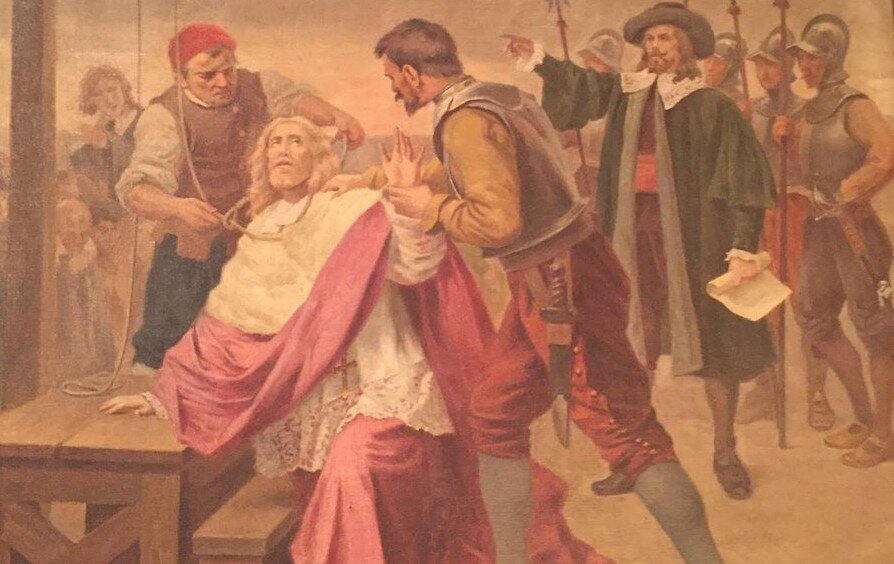
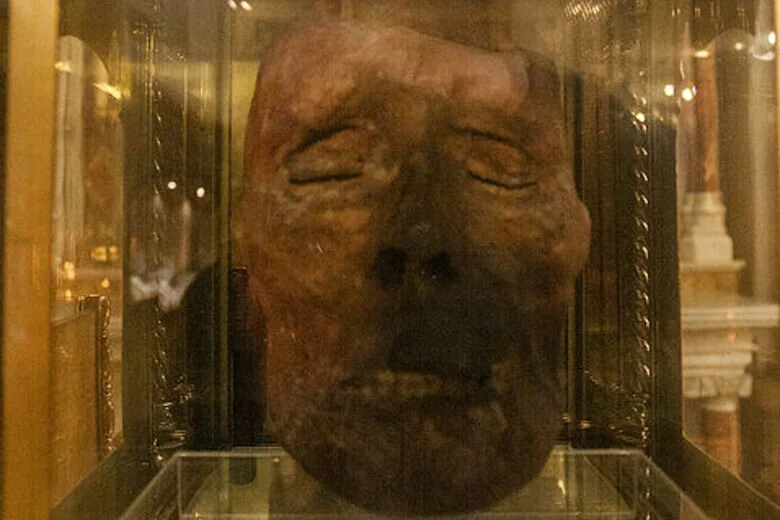
The Story of How St. Oliver's Head Ended up in Drogheda

St. Oliver Plunkett was found guilty of treason in 1681, before being hanged, drawn and quartered.

At Tyburn, his body was torched by the bloodthirsty Reformers in an act of depraved zealousness.

Painting of St. Oliver’s death in St. Peter’s Parish Church in Drogheda

Painting of St. Oliver’s death in St. Peter’s Parish Church in Drogheda

Oliver-Plunkett-1-e1499100762800.jpg

His head was eventually recovered from the fire and Dom Maurus Corker had it smuggled to the Benedictine Monastery in Lamspringe, Germany. Within the next few years, it was passed on to Cardinal Philip Howard OP at Rome, a friend of St. Oliver, who had helped the Archbishop of Armagh to return to Ireland safely after his ordination as Archbishop. From him, it passed to Oliver’s successor, Archbishop of Armagh Hugh McMahon, who returned the head to its rightful place in Ireland. McMahon brought the head to the Dominican Nuns at Siena, the prioress at the time being Sister Catherin Plunkett, St. Oliver’s grand niece.

As this came during the penal laws, when it was illegal to be a Catholic, much less a member of a religious order, the order and the relic both had to survive together in secret. Having originally started out in a mud cabin, the sisters moved to other parts of Drogheda over the years, always maintaining the veneer of being a boarding house for women rather than a convent.

When Pope Benedict XV declared Plunkett a martyr for the faith on St. Patrick’s Day in 1918, it was inevitable that his head eventually would have to be moved (incidentally it has been claimed that Benedict XV also blessed plans for the Easter Rising when Count Plunkett brought documents written by his son Joseph Mary Plunkett, apparently a distant relative of St. Oliver). Count Plunkett was in the audience on the day that Oliver was beatified.

head.jpg

The sisters had kept the head in good condition for 200 years at this point, with a shrine surrounding the relic at their convent.

Cardinal Michael Logue then requested that the sisters transfer his head to the St. Peter’s Parish Church in Drogheda, which fulfilled an agreement made initially by the sisters when they promised to return it to a successor of McMahon. The head had not been entirely hidden away however before this, in 1881 thousands had flocked to the convent to venerate St. Oliver on the 200 anniversary of his death.

In 1920, which the War of Independence raging, St. Oliver was beatified and his head transferred to the parish church in Drogheda with Eucharistic processions in celebration.

Pope Paul VI visited the shrine on a number of occasions in order to venerate it, eventually lifting Oliver to sainthood during his pontificate, in 1975.

Pope John Paul II visited Drogheda in 1979 and venerated the shrine also.

Most of the information in this article is sourced from Tommy Burns’s book ‘St. Oliver Plunkett: Two Centenaries 1921-2021’


Another Canadian Church Burns as Propaganda Prevails

In a now forgotten 2014 article, The Irish Times, wrote the headline ‘The Trouble with the Septic Tank Story’. The article brilliantly outlined some of the problems with the Tuam story, which had morphed from a tale regarding children without proper records, into an urban myth that involved the public imagining 800 babies being ‘dumped’ in a ‘septic tank’ on site.

That story begins with:

‘I never used that word ‘dumped’,” Catherine Corless, a local historian in Co Galway, tells The Irish Times. “I never said to anyone that 800 bodies were dumped in a septic tank. That did not come from me at any point. They are not my words.”

The story that emerged from her work was reported this week in dramatic headlines around the world.

“Tell us the truth about the children dumped in Galway’s mass graves” – The Guardian.

“Bodies of 800 babies, long-dead, found in septic tank at former Irish home for unwed mothers” – The Washington Post.

“Nearly 800 dead babies found in septic tank in Ireland” – Al Jazeera.

It proceeds:

The children’s names, ages, places of birth and causes of death were recorded. The average number of deaths over the 36-year period was just over 22 a year. The information recorded on these State- issued certificates has been seen by The Irish Times; the children are marked as having died variously of tuberculosis, convulsions, measles, whooping cough, influenza, bronchitis and meningitis, among other illnesses.

The deaths of these 796 children are not in doubt. Their numbers are a stark reflection of a period in Ireland when infant mortality in general was very much higher than today, particularly in institutions, where infection spread rapidly. At times during those 36 years the Tuam home housed more than 200 children and 100 mothers, plus those who worked there, according to records Corless has found.

What has upset, confused and dismayed her in recent days is the speculative nature of much of the reporting around the story, particularly about what happened to the children after they died. “I never used that word ‘dumped’,” she says again, with distress. “I just wanted those children to be remembered and for their names to go up on a plaque. That was why I did this project, and now it has taken [on] a life of its own.”

We are not going to focus too much on the contents, but you get the drift, the initial claim took on a life of its own. You can read the full article here: Tuam mother and baby home: the trouble with the septic tank story (irishtimes.com)

Another story has now taken on a life of its own, the Canadian Residential School story.

The initial claim of finding children buried in a mass grave at a home run over the course of a century has now morphed into an ever evolving urban myth where the Catholic Church ran a house of horrors where children were intentionally murdered and then dumped into a mass grave.

Never mind that the British established the Mother and Baby system in Ireland and that Anglicans, not Catholics, established the residential system in Canada for natives, the media is now determined to deliberately try to provoke violence against churches. This is a very serious situation and timidity is not the solution.

The Canadian bishops must hire historians, open their records and deal with this situation head on and immediately. Churches cannot be allowed to burn like this.