Yet Another New York Church Attacked

Anyone with ears to hear can discern what way the wind is blowing in North America.

Canada has had more anti Catholic terror attacks than those that precipitated the Red Terror in the Spanish Civil War that saw thousands of priests and nuns murdered, tortured and raped.

In the United States of America too, BLM activists such as Protestant pastor Shaun King have incited a Taliban like iconoclast crisis against Catholic statues and churches in the past year.

New York in particular has been a hot bed of terrorism against Catholics, with dozens of attacks on Catholic sites in the past year, ignored by political figures and the mainstream media.

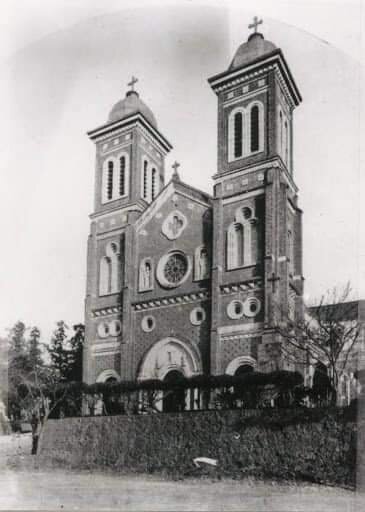
Once again, a deranged psychopath, possibly buoyed by the largely Protestant BLM movement’s call for attacks on Catholic churches and statues, has attacked a New York church. This time it was a newly installed statue of St. Bernadette in Queens at St. Michael's Church.

The Taliban like terrorist smashed up the arms of St. Bernadette's statue. Parish priest Father Do commented: ‘We never thought about these things when we built these churches; everything was out in the open, but now we have to protect ourselves.”

The priest charitably said that he suspected mental illness rather than anti Catholicism, yet the recent evidence in North America, especially in New York, would suggest otherwise.

With an election looming in Canada, North America's Taliban like persecution of Catholics needs to be a serious issue for Catholic voters.

https://www.catholicarena.com/latest/brooklynchuechattackmay21

https://www.catholicarena.com/latest/newyorkstatue

James Foley's Devotion to the Rosary in Captivity

In 2014, both Syria and Libya were still reeling from the calamity of the Obama/Clinton/Biden interventions in their countries.

One man who suffered while reporting both disasters as a journalist was James Foley. Foley was first imprisoned in Libya in 2011, before travelling to Syria, where he ultimately met his death in 2014.

When he was imprisoned in 2011 in Libya, he prayed the Rosary each day, counting the prayers using his knuckles.

In an article he wrote not long after he said:

I began to pray the rosary. It was what my mother and grandmother would have prayed. I said 10 Hail Marys between each Our Father. It took a long time, almost an hour to count 100 Hail Marys off on my knuckles. And it helped to keep my mind focused.

Clare and I prayed together out loud. It felt energizing to speak our weaknesses and hopes together, as if in a conversation with God, rather than silently and alone. …

One night, 18 days into our captivity, some guards brought me out of the cell. … Upstairs in the warden’s office, a distinguished man in a suit stood and said, “We felt you might want to call your families.”

I said a final prayer and dialed the number. My mom answered the phone. “Mom, Mom, it’s me, Jim.”

“Jimmy, where are you?”

“I’m still in Libya, Mom. I’m sorry about this. So sorry.”

After being considered missing for two years, a British Citizen who was a member of ISIS beheaded James Foley in Syria on August 19th 2014.

Since then, his family have held a Rosary for Peace in his memory.

New South Wales Catholics Fight Against Euthanasia

Since the inception of the lockdown crisis in March 2020, the talk of the necessity of saving lives has been undermined in many countries by efforts to legalise euthanasia in countries with severe restrictions.

In Ireland, the poor wording of the contemptibly named ‘Dying with Dignity Bill’ brought about its defeat, alongside virtually unanimous opposition from doctors and thousands of emails expressing concern over the legislation.

Now, in New South Wales, lockdown has coincided with efforts to legalise euthanasia and assisted suicide.

In a recent statement, Archbishop Anthony Fisher OP has pointed out the sick nature of using a time where elderly people are dying in large numbers to legalise an industry which will see them being pressured into dying:

There’s never a good time to introduce laws that sanction the killing of vulnerable human beings such as the terminally ill, elderly, frail and suffering. But to introduce such a bill in the middle of a pandemic and amidst lockdowns adversely affecting the lives and livelihoods of millions seems especially insensitive.

The people of NSW are currently accepting significant restrictions on their personal autonomy in order to protect those most at risk – particularly the elderly. In response to the latest wave of COVID-19, we’ve had a month of lockdown already and more is likely. Many of us have been unable to visit our elderly parents at home, in hospital or in aged care. Our sick and elderly have already suffered 17 months of increasing isolation and right now that is being intensified. Meanwhile, people are losing their jobs, businesses are going under, families are under the pressures of schooling and working from home, people’s movements are severely restricted, and depression rates are up. The last thing we need to hear from our leaders in this situation is a pro-suicide message or any suggestion that the elderly and dying no longer deserve the resources or protections given to the rest of us.

The NSW Government is rightly focused on getting us safely vaccinated and out of lockdown as soon as possible, and leading the process of social and economic recovery.

The NSW Health System is rightly focused on keeping the elderly and sick safe, and ensuring the system can cope with the increasing pressures upon it. Our health professionals do not want a bruising controversy that will further disrupt their already very pressured work environment.

In the face of our present emergency precious parliamentary time and health resources should not be diverted to other causes, and especially not to a bill that would enable a small group of highly autonomous people to make their doctors complicit in their suicide. The state-sanctioned killing of the sick, elderly and frail of New South Wales is the last thing we need right now! I call on the Government to keep us focused on the present challenges and once they have been met, let us focus on medicine at its best and not its most lethal.


Fisher’s strong words have been mirrored by John Whitehall of the Christian Medical and Dental Fellowship of Australia (CMDFA) has stated that:

The CMDFA agrees with the World Medical Association that the practice of euthanasia and physician-assisted suicide is unethical and must be condemned by the medical profession

To date, 7,000 people have signed a petition against euthanasia being introduced in New South Wales. Raise your voice to protect life - Hope Australia (noeuthanasia.org.au)

Tomorrow, a Zoom Conference will take place with Former Australian Prime Minister Tony Abbott, who is a practicing Catholic. It is being hosted by the University of Technology, Sydney. The title of the conference is ‘Ethics and the Politics of Euthanasia’.

As the culture of death continues to destroy Western Civilisation, perhaps euthanasia will serve as a bridge too far for those countries still holding out on legalising one of the most crass and cruel forms of coercion towards the most vulnerable.

You can read some of our previous articles on euthanasia below.

Catholic Adventurer Evacuated from Aghanistan

There have not been many humorous angles to the Taliban’s victory over the United States Army and NATO in Afghanistan this week.

One story that has given many people a laugh however has been that of Miles Routledge, the English Catholic adventurer who casually took a dark tourist trip to the country, only for the Taliban to take over while he was there. What started off as a bit of fun, ended up with Routledge being airlifted on a cramped military plane out of the country in the middle of the night.

Miles began his public journey with posts on 4chan, Facebook and Twitch. He wrote:

Decided to pop down to Afghanistan for a few days, never been before. Just goofing off and soaking in the sun. Seems more peaceful than London to me.

Some commenters disbelieved his story, yet he posted photographs and time stamps to prove that his story was true.

He then posted a screenshot of his credit card, which held the title ‘Lord Routledge’, evidently because he had convinced the bank of his titular importance. He joked (we assume) that this would help him in convincing the Taliban not to kill him.

E81nEVWXsAApzf2.jpg

He also posted pictures of himself beside guns on the streets of Kabul.

As his story spread and things in Kabul deteriorated, Miles posted photos of himself brandishing a cross and confirmed that he was a Catholic. As violence spread, he stated that he was beginning to grow anxious and was struggling to keep water down. He stated that he was praying every 20 minutes as his situation began to look less like fun and more like a threat to his life.

He stated ‘I’ve seen too many dead people. I’ve just wanted this whole thing to be a little charity thing where I can explore a weird country but I’ve mentally broke down’.

He also wrote:

''I was fully prepared for death, I accepted it. This trip has been a test of God. I'm very religious so I believe I'll be looked after. If I die, I’ll die happy and religious and proud.''

Last night, he was among those on a large RAF military plane who were evacuated to Dubai from Kabul.

Who was Teilhard de Chardin and Should Catholics Read Him?

In the previous few articles on the New Age, it is clear to see that New Age thought does not just contain errors but that it contains demons who are leading the world astray. As can be seen with the Vatican’s approval of someone like Chopra speaking at the fifth International conference - Exploring the Mind, Body and Soul - Unite to Prevent & Unite to Cure and from the evident infestation of new age practices in Irish Catholic culture, it is clear that it is a major problem afflicting the Church. It is worth asking how did it work its way into the Church and where are things heading with society as a whole. New Age thought has many overlaps with other scenarios that are playing out around the world, and it can be seen that the New Age movement (or occultism), eugenics movement and the climate change movement all have the same ruler, or deceiver, that deceiving ruler being Satan himself.

In some ways the quote from Levay in the Reiki article in reference to New Age - “trying to play the Devil’s game without using His Infernal name’’, could be applied to more than just the New Age. One of the ways that the dangerous lies of New Age thought entered the Church was through a man who, according to some, could have been possessed. That man was the French Jesuit Priest named Teilhard de Chardin. Many claim he was possessed not just because of his many heresies but because of one of Teilhard's writings in particular where he describes an encounter with an entity that took possession of him. Describing his experience in the third person, Chardin wrote that: ‘‘the Thing swooped down. . . Then, suddenly, a breath of scorching air passed his forehead, broke through the barrier of his closed eyelids, and penetrated his soul. The man felt he was ceasing to be merely himself; an irresistible rapture took possession of him as though all the sap of all living things, flowing at one and the same moment into the too narrow confines of his heart, was mightily refashioning the enfeebled fibers of his being . . . And at the same time the anguish of some superhuman peril oppressed him, a confused feeling that the force which had swept down upon him was equivocal, turbid, the combined essence of evil and goodness . . . “You called me here: here I am” [said “the Thing”]. “Grown weary of abstractions, of attenuations, of the wordiness of social life, you wanted to pit yourself against Reality entire and untamed . . . I was waiting for you in order to be made holy. And now I am established on you for life, or for death . . . He who has once seen me can never forget me: he must either damn himself with me or save me with himself.”

Following his encounter with this entity Teilhard began to write about and spread his diabolical lies about God. He spread lies about Jesus, spread lies about evolution and spread his dangerous evil beliefs on population control. He spoke of the universe "evolving" towards God in ways quite similar to that of Deepak Chopra and many new age teachers who speak of becoming one with the universe or of evolving towards god consciousness. Teilhard is quoted as saying things such as - "Christ saves. But must we not hasten to add that Christ, too, is saved by Evolution?" (Le Christique, 1955) ,

"I want to teach people how to see God everywhere, to see Him in all that is hidden, most solid, and most ultimate in the world. I am essentially Pantheist in my thinking and in my temperament."

"According to my own principles, I cannot fight against Christianity; I can only work inside it by trying to transform and convert it. A revolutionary attitude would be much easier, and much more pleasant, but it would be suicidal. So I must go step by step, tenaciously." (Letter, Mar. 21, 1941)

In 1926 Teilhard was forbidden from teaching by the Catholic Church. In the following years of his life, he was forbidden from writing or teaching on philosophical subjects, The Holy Office forbade his books from being kept in libraries, forbade his books from being translated into other languages and forbade them from being sold in Catholic bookstores. At one point , Pope Pius XII described Teilhard’s works as a cesspool of errors.

Despite all of this, his poison had become widely accepted by many in the Church. Although not every modernist plunged to the depths of Teilhard, many embraced his teachings in one form or another including those involved in the 2nd Vatican Council such as Cardinal Henri de Lubac who wrote a number of books in the 1960s on Chardin's theology. In one of Henri de Lubac's books called "The Religion of Teilhard de Chardin", de Lubac states - “We need not concern ourselves with a number of detractors of Teilhard, in whom emotion has blunted intelligence”

The acceptance of Teilhard's poisonous lies about how all is evolving towards god consciousness gave way to the lies that all religions lead to God, hence one of the reasons we now see many people in the Church professing acceptance of all religions. They have all forgotten or choose to ignore that God has told us that all the gods of the gentiles are demons,Psalm 95:5 "For all the gods of the Gentiles are devils: but the Lord made the heavens" and they have forgotten or choose to ignore the infallibly declared Dogma of Outside the Church.

“The Most Holy Roman Church firmly believes, professes and preaches that none of those existing outside the Catholic Church, not only pagans, also Jews, heretics, and schismatics can ever be partakers of eternal life, but that they are to go into the eternal fire ‘which was prepared for the devil and his angels’ (Mt. 25:41) unless before death they are joined with Her... No one, let his almsgiving be as great as it may, no one, even if he pour out his blood for the Name of Christ can be saved unless they abide within the bosom and unity of the Catholic Church.”

-Pope Eugene IV, ex cathedra, Council of Florence, Cantate Domino (1441 AD)

Since Vatican II religious indifferentism, a heresy which Pope Gregory XVI condemned in Mirari Vos, has become widespread and with increasing pace is leading to more and more apostasy from within. From interreligious prayer meetings to pachamama idolatry. From Coexist initiatives to Abrahamic temples. All this amounts to a betrayal of God who is deserving of all our love. Now this week we will witness the Vatican insult God yet again by allowing notorious New Age advocates to spew their diabolical nonsense at the Vatican international conference. Catholics cannot help but to be worried at what might come next.

The teachings of the likes of Chardin and Chopra ultimately lead to the worship of the earth and created things rather than worship of God. In their twisted views the earth itself is even a god because everyone and everything is all "one" advancing and evolving towards "god consciousness". It took many many years for their slippery lies to culminate in the Pachamama outrage in the Vatican in 2019. While those in the Vatican threw false smoke screens at Catholics and the general media about the Amazon synod being about discussing female ordination and priests being allowed to marry, many Catholics missed the blatant new age paganism being openly promoted. Throughout the Amazon Synod documents, there were references to "Mother Earth" and during the synod many Catholics were scandalized by the idolatry on display. Catholics around the world were shocked as Statues of Pachamama were placed in Churches and even brought into St Peter's Basilica. As Cardinal Gerhard Müller stated -

“they have no right to introduce Pagan or non-Catholic rites into the Church’s liturgy...bringing the idols into the Church was a grave sin, a crime against the divine law.” Thanks to the actions of one faithful Catholic, a number of those statues were removed from the church of Santa Maria in Traspontina to which Cardinal Gerhard Müller referred to when he said - “to take them out and throw them into the river might be against the human law, but to take idols into a Church was a grave sin, a crime against the Divine Law. There’s a great difference.”

It is worth noting that the term "mother earth" is also a common term within New Age practices which we discussed in the preceding articles. It is especially common in the satanic reiki in which they believe that the earth is a source of "power" and "energy". They also call upon the powers of "mother earth" in their invocations. And in ways quite similar to how Catholics would say render to God what belongs to God, those in the new age thought would say render to mother earth what belongs to mother earth. From this, it is clear to see another overlap between new age thought and Pachamama.

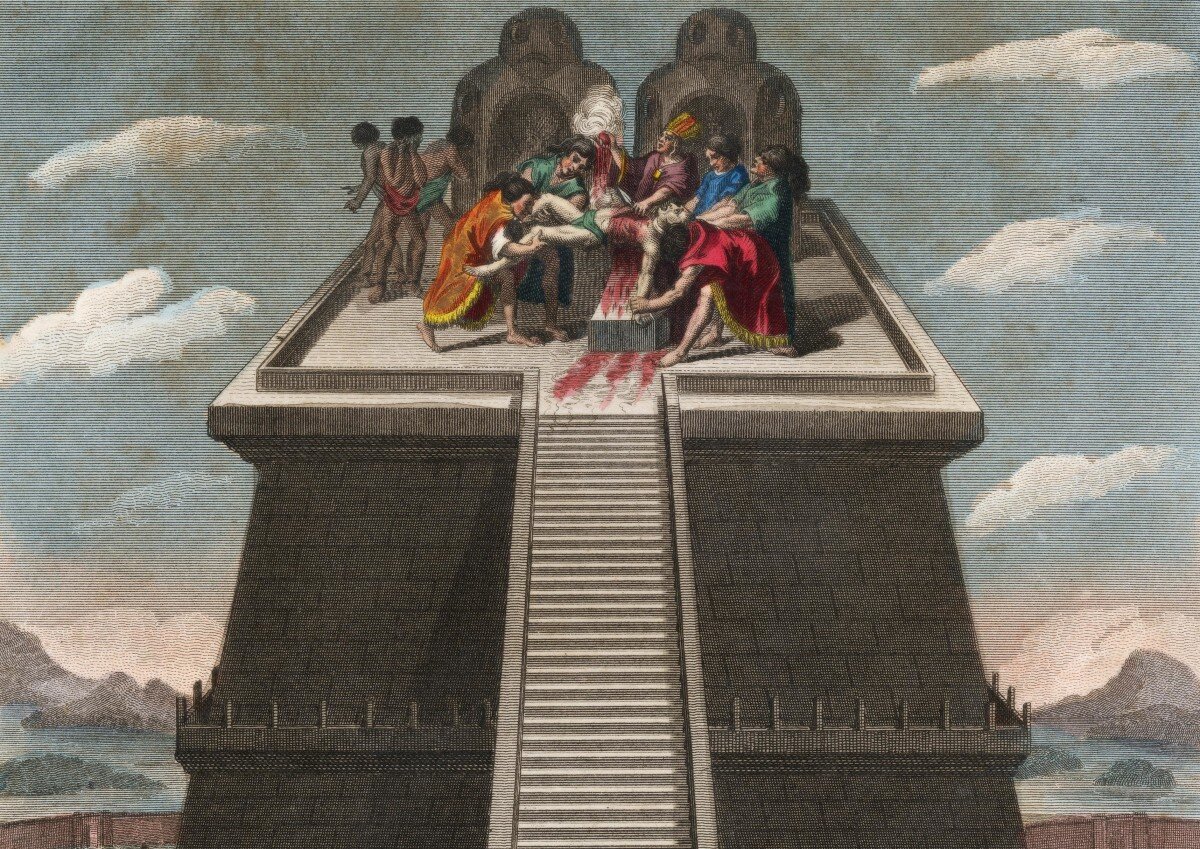
Pachamama is an Incan fertility goddess also known as "mother earth" which can be traced back to the Aztecs and also the Chimú tribe. The Chimú tribe is responsible for the largest child sacrificial site that has ever been found to date which involved the murder of 140 children and 220 young Llamas sacrificed to what was ultimately Pachamama. As one priest named Fr Nix has stated, It is worth asking is Pachamama the same demon behind abortion ? It is clear to see how the rise in occultism in Ireland has led to acceptance of horrors like abortion. As people have walked away from the one true Faith, The One Holy Catholic and Apostolic Church, either through ignorance or malice they have ended up falling into occultism via practices like reiki and yoga. These practices have thought them the motto of Satan, do what thou wilt. It has also led them to revere the earth in ways that they should revere God. Because their minds are darkened they now also easily fall into the lie of climate change extremism where they must do all they can to protect "mother earth" and to cease their sins against the climate, but yet they care little about sins against God.

To further illustrate where all these diabolical lies lead, Pachamama is also related to the climate change movement as can clearly be seen in the group named The Pachamama Alliance. As Liz Yore from the Fatima center stated, the moment all the population control advocates had their big aha moment was when they decided to take the idea of global warming and run with it in order to spread the lie that there are too many people in the world in order to get people to accept population control. One such person who has bought into this lie is Jane Goodall who is also one of the chosen speakers at the Vatican conference Exploring the Mind, Body and Soul, body. Jane Goodall is quoted as saying - “All these (environmental) things we talk about wouldn’t be a problem if there was the size of population that there was 500 years ago.’’

Now we have the spirit of Pachamama across the world pushing the climate change extremism and the lie of overpopulation in which the abortion industry offfers up sacrifices to appease "mother earth" and we also have evil campaigns such as oneplanetonechild.org being embraced by governments around the world. Even in Ireland there are now cars driving around with bumper stickers promoting one child policy. How is this related to Teilhard de Chardin ?

Because evolution theory, eugenics, occultism (or New Age thought) and demon worship go hand in hand. With Teilhard de Chardin it can be seen how his acceptance of one error led to acceptance of many errors. His belief of everything evolving towards god consciousness gave way to believing that there was no sin and that, as is popular among evolutionists, his evolution theory gave way to his support for eugenics as can be seen from another one of Teilhard's quotes - "In order to continue advancing, humanity must come up with effective control, both in quantity and quality, of reproduction in order to avoid overpopulation of the earth or its invasion by less satisfactory ethnic groups''.

Another of Teilhard’s quotes from 1951 states his belief in the “need” for eugenics - “We must recognize...the vital importance of a collective quest of discovery and invention no longer inspired solely by a vague delight in knowledge and power, but by the duty and the clearly-defined hope of gaining control (and so making use) of the fundamental driving forces of evolution. And with this, the urgent need for a generalized eugenics (racial no less than individual) directed, beyond all concern with economic or nutritional problems, towards a biological maturing of the human type and of the biosphere.”

That quote sounds like something which would come from the Nazi party, which is another thing to condsider. Roy Schoeman discusses in one of his talks how there were three streams which flowed into the culmination of the holocaust. Those were Occultism, Eugenics and Sexual depravity. We too are now up to our necks in all 3 of those streams which come straight from the pits of hell. Where will it culminate for us, unless people reject the lies from people like Chardin and Chopra and turn back to the One and Only Savior, Our Lord Jesus Christ.

Join Catholics around the world and fight to defend God's honour. Take up the rosary which Saint Padre Pio stated is the weapon for our times. Call out to the Holy Face of God , Numbers 10:35 " Arise, O Lord, and let thy enemies be scattered, and let them that hate thee, flee from before thy face." Although the situation in and out of the Church appears to be very dark, we know God wins and we know Our Lady has told us that in the end Her Immaculate Heart will triumph, so we look forward with hope.

Mícheál Benedictus

https://padreperegrino.org/2019/10/rc21/

Search Results for “integral ecology” – Padre Peregrino

Our Lady of Knock

On the 21st August 1879, Our Lady appeared to the people of Knock, Co. Mayo, Ireland. The country was facing a famine at that time, with Mayo one of the worst hit just as it had been during previous famines. 1879 also marked 50 years since the end of the Penal Laws in Ireland, which had forbidden Mass for centuries.

Unlike many other apparitions, Our Lady remained silent. Alongside her were St. John the Evangelist, St. Joseph and the image of the Lamb upon the altar. The locals who witnessed the event prayed for hours at the church after witnessing it.


Our Lady’s silence has been the subject of much debate, but perhaps it should remain so. Silence in prayer is always a sign of humility and reverence for the mysteriousness of our existence. If there is one thing that Ireland, and the world, needs now, it is that.

The witnesses to that event wrote down what they saw that day.

Here are a few of their statements in their own words:

PATRICK BYRNE

“I am sixteen years of age; I live quite near the chapel; I remember well the evening of the 21st August; it was Thursday, the evening before the Octave day. Dominick Byrne, junior, a namesake of mine, came to my house, and said that he had seen the biggest sight that ever he witnessed in his life. It was then after eight o’clock.

I came by the road on the west side of the church, I saw the figures clearly, fully, and distinctly, the Blessed Virgin, St. Joseph, and that of a bishop, said to be St. John the Evangelist. (Young Byrne then told what he saw regarding the vision, just as it has been described already by several persons who were present. The young fellow showed by his hands and position how the image or apparition of the Blessed Virgin Mary and that of St. Joseph and St. John stood). I remained only ten minutes, and then I went away. All this happened between a quarter or so past eight o‘clock and half past nine’’

DOMINICK BYRNE

“I am brother of Mary Byrne, who has given evidence already; I live near the chapel of Knock. My age is twenty years. On the occasion when my sister came about eight o’clock on the evening of the 21st August into our house, she exclaimed: ‘Come Dominick, and see the image of the Blessed Virgin, as she had appeared to us down at the chapel.’ I said: What image?” and then she told me, as she has already described it for your Reverence in her testimony; she told me all she was after seeing. I then went with her, and by this time some ten or twelve people had been collected around the place, namely, around the ditch or wall fronting the gable, where the vision had been seen, and to the south of the schoolhouse.

Then I beheld the three likenesses or figures that have been already described, The Blessed Virgin, St. Joseph, and St. John, as my sister called the bishop, who was like one preaching, with his hand raised towards the shoulder, and the forefinger and middle finger pointedly set, the other two fingers compressed by the thumb; in his left hand he held a book; he was so turned that he looked half towards the altar and half towards the people. The eyes of the images could be seen; they were like figures, inasmuch as they did not speak. I was filled with wonder at the sight I saw; I was so affected that I shed tears. I continued looking on for fully an hour, and then I went away to visit Mrs. Campbell, who was in a dying state; When we returned the vision had disappeared’’

MARGARET BYRNE (WIDOW)

“I, Margaret Byrne, nee Bourke, widow of Dominick Byrne, deceased, live near the chapel at Knock. I remember the evening of the 21st August. I was called out at about a quarter past eight o’clock by my daughter Margaret to see the vision of the Blessed Virgin Mary, and of the saints who appeared at the end of the little church. It was getting dark; it was raining. I came with others to the wall opposite the gable. I saw then and there distinctly the three images, one of the Blessed Virgin Mary, one of St. Joseph, and the third, as I learned, that of St. John the Evangelist.

I saw an altar, too, and a lamb on it somewhat whiter than the altar; I did not see the cross on the altar. The Blessed Virgin Mary appeared in the attitude of prayer, with her eyes turned up towards heaven, a crown on her head, and an outer garment thrown around her shoulders. I saw her feet. St. Joseph appeared turned towards the Blessed Virgin, with head inclined. I remained looking on for fully fifteen or twenty minutes; then I left and returned to my own house’’

Screenshot (305).png

JUDITH CAMPBELL

“I live at Knock, I remember the evening and night of the 21 August last. Mary Byrne called at my house about eight o’clock on that evening, and asked me to come up and see the great sight at the chapel. I ran up with her to the place, and I saw outside the chapel, at the gable of the sacristy facing the south, three figures representing St. Joseph, St. John and the Blessed Virgin Mary, also an altar, and the likeness of a lamb on it, with a cross at the back of the lamb. I saw a most beautiful crown on the brow or head of the Blessed Virgin. Our Lady was in the centre of the group, a small height above the other two; St. Joseph, St. John and the Blessed Virgin Mary, also an altar, and the likeness of a lamb on it, with a cross at the back of the lamb. I saw a most beautiful crown on the brow or head of the Blessed Virgin. Our Lady was in the centre of the group, a small height above the other two, St. Joseph to her right, and bent towards the Virgin, St. John, as we were led to call the third figure, was to the left of the Virgin, and in his left hand he held a book, his right hand was raised with the first and second fingers closed, and the forefinger and middle finger extended as if he were teaching. The night came on, and it was very wet and dark.

There was a beautiful light shining around the figures or likenesses that we saw. I went within a foot of them, none of us spoke to them, we believed they were St. Joseph and St. John the Evangelist, because some years ago, statues of St Joseph and of the Evangelist were in the chapel in Knock. All the figures were in white or in a robe of sliver-like whiteness, St. John wore a small mitre. Though it was raining, the place in which the figures appeared was quite dry.”


3-300x286.jpg

American Media Delights At Cardinal Burke Illness

Cardinal Raymond Leo Burke has long been a hate figure for mainstream media, but the levels of depravity that they have stooped to this week are beyond the realms of basic human decency. In a week where the ascent to power of the Taliban has been seen as a victory for barbarity, one has to wonder if even the Taliban would behave like those Western journalists who are taunting Cardinal Burke and spreading lies about him as he lies on a ventilator, fighting for his life.

In a video for CNN, ‘journalist’ Polo Sandoval reported ‘conservative Cardinal Raymond Leo Burke, American Cardinal Prelate of the Roman Catholic Church, who spread misinformation about coronavirus vaccines before being hospitalized himself and put on a ventilator’. The nasty and dishonest piece slanders the ill Cardinal Burke by saying, ‘He helped fuel baseless conspiracy theories about the vaccine and spread misinformation about coronavirus’. Polo then criticised Burke for calling Coronavirus ‘The Wuhan Virus’, in apparent outrage that at the suggestion that ‘China was to blame for the outbreak’. The bottom of the screen repeatedly mocked Burke during the video, stating ‘Vaccine skeptic Cardinal now on ventilator: pray for me’. Another message at the bottom of the screen claimed that Burke had implied that Covid vaccines would lead to people being micro chipped.

Burke said no such thing. CNN are spreading misinformation. The cardinal stated that some people want the latter, in accordance with a China like social credit system. In 1999, Polo’s employer were platforming those who wanted to plant microchips under people’s skin. CNN - Is human chip implant wave of the future? - January 14, 1999 In Sweden, micro chipping is already taking place, with around 5-10,000 already chipped. ID, wallet, keys all in your hand: Sweden moves into the future with microchipping (nbcnews.com) Thousands Of Swedes Are Inserting Microchips Under Their Skin : NPR CNN’s dishonesty is blatant in trying to encourage ill will towards the sickly Cardinal Burke, yet their clip of Cardinal Burke actually refutes their own bizarre claim, as he says no such thing.

Other outlets followed their lead. In a poorly written article at The Daily Beast, with the gleeful subheading ‘Divine Intervention’, Barbara Latza Nadeau claimed that:

The 73-year-old cardinal has shown himself to be a COVID-19 denier, publicly scoffing at Italy’s strict lockdown measures during the height of the pandemic and was even seen strolling around Rome mask-free even when face coverings were mandated outside

One Twitter user quickly pointed out that this was patently false.

Nadeau previously spread an incredibly insane conspiracy theory which claimed that Cardinal Burke was working with Matteo Salvini and Steve Bannon to ‘take down’ Pope Francis. Steve Bannon, Cardinal Burke, Minister Salvini, and the Plot to Take Down Pope Francis (thedailybeast.com)

There are many more articles on this topic, many of them by those who falsely conflate Cardinal Burke’s warnings of technocracy with being a ‘vaccine skeptic’, but once you have come across those two you have read them all.

Cardinal Burke was not, as these outlets claim, a ‘vaccine skeptic’.

You can hear him in the video below, correctly pointing out that ‘certain forces’ who hate family and nations have used the current crisis to ‘advance their evil agenda’.

In the full video from which that extract comes, Cardinal Burke criticises Marxist materialism and the media.

The latest news regarding Cardinal Burke’s illness is not good, with reports of him now having been placed in an artificial coma. One American celebrated, stating that he hopes that Cardinal Burke ‘enjoys his coma’ before falsely claiming that Cardinal Burke had ‘badmouthed the vaccine’.

Meanwhile, as American liberals wax lyrical about the Taliban, perhaps they should look closer to home for savagery, as they taunt and slander a man when he is at his weakest, all because he dared to criticise the mainstream media and make them reflect on their own lives.

Our Lord did warn us that they would hate us as they hated Him.

Hilaire Belloc's Islam Prediction

In 1938, Hilaire Belloc discussed Islam, its rise and its reemergence. He discussed why it thrived where other heresies failed and also why it was likely to rise again in the Modern World. You can read this extract from ‘The Great Heresies' below.

It might have appeared to any man watching affairs in the earlier years of the seventh century say from 600 to 630 that only one great main assault having been made against the Church, Arianism and its derivatives, that assault having been repelled and the Faith having won its victory, it was now secure for an indefinite time.

Christendom would have to fight for its life, of course, against outward unchristian things, that is, against Paganism. The nature worshippers of the high Persian civilization to the east would attack us in arms and try to overwhelm us. The savage paganism of barbaric tribes, Scandinavian, German, Slav and Mongol, in the north and centre of Europe would also attack Christendom and try to destroy it. The populations subject to Byzantium would continue to parade heretical views as a label for their grievances. But the main effort of heresy, at least, had failed so it seemed. Its object, the undoing of a united Catholic civilization, had been missed. The rise of no major heresy need henceforth be feared, still less the consequent disruption of Christendom.

By A.D. 630 all Gaul had long been Catholic. The last of the Arian generals and their garrisons in Italy and Spain had become orthodox. The Arian generals and garrisons of Northern Africa had been conquered by the orthodox armies of the Emperor.

It was just at this moment, a moment of apparently universal and permanent Catholicism, that there fell an unexpected blow of overwhelming magnitude and force. Islam arose_quite suddenly. It came out of the desert and overwhelmed half our civilization.

Islam_the teaching of Mohammed_conquered immediately in arms. Mohammed's Arabian converts charged into Syria and won there two great battles, the first upon the Yarmuk to the east of Palestine in the highlands above the Jordan, the second in Mesopotamia. They went on to overrun Egypt; they pushed further and further into the heart of our Christian civilization with all its grandeur of Rome. They established themselves all over Northern Africa; they raided into Asia Minor, though they did not establish themselves there as yet. They could even occasionally threaten Constantinople itself. At last, a long lifetime after their first victories in Syria, they crossed the Straits of Gibraltar into Western Europe and began to flood Spain. They even got as far as the very heart of Northern France, between Poitiers and Tours, less than a hundred years after their first victories in Syria_in A.D. 732.

They were ultimately thrust back to the Pyrenees, but they continued to hold all Spain except the mountainous north-western corner. They held all Roman Africa, including Egypt, and all Syria. They dominated the whole Mediterranean west and east: held its islands, raided and left armed settlements even on the shores of Gaul and Italy. They spread mightily throughout Hither Asia, overwhelming the Persian realm. They were an increasing menace to Constantinople. Within a hundred years, a main part of the Roman world had fallen under the power of this new and strange force from the Desert.

Such a revolution had never been. No earlier attack had been so sudden, so violent or so permanently successful. Within a score of years from the first assault in 634 the Christian Levant had gone: Syria, the cradle of the Faith, and Egypt with Alexandria, the mighty Christian See. Within a lifetime half the wealth and nearly half the territory of the Christian Roman Empire was in the hands of Mohammedan masters and officials, and the mass of the population was becoming affected more and more by this new thing.

Mohammedan government and influence had taken the place of Christian government and influence, and were on the way to making the bulk of the Mediterranean on the east and the south Mohammedan.

We are about to follow the fortunes of this extraordinary thing which still calls itself Islam, that is, "The Acceptation" of the morals and simple doctrines which Mohammed had preached.

I shall later describe the historical origin of the thing, giving the dates of its progress and the stages of its original success. I shall describe the consolidation of it, its increasing power and the threat which it remained to our civilization. It very nearly destroyed us. It kept up the battle against Christendom actively for a thousand years, and the story is by no means over; the power of Islam may at any moment re-arise.

But before following that story we must grasp the two fundamental things_, the nature of Mohammedanism; second, the essential cause of its sudden and, as it were, miraculous success over so many thousands of miles of territory and so many millions of human beings.

Mohammedanism was a : that is the essential point to grasp before going any further. It began as a heresy, not as a new religion. It was not a pagan contrast with the Church; it was not an alien enemy. It was a perversion of Christian doctrine. It vitality and endurance soon gave it the appearance of a new religion, but those who were contemporary with its rise saw it for what it was_not a denial, but an adaptation and a misuse, of the Christian thing. It differed from most (not from all) heresies in this, that it did not arise within the bounds of the Christian Church. The chief heresiarch, Mohammed himself, was not, like most heresiarchs, a man of Catholic birth and doctrine to begin with. He sprang from pagans. But that which he taught was in the main Catholic doctrine, oversimplified. It was the great Catholic world_on the frontiers of which he lived, whose influence was all around him and whose territories he had known by travel_which inspired his convictions. He came of, and mixed with, the degraded idolaters of the Arabian wilderness, the conquest of which had never seemed worth the Romans' while.

He took over very few of those old pagan ideas which might have been native to him from his descent. On the contrary, he preached and insisted upon a whole group of ideas which were peculiar to the Catholic Church and distinguished it from the paganism which it had conquered in the Greek and Roman civilization. Thus the very foundation of his teaching was that prime Catholic doctrine, the unity and omnipotence of God. The attributes of God he also took over in the main from Catholic doctrine: the personal nature, the all-goodness, the timelessness, the providence of God, His creative power as the origin of all things, and His sustenance of all things by His power alone. The world of good spirits and angels and of evil spirits in rebellion against God was a part of the teaching, with a chief evil spirit, such as Christendom had recognized. Mohammed preached with insistence that prime Catholic doctrine, on the human side_the immortality of the soul and its responsibility for actions in this life, coupled with the consequent doctrine of punishment and reward after death.

If anyone sets down those points that orthodox Catholicism has in common with Mohammedanism, and those points only, one might imagine if one went no further that there should have been no cause of quarrel. Mohammed would almost seem in this aspect to be a sort of missionary, preaching and spreading by the energy of his character the chief and fundamental doctrines of the Catholic Church among those who had hitherto been degraded pagans of the Desert. He gave to Our Lord the highest reverence, and to Our Lady also, for that matter. On the day of judgment (another Catholic idea which he taught) it was Our Lord, according to Mohammed, who would be the judge of mankind, not he, Mohammed. The Mother of Christ, Our Lady, "the Lady Miriam" was ever for him the first of womankind. His followers even got from the early fathers some vague hint of her Immaculate Conception.[1]

But the central point where this new heresy struck home with a mortal blow against Catholic tradition was a full denial of the Incarnation.

Mohammed did not merely take the first steps toward that denial, as the Arians and their followers had done; he advanced a clear affirmation, full and complete, against the whole doctrine of an incarnate God. He taught that Our Lord was the greatest of all the prophets, but still only a prophet: a man like other men. He eliminated the Trinity altogether.

With that denial of the Incarnation went the whole sacramental structure. He refused to know anything of the Eucharist, with its Real Presence; he stopped the sacrifice of the Mass, and therefore the institution of a special priesthood. In other words, he, like so many other lesser heresiarchs, founded his heresy on simplification.

Catholic doctrine was true (he seemed to say), but it had become encumbered with false accretions; it had become complicated by needless man-made additions, including the idea that its founder was Divine, and the growth of a parasitical caste of priests who battened on a late, imagined, system of Sacraments which they alone could administer. All those corrupt accretions must be swept away.

There is thus a very great deal in common between the enthusiasm with which Mohammed's teaching attacked the priesthood, the Mass and the sacraments, and the enthusiasm with which Calvinism, the central motive force of the Reformation, did the same. As we all know, the new teaching relaxed the marriage laws but in practice this did not affect the mass of his followers who still remained monogamous. It made divorce as easy as possible, for the sacramental idea of marriage disappeared. It insisted upon the equality of men, and it necessarily had that further factor in which it resembled Calvinism the sense of predestination, the sense of fate; of what the followers of John Knox were always calling "the immutable decrees of God."

Mohammed's teaching never developed among the mass of his followers, or in his own mind, a detailed theology. He was content to accept all that appealed to him in the Catholic scheme and to reject all that seemed to him, and to so many others of his time, too complicated or mysterious to be true. Simplicity was the note of the whole affair; and since all heresies draw their strength from some true doctrine, Mohammedanism drew its strength from the true Catholic doctrines which it retained: the equality of all men before God "All true believers are brothers." It zealously preached and throve on the paramount claims of justice, social and economic.

Now, why did this new, simple, energetic heresy have its sudden overwhelming success?

One answer is that it won battles. It won them at once, as we shall see when we come to the history of the thing. But winning battles could not have made Islam permanent or even strong had there not been a state of affairs awaiting some such message and ready to accept it.

Both in the world of Hither Asia and in the Graeco-Roman world of the Mediterranean, but especially in the latter, society had fallen, much as our society has today, into a tangle wherein the bulk of men were disappointed and angry and seeking for a solution to the whole group of social strains. There was indebtedness everywhere; the power of money and consequent usury. There was slavery everywhere. Society reposed upon it, as ours reposes upon wage slavery today. There was weariness and discontent with theological debate, which, for all its intensity, had grown out of touch with the masses. There lay upon the freemen, already tortured with debt, a heavy burden of imperial taxation; and there was the irritant of existing central government interfering with men's lives; there was the tyranny of the lawyers and their charges.

To all this Islam came as a vast relief and a solution of strain. The slave who admitted that Mohammed was the prophet of God and that the new teaching had, therefore, divine authority, ceased to be a slave. The slave who adopted Islam was henceforward free. The debtor who "accepted" was rid of his debts. Usury was forbidden. The small farmer was relieved not only of his debts but of his crushing taxation. Above all, justice could be had without buying it from lawyers. . . . All this in theory. The practice was not nearly so complete. Many a convert remained a debtor, many were still slaves. But wherever Islam conquered there was a new spirit of freedom and relaxation.

It was the combination of all these things, the attractive simplicity of the doctrine, the sweeping away of clerical and imperial discipline, the huge immediate practical advantage of freedom for the slave and riddance of anxiety for the debtor, the crowning advantage of free justice under few and simple new laws easily understood_that formed the driving force behind the astonishing Mohammedan social victory. The courts were everywhere accessible to all without payment and giving verdicts which all could understand. The Mohammedan movement was essentially a "Reformation," and we can discover numerous affinities between Islam and the Protestant Reformers_on Images, on the Mass, on Celibacy, etc.

The marvel seems to be, not so much that the new emancipation swept over men much as we might imagine Communism to sweep over our industrial world today, but that there should still have remained, as there remained for generations, a prolonged and stubborn resistance to Mohammedanism.

There you have, I think, the nature of Islam and of its first original blaze of victory.

We have just seen what was the main cause of Islam's extraordinarily rapid spread; a complicated and fatigued society, and one burdened with the institution of slavery; one, moreover, in which millions of peasants in Egypt, Syria and all the East, crushed with usury and heavy taxation, were offered immediate relief by the new creed, or rather, the new heresy. Its note was simplicity and therefore it was suited to the popular mind in a society where hitherto a restricted class had pursued its quarrels on theology and government.

That is the main fact which accounts for the sudden spread of Islam after its first armed victory over the armies rather than the people of the Greek-speaking Eastern Empire. But this alone would not account for two other equally striking triumphs. The first was the power the new heresy showed of absorbing the Asiatic people of the Near East, Mesopotamia and the mountain land between it and India. The second was the wealth and the splendour of the Caliphate (that is, of the central Mohammedan monarchy) in the generations coming immediately after the first sweep of victory.

The first of these points, the spread over Mesopotamia and Persia and the mountain land towards India, was not, as in the case of the sudden successes in Syria and Egypt, due to the appeal of simplicity, freedom from slavery and relief from debt. It was due to a certain underlying historical character in the Near East which has always influenced its society and continues to influence it today. That character is a sort of natural uniformity. There has been inherent in it from times earlier than any known historical record, a sort of instinct for obedience to one religious head, which is also the civil head, and a general similarity of social culture. When we talk of the age-long struggle between Asia and the West, we mean by the word "Asia" all that sparse population of the mountain land beyond Mesopotamia towards India, its permanent influence upon the Mesopotamian plains themselves, and its potential influence upon even the highlands and sea coast of Syria and Palestine.

The struggle between Asia and Europe swings over a vast period like a tide ebbing and flowing. For nearly a thousand years, from the conquest of Alexander to the coming of the Mohammedan Reformers (333 B.C. -634), the tide had set eastward; that is, Western influences_Greek, and then Greek and Roman_had flooded the debatable land. For a short period of about two and a half to three centuries even Mesopotamia was superficially Greek_in its governing class, at any rate. Then Asia began to flood back again westward. The old Pagan Roman Empire and the Christian Empire, which succeeded it and which was governed from Constantinople, were never able to hold permanently the land beyond the Euphrates. The new push from Asia westward was led by the Persians, and the Persians and Parthians (which last were a division of the Persians) not only kept their hold on Mesopotamia but were able to carry out raids into Roman territory itself, right up to the end of that period. In the last few years before the appearance of Mohammedanism they had appeared on the Mediterranean coast and had sacked Jerusalem.

Now when Islam came with its first furious victorious cavalry charges springing from the desert, it powerfully reinforced this tendency of Asia to reassert itself. The uniformity of temper which is the mark of Asiatic society, responded at once to this new idea of one very simple, personal form of government, sanctified by religion, and ruling with a power theoretically absolute from one centre. The Caliphate once established at Bagdad, Bagdad became just what Babylon had been; the central capital of one vast society, giving its tone to all the lands from the Indian borders to Egypt and beyond.

But even more remarkable than the flooding of all near Asia with Mohammedanism in one lifetime was the wealth and splendour and culture of the new Islamic Empire. Islam was in those early centuries (most of the seventh, all the eighth and ninth), the highest material civilization of our occidental world. The city of Constantinople was also very wealthy and enjoyed a very high civilization, which radiated over dependent provinces, Greece and the seaboard of the Aegean and the uplands of Asia Minor, but it was focussed in the imperial city; in the greater part of the country-sides culture was on the decline. In the West it was notoriously so. Gaul and Britain, and in some degree Italy, and the valley of the Danube, fell back towards barbarism. They never became completely barbaric, not even in Britain, which was the most remote; but they were harried and impoverished, and lacked proper government. From the fifth century to the early eleventh (say A.D. 450 to A.D. 1030) ran the period which we call "The Dark Ages" of Europe_in spite of Charlemagne's experiment.

So much for the Christian world of that time, against which Islam was beginning to press so heavily; which had lost to Islam the whole of Spain and certain islands and coasts of the central Mediterranean as well. Christendom was under siege from Islam. Islam stood up against us in dominating splendour and wealth and power, and, what was even more important, with superior knowledge in the practical and applied sciences.

Islam preserved the Greek philosophers, the Greek mathematicians and their works, the physical science of the Greek and Roman earlier writers. Islam was also far more lettered than was Christendom. In the mass of the West most men had become illiterate. Even in Constantinople reading and writing were not as common as they were in the world governed by the Caliph.

One might sum up and say that the contrast between the Mohammedan world of those early centuries and the Christian world which it threatened to overwhelm was like the contrast between a modern industrialized state and a backward, half-developed state next door to it: the contrast between modern Germany, for instance, and its Russian neighbor. The contrast was not as great as that, but the modern parallel helps one to understand it. For centuries to come Islam was to remain a menace, even though Spain was re-conquered. In the East it became more than a menace, and spread continually for seven hundred years, until it had mastered the Balkans and the Hungarian plain, and all but occupied Western Europe itself. Islam was the one heresy that nearly destroyed Christendom through its early material and intellectual superiority.

Now why was this? It seems inexplicable when we remember the uncertain and petty personal leaderships, the continual changes of local dynasties, the shifting foundation of the Mohammedan effort. That effort began with the attack of a very few thousand desert horsemen, who were as much drawn by desire for loot as by their enthusiasm for new doctrines. Those doctrines had been preached to a very sparse body of nomads, boasting but very few permanently inhabited centres. They had originated in a man remarkable indeed for the intensity of his nature, probably more than half convinced, probably also a little mad, and one who had never shown constructive ability_yet Islam conquered.

Mohammed was a camel driver, who had had the good luck to make a wealthy marriage with a woman older that himself. From the security of that position he worked out his visions and enthusiasms, and undertook his propaganda. But it was all done in an ignorant and very small way. There was no organization, and the moment the first bands had succeeded in battle, the leaders began fighting among themselves: not only fighting, but murdering. The story of all the first lifetime, and a little more, after the original rush_the story of the Mohammedan government (such as it was) so long as it was centred in Damascus, is a story of successive intrigue and murder. Yet when the second dynasty which presided for so long over Islam, the Abbasides, with their capital further east at Bagdad, on the Euphrates, restored the old Mesopotamian domination over Syria, ruling also Egypt and all the Mohammedan world, that splendour and science, material power and wealth of which I spoke, arose and dazzled all contemporaries, and we must ask the question again: why was this?

The answer lies in the very nature of the Mohammedan conquest. It did , as has been so frequently repeated, destroy at once what it came across; it did exterminate all those who would not accept Islam. It was just the other way. It was remarkable among all the powers which have ruled these lands throughout history for what has wrongly been called its "tolerance." The Mohammedan temper was not tolerant. It was, on the contrary, fanatical and bloodthirsty. It felt no respect for, nor even curiosity about, those from whom it differed. It was absurdly vain of itself, regarding with contempt the high Christian culture about it. It still so regards it even today.

But the conquerors, and those whom they converted and attached to themselves from the native populations, were still too few to govern by force. And (what is more important) they had no idea of organization. They were always slipshod and haphazard. Therefore a very large majority of the conquered remained in their old habits of life and of religion.

Slowly the influence of Islam spread through these, but during the first centuries the great majority in Syria, and even in Mesopotamia and Egypt, were Christian, keeping the Christian Mass, the Christian Gospels, and all the Christian tradition. It was they who preserved the Graeco-Roman civilization from which they descended, and it was that civilization, surviving under the surface of Mohammedan government, which gave their learning and material power to the wide territories which we must call, even so early, "the Mohammedan world," though the bulk of it was not yet Mohammedan in creed.

But there was another and it is the most important cause. The fiscal cause: the overwhelming wealth of the early Mohammedan Caliphate. The merchant and the tiller of the land, the owner of property and the negotiator, were everywhere relieved by the Mohammedan conquest; for a mass of usury was swept away, as was an intricate system of taxation which had become clogged, ruining the taxpayer without corresponding results for the government. What the Arabian conquerors and their successors in Mesopotamia did was to replace all that by a simple, straight system of tribute.

What ever was not Mohammedan in the immense Mohammedan Empire_that is, much the most of its population_was subject to a special tribute; and it was this tribute which furnished directly, without loss from the intricacies of bureaucracy, the wealth of the central power: the revenue of the Caliph. That revenue remained enormous during all the first generations. The result was that which always follows upon a high concentration of wealth in one governing centre; the whole of the society governed from that centre reflects the opulence of its directors.

There we have the explanation of that strange, that unique phenomenon in history_a revolt against civilization which did not destroy civilization; a consuming heresy which did not destroy the Christian religion against which it was directed.

The world of Islam became and long remained, the heir of the old Graeco-Roman culture and the preserver thereof. Thence was it that, alone of all the great heresies, Mohammedanism not only survived, and is, after nearly fourteen centuries, as strong as ever spiritually. In time it struck roots and established a civilization of its own over against ours, and a permanent rival to us.

Now that we have understood why Islam, the most formidable of heresies, achieved its strength and astounding success we must try to understand why, alone of all the heresies, it has survived in full strength and even continues (after a fashion) to expand to this day.

This is a point of decisive importance to the understanding not only of our subject but of the history of the world in general. Yet it is one which is, unfortunately, left almost entirely undiscussed in the modern world.

Millions of modern people of the white civilization_that is, the civilization of Europe and America_have forgotten all about Islam. They have never come in contact with it. they take for granted that it is decaying, and that, anyway, it is just a foreign religion which will not concern them. It is, as a fact, the most formidable and persistent enemy which our civilization has had, and may at any moment become as large a menace in the future as it has been in the past.

To that point of its future menace I shall return in the last of these pages on Mohammedanism.

All the great heresies_save this one of Mohammedanism_seem to go through the same phases.

First they rise with great violence and become fashionable; they do so by insisting on some one of the great Catholic doctrines in an exaggerated fashion; and because the great Catholic doctrines combined form the only full and satisfactory philosophy known to mankind, each doctrine is bound to have its special appeal.

Thus Arianism insisted on the unity of God, combined with the majesty and creative power of Our Lord. At the same time it appealed to imperfect minds because it tried to rationalize a mystery. Calvinism again had a great success because it insisted on another main doctrine, the Omnipotence and Omniscience of God. It got the rest out of proportion and went violently wrong on Predestination; but it had its moment of triumph when it looked as though it were going to conquer all our civilization_which it would have done if the French had not fought it in their great religious war and conquered its adherents on that soil of Gaul which has always been the battle ground and testing place of European ideas.

After this first phase of the great heresies, when they are in their initial vigour and spread like a flame from man to man, there comes a second phase of decline, lasting, apparently (according to some obscure law), through about five or six generations: say a couple of hundred years or a little more. The adherents of the heresy grow less numerous and less convinced until at last only quite a small number can be called full and faithful followers of the original movement.

Then comes the third phase, when each heresy wholly disappears as a bit of doctrine: no one believes the doctrine any more or only such a tiny fraction remain believers that they no longer count. But the social and moral factors of the heresy remain and may be of powerful effect for generations more. We see that in the case of Calvinism today. Calvinism produced the Puritan movement and from that there proceeded as a necessary consequence of the isolation of the soul, the backup of corporate social action, unbridled competition and greed, and at last the full establishment of what we call "Industrial Capital- ism" today, whereby civilization is now imperilled through the discontent of the vast destitute majority with their few plutocratic masters. There is no one left except perhaps a handful of people in Scotland who really believe the doctrines Calvin taught, but the spirit of Calvinism is still very strong in the countries it originally infected, and its social fruits remain.

Now in the case of Islam none of all this happened except the phase. There was no second phase of gradual decline in the numbers and conviction of its followers. On the contrary Islam grew from strength to strength acquiring more and more territory, converting more and more followers, until it had established itself as a quite separate civilization and seemed so like a new religion that most people came to forget its origin as a heresy.

Islam increased not only in numbers and in the conviction of its followers but in territory and in actual political and armed power until close on the eighteenth century. Less than 100 years before the American War of Independence a Mohammedan army was threatening to overrun and destroy Christian civilization, and would have done so if the Catholic King of Poland had not destroyed that army outside Vienna.

Since then the armed power of Mohammedanism has declined; but neither its numbers nor the conviction of its followers have appreciably declined; and as to the territory annexed by it, though it has lost places in which it ruled over subject Christian majorities, it has gained new adherents_to some extent in Asia, and largely in Africa. Indeed in Africa it is still expanding among the negroid populations, and that expansion provides an important future problem for the European Governments who have divided Africa between them.

And there is another point in connection with this power of Islam. Islam is apparently .

The missionary efforts made by great Catholic orders which have been occupied in trying to turn Mohammedans into Christians for nearly 400 years have everywhere wholly failed. We have in some places driven the Mohammedan master out and freed his Christian subjects from Mohammedan control, but we have had hardly any effect in converting individual Mohammedans save perhaps to some small amount in Southern Spain 500 years ago; and even so that was rather an example of political than of religious change.

Now what is the explanation of all this? Why should Islam alone of all the great heresies show such continued vitality?

Those who are sympathetic with Mohammedanism and still more those who are actually Mohammedans explain it by proclaiming it the best and most human of religions, the best suited to mankind, and the most attractive.

Strange as it may seem, there are a certain number of highly educated men, European gentlemen, who have actually joined Islam, that is, who are personal converts to Mohammedanism. I myself have known and talked to some half-dozen of them in various parts of the world, and there are a very much larger number of similar men, well instructed Europeans, who, having lost their faith in Catholicism or in some form of Protestantism in which they were brought up, feel sympathy with the Mohammedan social scheme although they do not actually join it or profess belief in its religion. We constantly meet men of this kind today among those who have travelled in the East.

These men always give the same answer_Islam is indestructible because it is founded on simplicity and justice. It has kept those Christian doctrines which are evidently true and which appeal to the common sense of millions, while getting rid of priestcraft, mysteries, sacraments, and all the rest of it. It proclaims and practices human equality. It loves justice and forbids usury. It produces a society in which men are happier and feel their own dignity more than in any other. That is its strength and that is why it still converts people and endures and will perhaps return to power in the near future.

Now I do not think that explanation to be the true one. All heresy talks in those terms. Every heresy will tell you that it has purified the corruptions of Christian doctrines and in general done nothing but good to mankind, satisfied the human soul, and so on. Yet every one of them Mohammedanism has faded out. Why?

In order to get the answer to the problem we must remark in what the fortunes of Islam have differed from those of all the other great heresies, and when we remark that I think we shall have the clue to the truth.

Islam has differed from all the other heresies in two main points which must be carefully noticed:

(1) It did not rise within the Church, that is, within the frontiers of our civilization. Its heresiarch was not a man originally Catholic who led away Catholic followers by his novel doctrine as did Arius or Calvin. He was an outsider born a pagan, living among pagans, and never baptized. He adopted Christian doctrines and selected among them in the true heresiarch fashion. He dropped those that did not suit him and insisted on those that did_which is the mark of the heresiarch_but he did not do this as from within; his action was external.

Those first small but fierce armies of nomad Arabs who won their astounding victories in Syria and Egypt against the Catholic world of the early seventh century were made of men who had all been pagans before they became Mohammedan. There was among them no previous Catholicism to which they might return.

(2) This body of Islam attacking Christendom from beyond its frontiers and not breaking it up from within, happened to be continually recruited with fighting material of the strongest kind and drafted in from the pagan outer darkness.

This recruitment went on in waves, incessantly, through the centuries until the end of the Middle Ages. It was mainly Mongol coming from Asia (though some of it was Berber coming from North Africa), and it was this ceaseless, recurrent impact of new adherents, conquerors and fighters as the original Arabs had been, which gave Islam its formidable resistance and continuance of power.

Not long after the first conquest of Syria and Egypt it looked as though the enthusiastic new heresy, in spite of its dazzling sudden triumph, would fail. The continuity in leadership broke down. So did the political unity of the whole scheme. The original capital of the movement was Damascus and at first Mohammedanism was a Syrian thing (and, by extension, an Egyptian thing); but after quite a short time a break-up was apparent. A new dynasty began ruling from Mesopotamia and no longer from Syria. The Western Districts, that is North Africa and Spain (after the conquest of Spain), formed a separate political government under a separate obedience.

The characteristic of these nomadic Mongols (who come after the fifth century over and over again in waves to the assault against our civilization), is that they are indomitable fighters and at the same time almost purely destructive. They massacre by the million; they burn and destroy; they turn fertile districts into desert. They seem incapable of creative effort.

Twice we in the Christian European West have barely escaped final destruction at their hands; once when we defeated the vast Asiatic army of

Attila near Chalons in France, in the middle of the fifth century (not before he had committed horrible outrage and left ruin behind him everywhere), and again in the thirteenth century, 800 years later. Then the advancing Asiatic Mongol power was checked, not by our armies but by the death of the man who had united it in his one hand. But it was not checked till it reached north Italy and was approaching Venice.

It was this recruitment of Mongol bodyguards in successive instalments which kept Islam going and prevented its suffering the fate that all other heresies had suffered. It kept Islam thundering like a battering ram from of Europe, making breaches in our defence and penetrating further and further into what had been Christian lands.

The Mongol invaders readily accepted Islam; the men who served as mercenary soldiers and formed the real power of the Caliphs were quite ready to conform to the simple requirements of Mohammedanism. They had no regular religion of their own strong enough to counteract the effects of those doctrines of Islam which, mutilated as they were, were in the main Christian doctrines the unity and majesty of God, the immortality of the soul and all the rest of it. The Mongol mercenaries supporting the political power of the Caliphs were attracted to these main doctrines and easily adopted them. They became good Moslems and as soldiers supporting the Caliphs were thus propagators and maintainers of Islam.

When in the heart of the Middle Ages it looked as though again Islam had failed, a new batch of Mongol soldiers, "Turks" by name, came in and saved the fortunes of Mohammedanism again although they began by the most abominable destruction of such civilization as Mohammedanism had preserved. That is why in the struggles of the Crusades Christians regarded the enemy as "The Turk"; a general name common to many of these nomad tribes. The Christian preachers of the Crusades and captains of the soldiers and the Crusaders in their songs speak of "The Turk" as the enemy much more than they do in general of Mohammedanism.

In spite of the advantage of being fed by continual recruitment, the pressure of Mohammedanism upon Christendom might have failed after all, had one supreme attempt to relieve that pressure upon the Christian West succeeded. That supreme attempt was made in the middle of the whole business (A.D. 1095-1200) and is called in history "The Crusades." Catholic Christendom succeeded in recapturing Spain; it nearly succeeded in pushing back Mohammedanism from Syria, in saving the Christian civilization of Asia, and in cutting off the Asiatic Mohammedan from the African. Had it done so perhaps Mohammedanism would have died.

But the Crusades failed. Their failure is the major tragedy in the history of our struggle against Islam, that is, against Asia_against the East.

What the Crusades were, and why and how they failed I shall now describe.

The success of Mohammedanism had not been due to its offering something more satisfactory in the way of philosophy and morals, but, as I have said, to the opportunity it afforded of freedom to the slave and debtor, and an extreme simplicity which pleased the unintelligent masses who were perplexed by the mysteries inseparable from the profound intellectual life of Catholicism, and from its radical doctrine of the Incarnation. But it was spreading and it looked as though it were bound to win universally, as do all great heresies in their beginnings, because it was the fashionable thing of the time_the conquering thing.

Now against the great heresies, when they acquire the driving power of being the new and fashionable thing, there arises a reaction within the Christian and Catholic mind, which reaction gradually turns the current backward, gets rid of the poison and re-establishes Christian civilization. Such reactions, begin, I repeat, obscurely. It is the plain man who gets uncomfortable and says to himself, "This may be the fashion of the moment, but I don't like it." It is the mass of Christian men who feel in their bones that there is something wrong, though they have difficulty in explaining it. The reaction is usually slow and muddled and for a long time not successful. But in the long run with internal heresy it has always succeeded; just as the native health of the human body succeeds in getting rid of some internal infection.

A heresy, when it is full of its original power, affects even Catholic thought_thus Arianism produced a mass of semi-Arianism running throughout Christendom. The Manichean dread of the body and the false doctrine that matter is evil affected even the greatest Catholics of the time. There is a touch of it in the letters of the great St. Gregory. In the same way Mohammedanism had its affect on the Christian Emperors of Byzantium and on Charlemagne, the Emperor of the West; for instance there was a powerful movement started against the use of images, which are so essential to Catholic worship. Even in the West, where Mohammedanism had never reached, the attempt to get rid of images in the churches nearly succeeded.

But while Mohammedanism was spreading, absorbing greater and greater numbers into its own body ;out of the subject Christian populations of East and North Africa, occupying more and more territory, a defensive reaction against it had begun. Islam gradually absorbed North Africa and crossed over into Spain; less than a century after those first victories in Syria it even pushed across the Pyrenees, right into France. Luckily it was defeated in battle halfway between Tours and Poitiers in the north centre of the country. Some think that if the Christian leaders had not won battle, the whole of Christendom would have been swamped by Mohammedanism. At any rate from that moment in the West it never advanced further. It was pushed back to the Pyrenees, and very slowly indeed over a period of 300 years it was thrust further and further south toward the centre of Spain, the north of which was cleared again of Mohammedan influence. In the East, however, as we shall see, it continued to be an overwhelming threat.

Now the success of Christian men in pushing back the Mohammedan from France and halfway down Spain began a sort of re-awakening in Europe. It was high time. We of the West had been besieged in three ways; pagan Asiatics had come upon us in the very heart of the Germanies; pagan pirates of the most cruel and disgusting sort had swarmed over the Northern Seas and nearly wiped out Christian civilization in England and hurt it also in Northern France; and with all that there had been this pressure of Mohammedanism coming from the South and South-east_a much more civilized pressure than that of the Asiatics or Scandinavian pirates but still a menace, under which our Christian civilization came near to disappearing.

It is most interesting to take a map of Europe and mark off the extreme limits reached by the enemies of Christendom during the worst of this struggle for existence. The outriders of the worst Asiatic raid got as far as Tournus on the Sa{ne, which is in the very middle of what is France today; the Mohammedan got, as we have seen, to the very middle of France also, somewhere between Tournus and Poitiers. The horrible Scandinavian pagan pirates raided Ireland, all England, and came up all the rivers of Northern France and Northern Germany. They got as far as Cologne, they besieged Paris, they nearly took Hamburg. People today forget how very doubtful a thing it was in the height of the Dark Ages, between the middle of the eighth and the end of the ninth century, whether Catholic civilization would survive at all. Half the Mediterranean Islands had fallen to the Mohammedan, all the Near East; he was fighting to get hold of Asia Minor; and the North and centre of Europe were perpetually raided by the Asiatics and the Northern pagans.

Then came the great reaction and the awakening of Europe.

The chivalry which poured out of Gaul into Spain and the native Spanish knights forcing back the Mohammedans began the affair. The Scandinavian pirates and the raiders from Asia had been defeated two generations before. Pilgrimages to Jerusalem, distant, expensive and perilous, but continuous throughout the Dark Ages, were now especially imperilled through a new Mongol wave of Mohammedan soldiers establishing themselves over the East and especially in Palestine; and the cry arose that the Holy Places, the True Cross (which was preserved in Jerusalem) and the remaining Christian communities of Syria and Palestine, and above all the Holy Sepulchre_the site of the Resurrection, the main object of every pilgrimage_ought to be saved from the usurping hands of Islam. Enthusiastic men preached the duty of marching eastward and rescuing the Holy Land; the reigning Pope, Urban, put himself at the head of the movement in a famous sermon delivered in France to vast crowds, who cried out: "God wills it." Irregular bodies began to pour out eastward for the thrusting back of Islam from the Holy Land, and in due time the regular levies of great Christian Princes prepared for an organized effort on a vast scale. Those who vowed themselves to pursue the effort took the badge of the Cross on their clothing, and from this the struggle became to be known as the Crusades.

The First Crusade was launched in three great bodies of more or less organized Christian soldiery, who set out to march from Western Europe to the Holy Land. I say "more or less organized" because the feudal army was never highly organized; it was divided into units of very different sizes each following a feudal lord_but of course it had sufficient organization to carry a military enterprise through, because a mere herd of men can never do that. In order not to exhaust the provisions of the countries through which they had to march the Christian leaders went in three bodies, one from Northern France, going down the valley of the Danube; another from Southern France, going across Italy; and a third of Frenchmen who had recently acquired dominion in Southern Italy and who crossed the Adriatic directly, making for Constantinople through the Balkans. they all joined at Constantinople, and by the time they got there, there were still in spite of losses on the way something which may have been a quarter of a million men_perhaps more. The numbers were never accurately known or computed.

The Emperor at Constantinople was still free, at the head of his great Christian capital, but he was dangerously menaced by the fighting Mohammedan Turks who were only just over the water in Asia Minor, and whose object it was to get hold of Constantinople and so press on to the ruin of Christendom. This pressure on Constantinople the great mass of the Crusaders immediately relieved; they won a battle against the Turks at Dorylaeum and pressed on with great difficulty and further large losses of men till they reached the corner where Syria joins onto Asia Minor at the Gulf of Alexandretta. There, one of the Crusading leaders carved out a kingdom for himself, making his capital at the Christian town of Edessa, to serve as a bulwark against further Mohammedan pressure from the East. The last of the now dwindling Christian forces besieged and with great difficulty took Antioch, which the Mohammedans had got hold of a few years before. Here another Crusading leader made himself feudal lord, and there was a long delay and a bad quarrel between the Crusaders and the Emperor of Constantinople, who naturally wanted them to return to him what had been portions of his realm before Mohammedanism had grown up_while the Crusaders wanted to keep what they had conquered so that the revenues might become an income for each of them.

At last they got away from Antioch at the beginning of the open season of the third year after they started_the last year of the eleventh century, 1099; they took all the towns along the coast as they marched; when they got on a level with Jerusalem they struck inland and stormed the city on the 15th of July of that year, killing all the Mohammedan garrison and establishing themselves firmly within the walls of the Holy City. They then organized their capture into a feudal kingdom, making one of their number titular King of the new realm of Jerusalem. They chose for that office a great noble of the country where the Teutonic and Gallic races meet in the north-east of France Godfrey of Bouillon, a powerful Lord of the Marches. He had under him as nominal inferiors the great feudal lords who had carved out districts for themselves from Edessa southwards, and those who had built and established themselves in the great stone castles which still remain, among the finest ruins in the world.

By the time the Crusaders had accomplished their object and seized the Holy Places they had dwindled to a very small number of men. It is probable that the actual fighting men, as distinguished from servants, camp followers and the rest, present at the siege of Jerusalem, did not count much more than 15,000. And upon that force everything turned. Syria had not been thoroughly recovered, nor the Mohammedans finally thrust back; the seacoast was held with the support of a population still largely Christian, but the plain and the seacoast and Palestine up to the Jordan make only a narrow strip behind which and parallel to which comes a range of hills which in the middle of the country are great mountains the Lebanon and the Anti-Lebanon. Behind that again the country turns into desert, and on the edge of the desert there is a string of towns which are, as it were, the ports of the desert_that is, the points where the caravans arrive.

These "ports of the desert" have always been rendered very important by commerce, and their names go back well beyond the beginning of recorded history. A string of towns thus stretched along the edge of the desert begins from Aleppo in the north down as far as Petra, south of the Dead Sea. They were united by the great caravan route which reaches to North Arabia, and they were all predominantly Mohammedan by the time of the Crusading effort. The central one of these towns and the richest, the great mark of Syria, is Damascus. If the first Crusaders had had enough men to take Damascus their effort would have been permanently successful. But their forces were insufficient for that, they could only barely hold the sea coast of Palestine up to the Jordan_and even so they held it only by the aid of immense fortified works.

There was a good deal of commerce with Europe, but not sufficient recruitment of forces, and the consequence was that the vast sea of Mohammedanism all around began to seep in and undermine the Christian position. The first sign of what was coming was the fall of Edessa (the capital of the north-eastern state of the Crusading federation, the state most exposed to attack), less than half a century after the first capture of Jerusalem.

It was the first serious set-back, and roused great excitement in the Christian West. The Kings of France and England set out with great armies to re-establish the Crusading position, and this time they went for the strategic key of the whole country Damascus. But they failed to take it: and when they and their men sailed back again the position of the Crusaders in Syria was as perilous as it had been before. They were guaranteed another lease of precarious security as long as the Mohammedan world was divided into rival bodies, but it was certain that if ever a leader should arise who could unify the Mohammedan power in his hands the little Christian garrisons were doomed.

And this is exactly what happened. Salah-ed- Din whom we call Saladin a soldier of genius, the son of a former Governor of Damascus, gradually acquired all power over the Mohammedan world of the Near East. He became master of Egypt, master of all the towns on the fringe of the desert, and when he marched to the attack with his united forces the remaining Christian body of Syria had no chance of victory. They made a fine rally, withdrawing every available man from their castle garrisons and forming a mobile force which attempted to relieve the siege of the castle of Tiberias on the Sea of Galilee. The Christian Army was approaching Tiberias and had got as far as the sloping mountain-side of Hattin, about a day's march away, when it was attacked by Saladin and destroyed.

That disaster, which took place in the summer of 1187, was followed by the collapse of nearly the whole Christian military colony in Syria and the Holy Land. Saladin took town after town, save one or two points on the sea coast which were to remain in Christian hands more than another lifetime. But the kingdom of Jerusalem, the feudal Christian realm which had recovered and held the Holy Places, was gone. Jerusalem itself fell of course, and its fall produced an enormous effect in Europe. All the great leaders, the King of England, Richard Plantagenet, the King of France and the Emperor, commanding jointly a large and first-rate army mainly German in recruitment, set out to recover what had been lost. But they failed. They managed to get hold of one or two more points on the coast, but they never retook Jerusalem and never re-established the old Christian kingdom.

Thus ended a series of three mighty duels between Christendom and Islam. Islam had won.

Had the Crusaders' remaining force at the end of the first Crusading march been a little more numerous, had they taken Damascus and the string of towns on the fringe of the desert, the whole history of the world would have been changed. The world of Islam would have been cut in two, with the East unable to approach the West; probably we Europeans would have recovered North Africa and Egypt_we should certainly have saved Constantinople_and Mohammedanism would have only survived as an Oriental religion thrust beyond the ancient boundaries of the Roman Empire. As it was Mohammedanism not only survived but grew stronger. It was indeed slowly thrust out of Spain and the eastern islands of the Mediterranean, but it maintained its hold on the whole of North Africa, Syria, Palestine, Asia Minor, and thence it went forward and conquered the Balkans and Greece, overran Hungary and twice threatened to overrun Germany and reach France again from the East, putting an end to our civilization. One of the reasons that the breakdown of Christendom at the Reformation took place was the fact that Mohammedan pressure against the German Emperor gave the German Princes and towns the opportunity to rebel and start Protestant Churches in their dominions.

Many expeditions followed against the Turk in one form or another; they were called Crusades, and the idea continued until the very end of the Middle Ages. But there was no recovery of Syria and no thrusting back of the Moslem.

Meanwhile the first Crusading march had brought so many new experiences to Western Europe that culture had developed very rapidly and produced the magnificent architecture and the high philosophy and social structure of the Middle Ages. That was the real fruit of the Crusades. They failed in their own field but they made modern Europe. Yet they made it at the expense of the old idea of Christian unity; with increasing material civilization, modern nations began to form, Christendom still held together, but it held together loosely. At last came the storm of the Reformation; Christendom broke up, the various nations and Princes claimed to be independent of any common control such as the moral position of the Papacy had insured, and we slid down that slope which was to end at last in the wholesale massacre of modern war which may prove the destruction of our civilization. Napoleon Bonaparte very well said: ‘It is profoundly true. Christian Europe is and should be by nature one; but it has forgotten its nature in forgetting its religion’.

The last subject but one in our appreciation of the great Mohammedan attack upon the Catholic Church and the civilization she had produced, is the sudden last effort and subsequent rapid decline of Mohammedan political power just after it had reached its summit. The last subject of all in this connection, the one which I will treat next, is the very important and almost neglected question of whether Mohammedan power may not re-arise in the modern world.

If we recapitulate the fortunes of Islam after its triumph in beating back the Crusaders and restoring its dominion over the East and confirming its increasing grasp over half of what had once been a united Graeco-Roman Christendom, Islam proceeded to develop two completely different and even contradictory fortunes: it was gradually losing its hold on Western Europe while it was increasing its hold over South-eastern Europe.

In Spain it had already been beaten back halfway from the Pyrenees to the Straits of Gibraltar before the Crusades were launched and it was destined in the next four to five centuries to lose every inch of ground which it had governed in the Iberian Peninsula: today called Spain and Portugal. Continental Western Europe (and even the islands attached to it) was cleared of Mohammedan influence during the last centuries of the Middle Ages, the twelfth to fifteenth centuries.

This was because Mohammedans of the West, that is, what was then called "Barbary," what is now French and Italian North Africa, were politically separated from the vast majority of the Mohammedan world which lay to the East.

Between the Barbary states (which we call today Tunis, Algiers and Morocco) and Egypt, the desert made a barrier difficult to cross. The West was less barren in former times than it is today, and the Italians are reviving its prosperity. But the vast stretches of sand and gravel, with very little water, always made this barrier between Egypt and the West a deterrent and an obstacle. Yet, more important than this barrier was the gradual disassociation between the Western Mohammedans of North Africa and the mass of Mohammedans to the East thereof. The religion indeed remained the same and the social habits and all the rest. Mohammedanism in North Africa remained one world with Mohammedanism in Syria, Asia and Egypt, just as the Christian civilization in the West of Europe remained for long one world with the Christian civilization of Central Europe and even of Eastern Europe. But distance and the fact that Eastern Mohammedans never sufficiently came to their help made the Western Mohammedans of North Africa and of Spain feel themselves something separate politically from their Eastern brethren.

To this we must add the factor of and its effect on sea power in those days and in those waters. The Mediterranean is much more than two thousand miles long; the only period of the year in which any effective fighting could be done on its waters under mediaeval conditions was the late spring, summer and early autumn and it is precisely in those five months of the year, when alone men could use the Mediterranean for great expeditions, that offensive military operations were handicapped by long calms. It is true these were met by the use of many-oared galleys so as to make fleets as little dependent on wind as possible, but still, distances of that kind did make unity of action difficult.

Therefore, the Mohammedans of North Africa not being supported at sea by the wealth and numbers of their brethren from the ports of Asia Minor and of Syria and the mouths of the Nile, gradually lost control of maritime communications. They lost, therefore, the Western islands, Sicily and Corsica and Sardinia, the Balearics and even Malta at the very moment when they were triumphantly capturing the Eastern islands in the Aegean Sea. The only form of sea power remaining to the Mohammedan in the West was the active piracy of the Algerian sailors operating from the lagoon of Tunis and the half-sheltered bay of Algiers. (The word "Algiers" comes from the Arabic word for "islands." There was no proper harbour before the French conquest of a hundred years ago, but there was a roadstead partially sheltered by a string of rocks and islets.) These pirates remained a peril right on until the seventeenth century. It is interesting to notice, for instance, that the Mohammedan call to prayer was heard on the coasts of Southern Ireland within the lifetime of Oliver Cromwell, for the Algerian pirates darted about everywhere, not only in the Western Mediterranean but along the coasts of the Atlantic, from the Straits of Gibraltar to the English Channel. They were no longer capable of conquest, but they could loot and take prisoners whom they held to ransom.

While this beating back of the Mohammedan into Africa was going on to the Western side of Europe, exactly the opposite was happening on the side. After the Crusades had failed Mohammedans made themselves secure in Asia Minor and began that long hammering at Constantinople which finally succeeded.

Constantinople was by far the richest and greatest capital of the Ancient World; it was the old centre of Greek and Roman civilization and even when it had lost all direct political power over Italy, and still more over France, it continued to be revered as the mighty monument of the Roman past. the Emperor of Constantinople was the direct heir of the Caesars. On the military side this very strong city supported by great masses of tribute and by a closely knit, well disciplined army, was the bulwark of Christendom. So long as Constantinople stood as a Christian city and Mass was still said in St. Sophia, the doors of Europe were locked against Islam. It fell in the same generation that saw the expulsion of the last Mohammedan Government from Southern Spain. Men who in their maturity marched into Granada with the victorious armies of Isabella the Catholic could remember how, in early childhood, they had heard the awful news that Constantinople itself had fallen to the enemies of the Church.

The fall of Constantinople at the end of the Middle Ages (1453) was only the beginning of further Mohammedan advances. Islam swept all over the Balkans; it took all the Eastern Mediterranean islands, Crete and Rhodes and the rest; it completely occupied Greece; it began pushing up the Danube valley and northwards into the great plains; it destroyed the ancient kingdom of Hungary in the fatal battle of Mohacs and at last, in the first third of the sixteenth century, just at the moment when the storm of the Reformation had broken out Islam threatened Europe close at hand, bringing pressure upon the heart of the Empire, at Vienna.

It is not generally appreciated how the success of Luther's religious revolution against Catholicism in Germany was due to the way in which Mohammedan pressure from the East was paralysing the central authority of the German Emperors. They had to compromise with the leaders of the religious revolution and try to patch up a sort of awkward peace between the irreconcilable claims of Catholic authority and Protestant religious theory in order to meet the enemy at their gates; the enemy which had already overthrown Hungary and might well overthrow all of Southern Germany and perhaps reach the Rhine. If Islam had succeeded in doing this during the chaos of violent civil dissension among the Germans, due to the launching of the Reformation, our civilization would have been as effectively destroyed as it would have been if the first rush of the Mohammedans through Spain had not been checked and beaten back eight centuries earlier in the middle of France.

This violent Mohammedan pressure on Christendom from the East made a bid for success by sea as well as by land. The last great wave of Mongol soldiery, the last great Turkish organization working now from the conquered capital of Constantinople, proposed to cross the Adriatic, to attack Italy by sea and ultimately to recover all that had been lost in the Western Mediterranean.

There was one critical moment when it looked as though the scheme would succeed. A huge Mohammedan armada fought at the mouth of the Gulf of Corinth against the Christian fleet at Lepanto. The Christians won that naval action and the Western Mediterranean was saved. But it was a very close thing, and the name of Lepanto should remain in the minds of all men with a sense of history as one of the half dozen great names in the history of the Christian world. It has been a worthy theme for the finest battle poem of our time, "The Ballad of Lepanto," by the late Mr. Gilbert Chesterton.

Today we are accustomed to think of the Mohammedan world as something backward and stagnant, in all material affairs at least. We cannot imagine a great Mohammedan fleet made up of modern ironclads and submarines, or a great modern Mohammedan army fully equipped with modern artillery, flying power and the rest. But not so very long ago, , the Mohammedan Government centred at Constantinople had better artillery and better army equipment of every kind than had we Christians in the West. The last effort they made to destroy Christendom was contemporary with the end of the reign of Charles II in England and of his brother James and of the usurper William III. It failed during the last years of the seventeenth century, only just over two hundred years ago. Vienna, as we saw, was almost taken and only saved by the Christian army under the command of the King of Poland on a date that ought to be among the most famous in history-September 11, 1683. But the peril remained, Islam was still immensely powerful within a few marches of Austria and it was not until the great victory of Prince Eugene at Zenta in 1697 and the capture of Belgrade that the tide really turned_and by that time we were at the end of the seventeenth century.

It should be fully grasped that the generation of Dean Swift, the men who saw the court of Louis XIV in old age, the men who saw the Hanoverians brought in as puppet Kings for England by the dominating English wealthy class, the men who saw the apparent extinction of Irish freedom after the failure of James II's campaign at the Boyne and the later surrender of Limerick, all that lifetime which overlapped between the end of the seventeenth and the beginning of the eighteenth century, was dominated by a vivid memory of a Mohammedan threat which had nearly nearly made good and which apparently might in the near future be repeated. The Europeans of that time thought of Mohammedanism as we think of Bolshevism or as white men in Asia think of Japanese power today.

What happened was something quite unexpected; the Mohammedan power began to break down on the material side. The Mohammedans lost the power of competing successfully with the Christians in the making of those instruments whereby dominion is assured; armament, methods of communication and all the rest of it. Not only did they not advance, they went back. Their artillery became much worse than ours. While our use of the sea vastly increased, theirs sank away till they had no first class ships with which to fight naval battles.

The eighteenth century is a story of their gradual losing of the race against the European in material things.

When that vast revolution in human affairs introduced by the invention of modern machinery began in England and spread slowly throughout Europe, the Mohammedan world proved itself quite incapable of taking advantage thereof. During the Napoleonic wars, although supported by England, Islam failed entirely to meet the French armies of Egypt; its last effort resulted in complete defeat (the land battle of the Nile).

All during the nineteenth century the process continued. As a result, Mohammedan North Africa was gradually subjected to European control; the last independent piece to go being Morocco. Egypt fell under the control of England. Long before that Greece had been liberated, and the Balkan States. Half a lifetime ago it was taken for granted everywhere that the last remnants of Mohammedan power in Europe would disappear. England bolstered it up and did save Constantinople from being taken by the Russians in 1877-78, but it seemed only a question of a few years before the Turks would be wiped out for good. Everyone was waiting for the end of Islam, on this side of the Bosphorus at least; while in Syria, Asia Minor and Mesopotamia it was losing all political and military vigour. After the Great War, what was left of Mohammedan power, even in hither Asia, was only saved by the violent quarrels between the Allies.

Even Syria and Palestine were divided between France and England. Mesopotamia fell under the control of England and no menace of Islamic power remained, though it was still entrenched in Asia Minor and kept a sort of precarious hold on the thoroughly decayed city of Constantinople alone. The Mediterranean was gone; every inch of European territory was gone; all full control over African territory was gone; and the great duel between Islam and Christendom seemed at last to have been decided in our own day.

To what was due this collapse? I have never seen an answer to that question. There was no moral disintegration from within, there was no intellectual breakdown; you will find the Egyptian or Syrian student today, if you talk to him on any philosophical or scientific subject which he has studied, to be the equal of any European. If Islam has no physical science now applied to any of its problems, in arms and communications, it has apparently ceased to be part of our world and fallen definitely below it. Of every dozen Mohammedans in the world today, eleven are actually or virtually subjects of an Occidental power.It would seem, I repeat, as though the great duel was now decided.

But can we be certain it is so decided? I doubt it very much. It has always seemed to me possible, and even probable, that there would be a resurrection of Islam and that our sons or our grandsons would see the renewal of that tremendous struggle between the Christian culture and what has been for more than a thousand years its greatest opponent.

Why this conviction should have arisen in the minds of certain observers and travellers, such as myself, I will now consider. It is indeed a vital question, "May not Islam arise again?"

In a sense the question is already answered because Islam has never departed. It still commands the fixed loyalty and unquestioning adhesion of all the millions between the Atlantic and the Indus and further afield throughout scattered communities of further Asia. But I ask the question in the sense "Will not perhaps the temporal power of Islam return and with it the menace of an armed Mohammedan world which will shake off the domination of Europeans still nominally Christian and reappear again as the prime enemy of our civilization?" The future always comes as a surprise but political wisdom consists in attempting at least some partial judgment of what that surprise may be. And for my part I cannot but believe that a main unexpected thing of the future is the return of Islam. Since religion is at the root of all political movements and changes and since we have here a very great religion physically paralysed but morally intensely alive, we are in the presence of an unstable equilibrium which cannot remain permanently unstable. Let us then examine the position.

I have said throughout these pages that the particular quality of Mohammedanism, regarded as a heresy, was its vitality. Alone of all the great heresies Mohammedanism struck permanent roots, developing a life of its own, and became at last something like a new religion. So true is this that today very few men, even among those who are highly instructed in history, recall the truth that Mohammedanism was essentially in its origins a new religion not a heresy.

Like all heresies, Mohammedanism lived by the Catholic truths which it had retained. Its insistence on personal immortality, on the Unity and Infinite Majesty of God, on His Justice and Mercy, its insistence on the equality of human souls in the sight of their Creator_these are its strength.

But it has survived for other reasons than these; all the other great heresies had their truths as well as their falsehoods and vagaries, yet they have died one after the other. The Catholic Church has seen them pass, and though their evil consequences are still with us the heresies themselves are dead.

The strength of Calvinism was the truth on which it insisted, the Omnipotence of God, the dependence and insufficiency of man; but its error, which was the negation of free-will, also killed it. For men could not permanently accept so monstrous a denial of common sense and common experience. Arianism lived by the truth that was in it, to wit, the fact that the reason could not directly reconcile the opposite aspects of a great mystery that of the Incarnation. But Arianism died because it added to this truth a falsehood, to wit, that the apparent contradiction could be solved by denying the full Divinity of Our Lord.

And so on with the other heresies. But Mohammedanism, though it also contained errors side by side with those great truths, flourished continually, though thirteen hundred years have passed since its first great victories in Syria. The causes of this vitality are very difficult to explore, and perhaps cannot be reached. For myself I should ascribe it in some part to the fact that Mohammedanism being a thing from the outside, a heresy that did not arise from within the body of the Christian community but beyond its frontiers, has always possessed a reservoir of men, newcomers pouring in to revivify its energies. But that cannot be a full explanation; perhaps Mohammedanism would have died but for the successive waves of recruitment from the desert and from Asia; perhaps it would have died if the Caliphate at Baghdad had been left entirely to itself; and if the Moors in the West had not been able to draw upon continual recruitment from the South.

Whatever the cause be, Mohammedanism has survived, and vigorously survived. Missionary effort has had no appreciable effect upon it. It still converts pagan savages wholesale. It even attracts from time to time some European eccentric, who joins its body. . No fragment of Islam ever abandons its sacred book, its code of morals, its organized system of prayer, its simple doctrine.

In view of this, anyone with a knowledge of history is bound to ask himself whether we shall not see in the future a revival of Mohammedan political power, and the renewal of the old pressure of Islam upon Christendom.

We have seen how the material political power of Islam declined very rapidly during the eighteenth and nineteenth centuries. We have just followed the story of that decline. When Suleiman the Magnificent was besieging Vienna he had better artillery, better energies and better everything than his opponents; Islam was still in the field the material superior of Christendom at least it was the superior in fighting power and fighting instruments. That was within a very few years of the opening of the eighteenth century. Then came the inexplicable decline. The religion did not decay, but its political power and with that its material power declined astonishingly, and in the particular business of arms it declined most of all. When Dr. Johnson's father, the bookseller, was setting up business at Lichfield, the Grand Turk was still dreaded as a potential conqueror of Europe; before Dr. Johnson was dead no Turkish fleet or army could trouble the West. Not a lifetime later, the Mohammedan in North Africa had fallen subject to the French; and those who were then young men lived to see nearly all Mohammedan territory, except for a decaying fragment ruled from Constantinople, firmly subdued by the French and British Governments.

These things being so, the recrudescence of Islam, the possibility of that terror under which we lived for centuries reappearing, and of our civilization again fighting for its life against what was its chief enemy for a thousand years, seems fantastic. Who in the Mohammedan world today can manufacture and maintain the complicated instruments of modern war? Where is the political machinery whereby the religion of Islam can play an equal part in the modern world?

I say the suggestion that Islam may re-arise sounds fantastic but this is only because men are always powerfully affected by the immediate past: one might say that they are blinded by it.

Cultures spring from religions; ultimately the vital force which maintains any culture is its philosophy, its attitude toward the universe; the decay of a religion involves the decay of the culture corresponding to it we see that most clearly in the breakdown of Christendom today. The bad work begun at the Reformation is bearing its final fruit in the dissolution of our ancestral doctrines the very structure of our society is dissolving.

In the place of the old Christian enthusiasms of Europe there came, for a time, the enthusiasm for nationality, the religion of patriotism. But self-worship is not enough, and the forces which are making for the destruction of our culture, notably the Jewish Communist propaganda from Moscow, have a likelier future before them than our old-fashioned patriotism.

In Islam there has been no such dissolution of ancestral doctrine or, at any rate, nothing corresponding to the universal break-up of religion in Europe. The whole spiritual strength of Islam is still present in the masses of Syria and Anatolia, of the East Asian mountains, of Arabia, Egypt and North Africa.

The final fruit of this tenacity, the second period of Islamic power, may be delayed: but I doubt whether it can be permanently postponed.

There is nothing in the Mohammedan civilization itself which is hostile to the development of scientific knowledge or of mechanical aptitude. I have seen some good artillery work in the hands of Mohammedan students of that arm; I have seen some of the best driving and maintenance of mechanical road transport conducted by Mohammedans. There is nothing inherent to Mohammedanism to make it incapable of modern science and modern war. Indeed the matter is not worth discussing. It should be self-evident to anyone who has seen the Mohammedan culture at work. That culture happens to have fallen back in material applications; there is no reason whatever why it should not learn its new lesson and become our equal in all those temporal things which now give us our superiority over it whereas in we have fallen inferior to it.

People who question this may be misled by a number of false suggestions dating from the immediate past. For instance, it was a common saying during the nineteenth century that Mohammedanism had lost its political power through its doctrine of fatalism. But that doctrine was in full vigour when the Mohammedan power was at its height. For that matter Mohammedanism is no more fatalist than Calvinism; the two heresies resemble each other exactly in their exaggerated insistence upon the immutability of Divine decrees.

There was another more intelligent suggestion made in the nineteenth century, which was this:_that the decline of Islam had proceeded from its fatal habit of perpetual civil division: the splitting up and changeability of political authority among the Mohammedans. But that weakness of theirs was present from the beginning; it is inherent in the very nature of the Arabian temperament from which they started. Over and over again this individualism of theirs, this "fissiparous" tendency of theirs, has gravely weakened them; yet over and over again they have suddenly united under a leader and accomplished the greatest things.

Now it is probable enough that on these lines unity under a leader the return of Islam may arrive. There is no leader as yet, but enthusiasm might bring one and there are signs enough in the political heavens today of what we may have to expect from the revolt of Islam at some future date perhaps not far distant.

After the Great War the Turkish power was suddenly restored by one such man. Another such man in Arabia, with equal suddenness, affirmed himself and destroyed all the plans laid for the incorporation of that part of the Mohammedan world into the English sphere. Syria, which is the connecting link, the hinge and the pivot of the whole Mohammedan world, is, upon the map, and superficially, divided between an English and a French mandate; but the two Powers intrigue one against the other and are equally detested by their Mohammedan subjects, who are only kept down precariously by force. There has been bloodshed under the French mandate more than once and it will be renewed[2]; while under the English mandate the forcing of an alien Jewish colony upon Palestine has raised the animosity of the native Arab population to white heat. Meanwhile a ubiquitous underground Bolshevist propaganda is working throughout Syria and North Africa continually, against the domination of Europeans over the original Mohammedan population.

Lastly there is this further point to which attention should be paid: the attachment (such as it is) of the Mohammedan world in India to English rule is founded mainly upon the gulf between the Mohammedan and Hindu religions. Every step towards a larger political independence for either party strengthens the Mohammedan desire for renewed power. The Indian Mohammedan will more and more tend to say: "If I am to look after myself and not to be favoured as I have been in the past by the alien European master in India, which I once ruled, I will rely upon the revival of Islam." For all these reasons (and many more might be added) men of foresight may justly apprehend, or at any rate expect, the return of Islam.

It would seem as though the Great Heresies were granted an effect proportionate to the lateness of their appearance in the story of Christendom.

The earlier heresies on the Incarnation, when they died out, left no enduring relic of their presence. Arianism was revived for a moment in the general chaos of the Reformation. Sundry scholars, including Milton in England and presumably Bruno in Italy and a whole group of Frenchmen, put forward doctrines in the sixteenth and seventeenth centuries which attempted to reconcile a modified materialism and a denial of the Trinity with some part of Christian religion. Milton's effort was particularly noticeable. English official history has, of course, suppressed it as much as possible, by the usual method of scamping all emphasis upon it. The English historians do not deny Milton's materialism; quite recently several English writers on Milton have discoursed at length on his refusal of full Divinity to Our Lord. But this effort at suppression will break down, for one cannot ever hide a thing so important as Milton's attack, not only on the Incarnation, but on the Creation, and on the Omnipotence of Almighty God.

But of that I will speak later when we come to the Protestant movement. It remains generally true that the earlier heresies not only died out but left no enduring memorial of their action on European society.

But Mohammedanism coming as much later than Arianism as Arianism was later than the Apostles has left a profound effect on the political structure of Europe and upon language: even to some extent on science.

Politically, it destroyed the independence of the Eastern Empire and though various fragments have, some of them, revived in maimed fashion, the glory and unity of Byzantine rule disappeared for ever under the attacks of Islam. The Russian Tsardom, oddly enough, took over a maimed inheritance from Byzantium, but it was a very poor reflection of the old Greek splendour. The truth is that Islam permanently wounded the east of our civilization in such fashion the barbarism partly returned. On North Africa its effect was almost absolute and remains so to this day. Europe has been quite unable has been quite unable to reassert herself there. The great Greek tradition has utterly vanished from the Valley of the Nile and from the Delta, unless one calls Alexandria some sort of relic thereof, with its mainly European civilization, French and Italian, but beyond that right up to the Atlantic the old order failed apparently for ever. The French in taking over the administration of Barbary and planting therein a considerable body of their own colonists, of Spaniards, and of Italians, have left the main structure of North African society wholly Mohammedan; and there is no sign of its becoming anything else.

In what measure Islam affected our science and our philosophy is open to debate. Its effect has been, of course, heavily exaggerated, because to exaggerate it was a form of attack upon Catholicism. The main part of what writers on mathematics, physical science and geography, from the Islamic side, writers who wrote in Arabic, who professed either the full doctrine of Islam or some heretical form of it (sometimes almost atheist) was drawn from the Greek and Roman civilization which Islam had overwhelmed. It remains true that Islam handed on through such writers a great part of the advances in those departments of knowledge which the Graeco-Roman civilization had made.

During the Dark Ages and even during the early Middle Ages, or at any rate the very early Middle Ages, the Mohammedan world detained the better part of academic teaching and we had to turn to it for our own instruction.

The effect of Mohammedanism on Christian language, though of course a superficial matter, is remarkable. We find it in a host of words, including such very familiar ones as "algebra," "alcohol," "admiral," etc. We find it in the terms of heraldry, and we find it abundantly in place names. Indeed, it is remarkable to see how place names of Roman and Greek origin have been replaced by totally different Semitic terms. Half the rivers of Spain, especially in the southern part of the country, include the term "wadi," and it is curious to note how far in the Western Hemisphere "Guadeloupe" preserves an Arabic form drawn from Estremadura.

The towns in North Africa and the villages for that matter as a rule were rebaptized, the names of the most famous_for instance, Carthage and Caesarea, disappeared. Others arose spontaneously, such as "Algiers," a name derived from the Arabic phrase for "the islands"the old roadstead of Algiers owing its partial security to a line of rocky islets parallel with the coast.

The whole story of this replacing of the original names of towns and rivers by Semitic forms is one of the most valuable examples we have of the disconnection between language and race. The race in North Africa from Libya westward is much of what it has been from the beginning of recorded time. It is Berber. Yet the Berber language survives only in a few hill districts and in desert tribes. The Punic, the Greek, the Latin, the common speech of Tripoli (a surviving Greek name, by the way), Tunis, and all Barbary, have quite gone. Such an example should have given pause to the academic theorists who talked of the English as "Anglo-Saxon," and argued from their place names that the English had come over from North Germany and Denmark in little boats, exterminated everybody east of Cornwall and replanted it with their own communities. Yet of such fantasies a good deal survives, most strongly, of course, at Oxford and Cambridge.

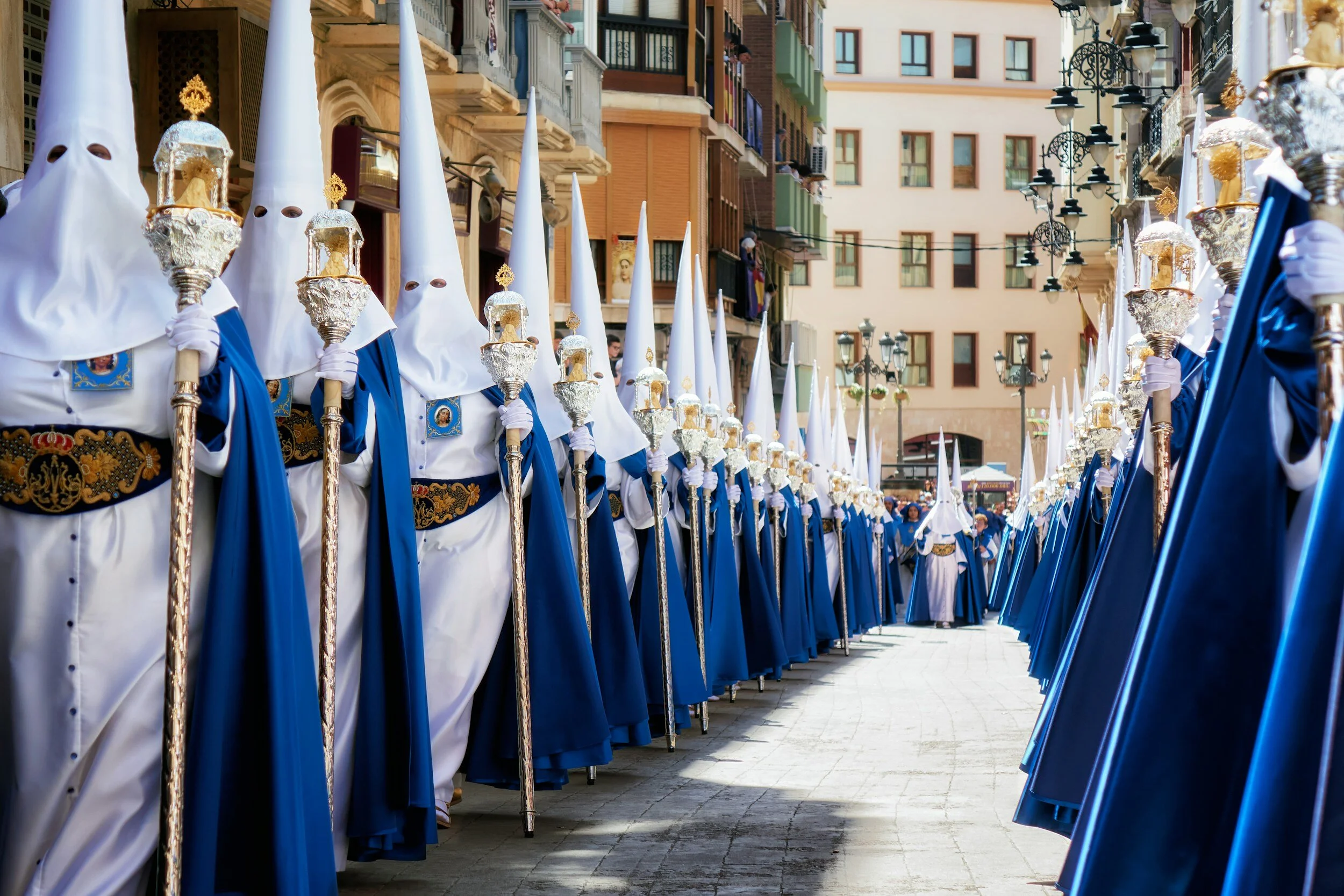
Reginald Garrigou-Lagrange on the Assumption

The Following is from Reginald Garrigou Lagrange OP’s 1948 book The Mother of the Saviour and Our Interior Life

1. What is meant by the Assumption ?

The whole Church understands by the term that the Blessed Virgin Mary, soon after her death and glorious resurrection, was taken up body and soul to Heaven to be forever enthroned above the angels and saints.

The term Assumption is used rather than Ascension since, unlike Jesus who ascended to Heaven by his own power, Mary was lifted up by God to the degree of glory for which she had been predestined. […]

2. Was the Assumption revealed ?

Without a divine revelation, the Assumption would not be capable of being defined a dogma of faith, since the motive of faith is the authority of God in revelation. […]

Hence, that the Assumption should have been known as certain and capable of being proposed to the whole Church for acceptance, a public revelation must have been made to the Apostles, or at least to one of them – Saint John, for example.  Note that this revelation must have been made to an apostle since the deposit of common and public revelation was completed with the death of the last apostle [Saint John].  It may have been made explicitly or implicitly. […]

3. Was the privilege of the Assumption explicitly revealed ?

Everything tends to indicate that the privilege of the Assumption was explicitly revealed to the Apostles, or at least to one of them ; and this was transmitted subsequently by the oral Tradition of the liturgy ; otherwise there is no explanation of the universal Feast of the Assumption, found so clearly from the 7th century on, by which time the Assumption itself was already the object of the ordinary magisterium of the Church. […]

4. Is the Assumption implicitly revealed in the Holy Scripture ?

— From the words of Gabriel the Archangel at the Annunciation and from St Elisabeth at the Visitation :

* « Hail, full of grace, the Lord is with Thee ; blessed art thou amongst women » (Lc 1, 28) ;

* « Blessed art thou amongst women » (Lc 1, 42).

we can conclude that the Assumption was implicitly revealed in the Holy Scripture :

Mary received fullness of grace and was blessed by God among women in an exceptional way.  But this exceptional blessing negatives the divine malediction to bring forth children in pain and to return to dust (Gen 3, 16-19).   Mary was therefore preserved through it from corruption in her body: her body would not return to dust but would be restored to life in an anticipated resurrection. […]

— « Thanks be to God, who hath given us the victory through Our Lord Jesus-Christ » (1 Co 15, 57) ; « Through death, [Jesus-Christ] might destroy him who had the empire of death, that is to say, the devil »   5 Hebr 2, 14).

Christ ‘s perfect victory over Satan included victory over sin and death.  But Mary, the Mother of God, was most intimately associated with Jesus on Calvary in His victory over Satan.  Hence she was associated with Him in His victory over death by her anticipated resurrection and her Assumption.

5. What are the consequences of this dogma for our soul ?

The Assumption of the Blessed Virgin along with the Ascension of Our Blessed Lord, crowns our faith in the objective completion of the work of the Redemption, and gives our hope a new guarantee.

Finally, the just man lives by his faith.  Hence he finds in the solemn definition of a revealed truth a form of spiritual nourishment which increases his faith, strengthens his hope, and makes his charity more fervent.

Revisiting Pope John Paul's Afghanistan Warning

The surreal events of 2001 remain the most haunting and perplexing of the Twentieth Century so far, they may very well remain so until the year 2099. Not only the attacks of September 11th, but so too also the subsequent invasion of Afghanistan. Two years later came the nightmare of the Iraq invasion also.

When 9/11 took place, Pope John Paul II was still in the Vatican.

The day after those events, he stated:

I cannot begin this audience without expressing my profound sorrow at the terrorist attacks which yesterday brought death and destruction to America, causing thousands of victims and injuring countless people. To the President of the United States and to all American citizens I express my heartfelt sorrow. In the face of such unspeakable horror we cannot but be deeply disturbed. I add my voice to all the voices raised in these hours to express indignant condemnation, and I strongly reiterate that the ways of violence will never lead to genuine solutions to humanity’s problems.

Yesterday was a dark day in the history of humanity, a terrible affront to human dignity. After receiving the news, I followed with intense concern the developing situation, with heartfelt prayers to the Lord. How is it possible to commit acts of such savage cruelty? The human heart has depths from which schemes of unheard-of ferocity sometimes emerge, capable of destroying in a moment the normal daily life of a people. But faith comes to our aid at these times when words seem to fail. Christ’s word is the only one that can give a response to the questions which trouble our spirit. Even if the forces of darkness appear to prevail, those who believe in God know that evil and death do not have the final say. Christian hope is based on this truth; at this time our prayerful trust draws strength from it.

With deeply felt sympathy I address myself to the beloved people of the United States in this moment of distress and consternation, when the courage of so many men and women of good will is being sorely tested. In a special way I reach out to the families of the dead and the injured, and assure them of my spiritual closeness. I entrust to the mercy of the Most High the helpless victims of this tragedy, for whom I offered Mass this morning, invoking upon them eternal rest. May God give courage to the survivors; may he sustain the rescue-workers and the many volunteers who are presently making an enormous effort to cope with such an immense emergency. I ask you, dear brothers and sisters, to join me in prayer for them. Let us beg the Lord that the spiral of hatred and violence will not prevail. May the Blessed Virgin, Mother of Mercy, fill the hearts of all with wise thoughts and peaceful intentions.


Today, my heartfelt sympathy is with the American people, subjected yesterday to inhuman terrorist attacks which have taken the lives of thousands of innocent human beings and caused unspeakable sorrow in the hearts of all men and women of good will. Yesterday was indeed a dark day in our history, an appalling offence against peace, a terrible assault against human dignity.

I invite you all to join me in commending the victims of this shocking tragedy to Almighty God' s eternal love. Let us implore his comfort upon the injured, the families involved, all who are doing their utmost to rescue survivors and help those affected.

I ask God to grant the American people the strength and courage they need at this time of sorrow and trial.

The first official death from the 9/11 attacks was an Irish American Catholic priest, Father Michael Fallon Judge, who was killed during duty as a New York City Fire Department chaplain.

Weeks after, promises of a swift war against the Taliban had led to a cautious approach from the Vatican.

Yet within weeks, it was apparent that a serious humanitarian situation was developing.

In early October, Caritas were already warning of a dire catastrophe. On the 23rd of October, they wrote:

Caritas Internationalis, an international confederation of Catholic humanitarian organisations, has appealed for 11 million dollars to aid the people of Afghanistan.
From its headquarters in Vatican City, Caritas has asked its network to provide funds to care for the estimated two million refugees currently in camps in Pakistan and support health and nutrition programmes inside Afghanistan.

As winter approaches, millions of Afghanis on both sides of the border with Pakistan are in desperate need of food and shelter.

The food situation in Afghanistan was already precarious before the current crisis erupted in the wake of the September 11 terrorist attacks in the United States, with one out of every four Afghanis dependent on food assistance for survival.

Three consecutive years of drought and 22 years of war have led to economic deprivation and tremendous hardship for the Afghan people, and escalation of fighting has compounded their misery.

Women in particular have suffered greatly. Thousands have been widowed, and many have no means of supporting themselves and their children.

In the wake of Allied bombings across Afghanistan, the United Nations estimates that at least one million more people may attempt to flee across the currently closed border with Pakistan, and over two million more could be internally displaced.

In November of that year, the pope was decrying the unfolding situation:

As we thank God for all that the fields produced this year, we must not forget those brothers and sisters in different parts of the world who are deprived of essential goods, such as food, water, a home and health care. At this time of great international concern, I am thinking especially of the peoples of Afghanistan, who must urgently receive necessary aid. This is a world emergency, which, however, does not allow us to forget that in other parts of the world there continue to be conditions of great and compelling need.

As indiscriminate violence against Afghans rose under Skull and Bones/Fabian Society members George W. Bush and Tony Blair, Pope John Paul II used this World Day of Peace message to speak out against violence that was vengeful and targeted at innocent people.

The World Day of Peace this year is being celebrated in the shadow of the dramatic events of 11 September last. On that day, a terrible crime was committed: in a few brief hours thousands of innocent people of many ethnic backgrounds were slaughtered. Since then, people throughout the world have felt a profound personal vulnerability and a new fear for the future. Addressing this state of mind, the Church testifies to her hope, based on the conviction that evil, the mysterium iniquitatis, does not have the final word in human affairs. The history of salvation, narrated in Sacred Scripture, sheds clear light on the entire history of the world and shows us that human events are always accompanied by the merciful Providence of God, who knows how to touch even the most hardened of hearts and bring good fruits even from what seems utterly barren soil. 

This is the hope which sustains the Church at the beginning of 2002: that, by the grace of God, a world in which the power of evil seems once again to have taken the upper hand will in fact be transformed into a world in which the noblest aspirations of the human heart will triumph, a world in which true peace will prevail. 

  Recent events, including the terrible killings just mentioned, move me to return to a theme which often stirs in the depths of my heart when I remember the events of history which have marked my life, especially my youth. 

The enormous suffering of peoples and individuals, even among my own friends and acquaintances, caused by Nazi and Communist totalitarianism, has never been far from my thoughts and prayers. I have often paused to reflect on the persistent question: how do we restore the moral and social order subjected to such horrific violence? My reasoned conviction, confirmed in turn by biblical revelation, is that the shattered order cannot be fully restored except by a response that combines justice with forgiveness. The pillars of true peace are justice and that form of love which is forgiveness.   

But in the present circumstances, how can we speak of justice and forgiveness as the source and condition of peace? We can and we must, no matter how difficult this may be; a difficulty which often comes from thinking that justice and forgiveness are irreconcilable. But forgiveness is the opposite of resentment and revenge, not of justice. In fact, true peace is “the work of justice” (Is 32:17). As the Second Vatican Council put it, peace is “the fruit of that right ordering of things with which the divine founder has invested human society and which must be actualized by man thirsting for an ever more perfect reign of justice” (Pastoral Constitution Gaudium et Spes, 78). For more than fifteen hundred years, the Catholic Church has repeated the teaching of Saint Augustine of Hippo on this point. He reminds us that the peace which can and must be built in this world is the peace of right order—tranquillitas ordinis, the tranquillity of order (cf. De Civitate Dei, 19,13). 

True peace therefore is the fruit of justice, that moral virtue and legal guarantee which ensures full respect for rights and responsibilities, and the just distribution of benefits and burdens. But because human justice is always fragile and imperfect, subject as it is to the limitations and egoism of individuals and groups, it must include and, as it were, be completed by the forgiveness which heals and rebuilds troubled human relations from their foundations. This is true in circumstances great and small, at the personal level or on a wider, even international scale. Forgiveness is in no way opposed to justice, as if to forgive meant to overlook the need to right the wrong done. It is rather the fullness of justice, leading to that tranquillity of order which is much more than a fragile and temporary cessation of hostilities, involving as it does the deepest healing of the wounds which fester in human hearts. Justice and forgiveness are both essential to such healing. 

It is these two dimensions of peace that I wish to explore in this message. The World Day of Peace this year offers all humanity, and particularly the leaders of nations, the opportunity to reflect upon the demands of justice and the call to forgiveness in the face of the grave problems which continue to afflict the world, not the least of which is the new level of violence introduced by organized terrorism.  

   It is precisely peace born of justice and forgiveness that is under assault today by international terrorism. In recent years, especially since the end of the Cold War, terrorism has developed into a sophisticated network of political, economic and technical collusion which goes beyond national borders to embrace the whole world. Well-organized terrorist groups can count on huge financial resources and develop wide-ranging strategies, striking innocent people who have nothing to do with the aims pursued by the terrorists. 

When terrorist organizations use their own followers as weapons to be launched against defenceless and unsuspecting people they show clearly the death-wish that feeds them. Terrorism springs from hatred, and it generates isolation, mistrust and closure. Violence is added to violence in a tragic sequence that exasperates successive generations, each one inheriting the hatred which divided those that went before. Terrorism is built on contempt for human life. For this reason, not only does it commit intolerable crimes, but because it resorts to terror as a political and military means it is itself a true crime against humanity.   

Importantly, he wrote:

There exists therefore a right to defend oneself against terrorism, a right which, as always, must be exercised with respect for moral and legal limits in the choice of ends and means. The guilty must be correctly identified, since criminal culpability is always personal and cannot be extended to the nation, ethnic group or religion to which the terrorists may belong. International cooperation in the fight against terrorist activities must also include a courageous and resolute political, diplomatic and economic commitment to relieving situations of oppression and marginalization which facilitate the designs of terrorists. The recruitment of terrorists in fact is easier in situations where rights are trampled upon and injustices tolerated over a long period of time.

It was because of this point that the Washington Post noted in 2002 that:

The Vatican, however, has been reluctant to endorse the U.S. military response to the terrorist assault and pointedly called for the military to exercise care to prevent the harming of civilians. John Paul has declined to declare the fighting in Afghanistan a "just war," an official option open to him.

In his Easter message that year, he prayed:

In how many corners of the world do we hear the cry
of those who implore help, because they are suffering and dying:
from Afghanistan, terribly afflicted in recent months
and now stricken by a disastrous earthquake,
to so many other countries of the world
where social imbalances and rival ambitions still torment
countless numbers of our brothers and sisters.

Over the next number of years, Afghanistan became no less violent, but the world’s attention turned instead to the new nightmare of the Iraq War, which was far more vehemently opposed by the Vatican.

The wars in Afghanistan were unfortunately called a ‘crusade’ by George W. Bush, who was a member of a secret society called Skull and Bones. This perception has all but disappeared today in the West, but it was a powerful one at the time and it was a powerful one in the Islamic world, even though the ghouls of the Bush’s Republican Party and and Blair’s Labour Party, the twin evils of neoconservatism and neoliberalism were as antithetical to Christianity as they were to Islam.

Pope John Paul II’s warning about restraint in seeking justice against terrorism was not listened too unfortunately.

The tortures of innocent Afghan civilians by American soldiers at Bagram prison are comparable to any stories from Concentration Camps or Gulags in the Twentieth Century.

645 prisoners had been held there in total over a number of years. A report in the New York Times (which must bear some responsibility for the crimes they are reporting on) stated:

(W)hat happened at Abu Ghraib was no aberration, but part of a widespread pattern. It showed the tragic impact of the initial decision by Mr. Bush and his top advisers that they were not going to follow the Geneva Conventions, or indeed American law, for prisoners taken in antiterrorist operations. The investigative file on Bagram, obtained by The Times, showed that the mistreatment of prisoners was routine: shackling them to the ceilings of their cells, depriving them of sleep, kicking and hitting them, sexually humiliating them and threatening them with guard dogs -- the very same behavior later repeated in Iraq

Two of the prisoners at Bagram were innocent Afghanis who were brutally murdered in a sadistic style that that Taliban would flinch at.

One of them, Mullah Habibullah, was killed from a pulmonary embolism thanks to repeated blows to his legs.

Another, Dilawar of Yakubi, was an innocent taxi man who was imprisoned because of false information provided to avail of a bounty. This is a sketch of his torture.

Bagram_prisoner_abuse.184.1.450.jpg

His cause of death was something you would scarcely see in a film like Schindler’s List. They included, a black hood pulled over his head limiting his ability to breathe, knee strikes to the abdomen, Over 100 peroneal strikes (a nerve behind the kneecap), being shoved against a wall, being pulled by his beard, having his bare feet stepped on, kicks to the groin, being chained to the ceiling for extended hours, slammed his chest into a table front. Female soldier Sergeant Selena Salcedo admitted to mistreating Dilawar and received a rap on the knuckles for it.

Dilawar’s brutalised legs

Dilawar’s brutalised legs

The New York Times wrote:

On the day of his death, Dilawar had been chained by the wrists to the top of his cell for much of the previous four days. A guard tried to force the young man to his knees. But his legs, which had been pummeled by guards for several days, could no longer bend. An interrogator told Mr. Dilawar that he could see a doctor after they finished with him. When he was finally sent back to his cell, though, the guards were instructed only to chain the prisoner back to the ceiling. "Leave him up," one of the guards quoted Specialist Claus as saying. Several hours passed before an emergency room doctor finally saw Mr. Dilawar. By then he was dead, his body beginning to stiffen. It would be many months before Army investigators learned that most of the interrogators had in fact believed Mr. Dilawar to be an innocent man who simply drove his taxi past the American base at the wrong time.

During torture, he would scream ‘Allah’ which elicited laughter from the American soldiers, who delivered more peroneal strikes in order to hear the screams again. This lasted for 24 hours.

Dilawar

Dilawar

NATO soldiers who served in Afghanistan will recall that they followed orders and most did what was asked of them, but with defeat after 20 years, Pope John Paul II’s words ring true. An entire nation was targeted for the crimes of the few (who had Saudi, not Afghan passports).

It is not easy, but forgiveness and desire for peace is always the least injurious course of action, not only towards others, but also towards ourselves.

But what does forgiveness actually mean? And why should we forgive? A reflection on forgiveness cannot avoid these questions. Returning to what I wrote in my Message for the 1997 World Day of Peace (“Offer Forgiveness and Receive Peace”), I would reaffirm that forgiveness inhabits people's hearts before it becomes a social reality. Only to the degree that an ethics and a culture of forgiveness prevail can we hope for a “politics” of forgiveness, expressed in society's attitudes and laws, so that through them justice takes on a more human character. 

Forgiveness is above all a personal choice, a decision of the heart to go against the natural instinct to pay back evil with evil. The measure of such a decision is the love of God who draws us to himself in spite of our sin. It has its perfect exemplar in the forgiveness of Christ, who on the Cross prayed: “Father, forgive them; for they know not what they do” (Lk 23:34). 

Forgiveness therefore has a divine source and criterion. This does not mean that its significance cannot also be grasped in the light of human reasoning; and this, in the first place, on the basis of what people experience when they do wrong. They experience their human weakness, and they want others to deal leniently with them. Why not therefore do towards others what we want them to do towards us? All human beings cherish the hope of being able to start all over again, and not remain for ever shut up in their own mistakes and guilt. They all want to raise their eyes to the future and to discover new possibilities of trust and commitment.   

9. Forgiveness therefore, as a fully human act, is above all a personal initiative. But individuals are essentially social beings, situated within a pattern of relationships through which they express themselves in ways both good and bad. Consequently, society too is absolutely in need of forgiveness. Families, groups, societies, States and the international community itself need forgiveness in order to renew ties that have been sundered, go beyond sterile situations of mutual condemnation and overcome the temptation to discriminate against others without appeal. The ability to forgive lies at the very basis of the idea of a future society marked by justice and solidarity. 

By contrast, the failure to forgive, especially when it serves to prolong conflict, is extremely costly in terms of human development. Resources are used for weapons rather than for development, peace and justice. What sufferings are inflicted on humanity because of the failure to reconcile! What delays in progress because of the failure to forgive! Peace is essential for development, but true peace is made possible only through forgiveness.

Forgiveness is not a proposal that can be immediately understood or easily accepted; in many ways it is a paradoxical message. Forgiveness in fact always involves an apparent short-term loss for a real long-term gain. Violence is the exact opposite; opting as it does for an apparent short‑term gain, it involves a real and permanent loss. Forgiveness may seem like weakness, but it demands great spiritual strength and moral courage, both in granting it and in accepting it. It may seem in some way to diminish us, but in fact it leads us to a fuller and richer humanity, more radiant with the splendour of the Creator. 

My ministry at the service of the Gospel obliges me, and at the same time gives me the strength, to insist upon the necessity of forgiveness. I do so again today in the hope of stirring serious and mature thinking on this theme, with a view to a far-reaching resurgence of the human spirit in individual hearts and in relations between the peoples of the world.   


Why Was St. Kolbe Called 'Anti Semitic'?

In an article in Anglo Protestant newspaper The Irish Times in 1999, Geoffrey Wigoder referred to Saint Maximilian Kolbe as ‘the anti Semitic priest’.

An Israeli, he served as Vatican's Secretariat for Religious Dialogue with the Jewish People at the time of writing the article. In a shocking passage, Wigoder seems to have objected to not only the beatification of Kolbe (who was killed by the Nazis) but also the beatification of St. Edith Stein, who was also killed by the Nazis. He also repeated baseless insinuations about Pope Pius XII.

He wrote:

There have been glitches during this period and certain acts of the Pope - such as his reception of Arafat when a terrorist leader and of Waldheim, or his beatification of the anti-Semitic priest Maximilian Kolbe and of Edith Stein, the nun who died at Auschwitz for her Jewishness, as well as the proposed beatification of the controversial Pius XII - have been badly received in the Jewish community.

The accusations stemmed from 1982, the first charges were from Austrian periodical Wiener Tagebuch, a propaganda arm of the Austrian Communist Party (KPO).

Later, Washington Post writer Richard Cohen had criticised Pope John Paul II’s beatification of Kolbe, stating that the anti Semitism of Kolbe was ‘swept under the carpet’. Cohen actually blamed Kolbe for inciting the Holocaust (which Kolbe died in) and wrote:

 it is not unfair to say that he and others like him provided a hospitable enviroment for it (the Holocaust). By propagating anti-Semitism, they set the stage for the unimaginable horror that was to follow.

In selecting Father Kolbe for sainthood, the church overlooked this

In a deranged article in 2006, Cohen raged at Pope Benedict XVI’s visit to Auschwitz:

In religious terms, he is undoubtedly a saint -- but not to me. My saints are not bigots.

A writer who supported killing or expelling 82% of Iraq’s Christians in an illegal and criminal war, Christopher Hitchens, dismissed the heroism of Kolbe, writing that he was:

a rather ambivalent priest who . . . had apparently behaved nobly in Auschwitz

Hitchens, who helped to bring about a criminal war that led to an estimated one million deaths of innocent people in Iraq while he smoked cigars and drank wine, also wrote that Kolbe had been:

stoking the very oven in which he was to perish.

More recently, Hareetz marked Pope Francis’s visit to Auschwitz by stating:

The Catholic Church canonised him, turning him into a martyr nearly 35 years ago. It ignored the fact that he was actually an anti Semite who believed in the ‘Protocols of the Elders of Zion’ and that he justified the expulsion of Jews from Poland’s economy.

The article then made insinuations about Pope Pius XII and the Vatican Archives, which have since been proven to be false with the opening of the records of the much slandered pope.

Jedrzej Giertych, who wrote a book called ‘The Libel against a Saint’, stated that even most Jews in the 1920s thought that the Protocols of the Elders of Zion was authentic, nonetheless, it only makes up a couple of lines in his vast bibliography.

The New York Times reported that the opposition to Kolbe’s beatification was coming mainly from British and American sources. The New York Times article on the matter actually defended Kolbe, writing:

In 1934 his colleagues in Poland sent him a sample issue of the newspaper. Father Kolbe wrote back to them about an article that demanded the elimination of Jews from Polish economic life. The letter said:

''It would be better not to speak so much about the necessity of a systematic removal of Jews, but rather to contribute to the multiplication of Polish businesses, which would lead more speedily to the goal.''

The next year he wrote to the editors: ''I would pay great attention not to stimulate hatred against Jews or to deepen it among readers, who are already hostile to them. Our highest goal must always be the conversion and sanctification of souls.'' Conversion Was the Goal

Nonetheless, Kolbe was not without Jewish defenders.

The St. Louis Centre for Holocaust Studies wrote:

his image of the Jews, as of all who did not share his faith, was of people who were prisoners of error, not objects of hatred.

Where did this controversy come from?

Kolbe had written thousands of letters, books and articles over a number of decades, many of them as part of his Militia Immaculata initiative, with his print editions of The Knight of the Immaculate and the Little Daily reaching large numbers of people. Despite the tens of thousands of pages from these 10,000 plus documents, only 31 mentioned Judaism, and they were mostly in relation to Masonry and Communism, of which he said he wished, ‘to seek the conversion of sinners, heretics, schismatics, Jews, etc., and especially, Masons’. There was of course the well known story from 1917, where a young Kolbe had seen Masons marching in Rome showing St. Michael being trounced by Lucifer and threatening to make the pope their slave.

Eugene Fisher, executive secretary of the National Conference of Catholic Bishops’ Secretariat for Catholic-Jewish Relations in the early 1980s had written that Kolbe had kept some 2,000 Jewish refugees in his monastery, evidence that his issue was more to do with spirituality than with race or whatever has been insinuated by the likes of pro Iraq War Christopher Hitchens.

Kolbe, by an objective measure was an incredibly noble and brave man, who gave up his life so that a man with children would live instead.

His Polish background and opposition to Freemasonry and to Communism was in an environment that was very different to that which was to be found after World War II.

In his own words, he articulated it best:

Hatred is not a creative force: only love is creative

Was St. Maximilian Kolbe an Anti-Semite? | EWTN

SAINTHOOD - The Washington Post

Whose Silence? - The Washington Post

Rome has left its traditional anti-Judaism well behind it (irishtimes.com)

The Defeat of Tenochtitlan and the End of Aztec Human Sacrifice

Few civilisations in history embody violence and cruelty as did the Aztecs.

Although many interpret terms like ‘Aztec’ to indicate all indigenous peoples of Central America, it ignores the fact that the Aztec Empire was run by animalistic bullies, who used their opulent wealth and power to enslave, massacre and abuse other indigenous peoples.

The Tlaxcaltecs and other native groups eagerly assisted Hernán Cortés and his Spanish forces in the Battle of Tenochtitlan, wishing for an end to the wicked Aztec Empire.

The idea that all natives were opposed to the Spanish is one misconception, but another one is that which seems to think that the treatment of natives in the Americas was worse than if they had been left alone. The same people who argue that, invariably do so on the assumption of the truth of allegations of ‘mass murders’ by the church against natives, even as recently as the early 20th Century. Ironically, the church did no such thing, but the pagan Aztecs did.

aztec-human-sacrifice-hero.jpg


Atop Templo Mayor in Tenochtitlan, innocent people would be sacrificed to the gods in gruesome fashion. Cortes’s men witnessed this upon their arrivals, they saw the priests slicing open the chests of sacrificial victims and offering their hearts to their gods. They would then dispose of the body down the steps of the Templo Mayor.

Recently discovered towers of skulls in Mexico

Recently discovered towers of skulls in Mexico

One of the conquistadors, Andres de Tapia, described how he had seen large constructions with thousands of skulls embedded. Recent excavations have shown that this was indeed true. It is remarkable that we still have to listen to exaggerations surrounding the Spanish Inquisition, when the numbers of deaths were minimal, while these genocides in the name of indigenous gods are overlooked, even denied or dismissed.

700_cs_80622N_Codex.jpg

Why did the Aztecs do this? The practical reason was to rule by fear. The cosmological reason was that they believed in Huitzilopochtli, the god who opposed the darkness and who needed to be supplanted and satisfied with constant sacrifices of humans.

The human sacrifice element is obviously the one that still captures much of people’s imagination, but slavery and war on behalf of the Aztecs was equally as much a part of their corrosive influence on the region.

In November 2020, the Mexican government sought an apology from the Catholic Church for its role in helping to end the evil Aztec Empire. They should be given no such thing.

On August 13th 1521, Cortes and his men took victory against the Aztecs and finally conquered Tenochtitlan.

Less than 20 years later, Our Lady of Guadalupe appeared in a land plagued by human sacrifice and enslavement to demons masquerading as gods. Within a decade, Mexico was Catholic.

Always pray and hope, with the expectation and realisation that it can move mountains and that the Holy Spirit works in the world.

Writing on the United States and its abortion culture, Dr. Peter Kreeft has written the following, which must give us pause for thought in our own times.

About 500 years ago, a strikingly similar culture of death reigned in Aztec Mexico. Some historians estimate that one out of every three children . . . were ritually sacrificed to their bloodthirsty and demanding god . . . exactly the same proportion of children conceived in America who are aborted today...


Catholic Staff and Students Being Bullied in Irish Schools

In a shocking new survey, it has been revealed that large numbers of Catholic students and staff are being aggressively bullied in the Irish education system.

Catholic World Report write that the survey of 214 teachers has revealed that intimidation and harassment of Catholics is now endemic in the Irish schooling system.

Some of the findings include

  • Religiously committed students feel vulnerable as they are a minority in Irish schools now.

  • Expressing religious based convictions can lead to low level bullying by staff members … e.g. expressing anti-abortion views

  • A Catholic student is more likely to be ridiculed or laughed at for their faith position so they tend to be silenced by the prevailing trend towards a secular humanist worldview

Certainly one has to assume that the behaviours of certain Irish politicians and media figures have been the catalyst for this, with many in the public eye even engaging in bullying behaviours of their own such as recording processions in order to encourage social media mobs to bully Catholics.

You can read a summary of of the shocking report here.

https://www.catholicworldreport.com/2021/08/11/report-shows-irish-teachers-concern-over-bullying-of-practicing-catholic-students/

Ireland Offers Hope to UK Euthanasia Battle

Many in Ireland are aware that the Dying with Dignity Act 2020 — An Bille um Bás Dínitiúil, 2020 — will not progress because as Mr. Lawless noted, it is not “legislatively workable” due to “a number technical legal errors.”

Obviously (!) that decision was made without any reference to the 1400+ submissions received by the Justice Committee of the Oireachtas — most overwhelmingly opposed to the legislation! Sure.

The brilliant news is that resistance is not futile!

In much the same way that Ireland’s legislation was pushed during the pandemic, the UK introduced two Bills through the House of Lords mid-pandemic while the NHS was nearly overwhelmed keeping people alive. The first Bill lapsed. The most recent version is basically identical and called the Assisted Dying Bill (HL Bill-13.)

The medical response in Canada to our “Medical Assistance in Dying” was at best, muted. (MAiD includes Assisted Suicide & Voluntary Euthanasia.) The official response from the Canadian Medical Association and its subsidiary medical associations, was to take a “neutral” approach — in other words they provided no particular medical opposition.

I hope that the UK notes the vast differences in response and outcomes between Canada and Ireland.

My focus is now to write for the UK: Catholic Arena will keep readers apprised of the progress there. I will be holding up the Irish response as a beacon of hope! It shows the British people and medical organizations that it can be done.

If there is one concrete benefit to opposing Assisted Suicide and Euthanasia, it is for people like Canadian Lia (Garifalia) Milousis, who tells her poignant story in the video below.

“I’m the future version of myself who survived to tell you this.”

Dr. Kevin Hay

BREAKING Nantes Terrorist Murders Priest in Vendée

Last year, liberal journalists and activists across Europe embarked upon a disinformation campaign in order to distract from a politically inconvenient story.

A Rwandan refugee had intentionally set Nantes Cathedral on fire in an act of arson.

The disinformation campaign claimed that he has been released without charge and was not a suspect but a wonderful sacristan. He was the sacristan, but was not wonderful and his deportation order was not follow upon even when it was determined that he had in fact set fire to Nantes Cathedral.

Now, in a farcical and tragic development, French media are reporting this morning that the same terrorist was allowed to remain free and has MURDERED a priest in the Vendée, the historical home of persecution of Catholics in France.

The Interior Minister of France has announced the ‘assassination' on Twitter, before cowardly making excuses for allowing the terrorist to stay and blaming Marine Le Pen for her rhetoric.

More on this story as we get it.

The Tragedy of Nagasaki's Christianity

August 9th, 1945.

On this date, the most devastating single act of violence in history was committed against the home of Christianity in the East when American forces dropped an Atomic Bomb on Nagasaki, Japan.

The city had a long and mystical relationship with the Catholic faith since 1549, when Saint Francis Xavier arrived at Kagoshima in Japan. The great Jesuit brought with him teachings of Christ and the Catholic faith.

The initial years of Japanese Christianity were a success and brought many baptisms and conversions to the faith. The Jesuits continued the success they experienced in other areas into the city of Nagasaki. So prolific were they in inspiring the Nagasaki people to follow Christ and to embrace his church that the area became known as 'Little Rome'.

The Japanese had converted to Catholicism in droves, estimates state that 130,000 had converted by 1579.

It was at that time the largest non European ruled Christian nation. The Jesuits, joined by the Franciscans and Dominicans, had successfully won over locals.

Domestic tensions would soon impinge upon this success.

A ban on the Jesuits in 1587 arose from Japanese native Toyitomi Hideyoshi, hoping to stamp out the influence of Christianity and the Jesuits in particular, upon the Japanese. Incidents like the San Felipe, where it was alleged Jesuits were a precursor to invasion, only made the situation worse.

In 1597, the Japanese church began the first of its many sufferings, when the executions took place of the men who became the 26 Martyrs of Nagasaki. Like our Blessed Lord, these men were crucified and pierced with spears, they were composed of Franciscans and Jesuits.

In 1615, Christianity was completely prohibited from Japan and missionaries were ordered to leave. Many stayed, even though persecutions followed. On September 10th 1622, 56 Christians were burned alive or beheaded at Nagasaki.

The following centuries were equally bleak for Christians in Japan.

Many tried to live their faith in secret but were forced to trample on an image of Christ or Mary once a year in order to prove that they were not secret Christians.

Despite their great suffering and the lack of priests to say Mass, the underground Church of Nagasaki was a place where Christians kept their faith from generation to generation. Anywhere they could, they prayed together, in secret and with great love for the Mystical Body of Christ.

In 1865, after Japan had been reopened to non natives, a French priest by the name of Bernard Petitjean was approached by some of those remnant Christians.

One of them whispered that she believed as he did and asked to see an image of the Virgin Mary. The priest was stunned to find that they'd baptised their children for centuries and kept the faith alive.

Most of the hidden Christians of that area were from the Village of Urakami.

In thanksgiving for the Lord's presence, they decided to build a Cathedral on the grounds of the land where they had been forced to trample on Our Lady's image. The Church of the Immaculate Conception that was built there was the biggest in Asia.

The Cathedral was completed in 1925 and became a sign of hope for Christians leading in to the future. 20 years later, 95% of Japan's now blossoming Catholic Church lived in Nagasaki.

After 250 years of exile, Japanese Christians finally had reasons for optimism.

Unfortunately, some in the United States had other plans for Japan's Christians.

On August 9th 1945, as the local Catholics prepared for the Feast of Immaculate Conception, the pilots of the Boxscar were instructed to look for the spire of the Urakami Cathedral as they dropped the 'Fatman' bomb.

Under orders from Harry Truman, a Freemason, the United States dropped its 2nd Atom Bomb in 3 days. The destruction was unimaginable.

Fulton Sheen would later associate the viciousness of the atomic bomb attacks with the moral disorder of the world afterwards, seeing it has having opened up a new system where the ends justified the means in all circumstances and man was capable of using technology to inflict hell on Earth.

The bombing in Nagasaki happened at 11.02 am as many attended Mass.

In the death toll

-8,500 of the 12,000 Christians

- 3 separate orders of nuns

- An entire Catholic school

There were stories of nuns singing as they made their way through the streets after the blast, many dropping dead on the street as they did so.

Christians now make up only 1% of the wider Japanese population.

We can pray and hope that these near 500 years of suffering and hiding will reap many rewards for the descendants of Christians in centuries to come, the blood of the martyrs will always be the seed of the church.

New Film on Latin Mass Highlights its Beauty

With current debates over the liturgy raging within the church, a new film is set to be released at the most apt time.

Mass of the Ages will offer a look into the Latin Mass communities of the United States of America, with cinematography that highlights the beautiful aesthetics. The makers of the film have stated that it

strives to reclaim the extraordinary mystery of Christ’s presence in the liturgy in the manner it has been celebrated for nearly 1600 years.

Rather than getting caught up in current debates:

Mass of the Ages approaches the debate by letting the beauty of the TLM stand on its own, so that it might be appreciated and understood by every Catholic.  The film project was undertaken by a group of professional Catholic filmmakers two years ago in response to the staggering statistics of disaffiliation in the Church among young Catholics, gradual decline in the priesthood, and degradation of the family unit over the past 50 years.  It also stems from the perspective that the TLM offers a solid foundation at a time when the world is in chaos and many Catholics are doubtful of Christ’s True Presence in the Eucharist. 

Many Latin Mass Communities in Europe and North America will note that their membership transcends overall trends wherein young people have less the faith, Director and Producer Cameron O’Hearn states:

Millions have left the Church, but many flock to the Traditional Latin Mass which weathered the sweeping changes of the 1960s and retains its traditions. Families are rising up to be a part of it, and it isn’t what you’d expect. When you think of a ‘Traditional Catholic, you probably have someone very specific in mind. But the characters in Mass of the Ages will surprise you--messy families, courageous priests, and deaths that forge a strong faith.

Despite claims to the contrary made about Traditionalists in liberal Catholic media in recent weeks, the ‘filmmakers affirm the validity of both the Novus Ordo and TLM and do so in a spirit of reverence’.

Rather, in a timely fashion, they state:

Our main priority is to showcase the beauty of the Mass of the Saints--where Heaven touches Earth--and make it accessible to the average Catholic. Mass of the Ages will give you a deep appreciation for your Catholic faith, and we cannot wait to share it with you

There are significant reasons as to why Traditional Latin Masses have surged in attendance over the past 14 years. When people attend them, specifically young people, they find that it transmits beauty, reverence and piety with an immediacy that is not always readily present in the inconsistent nature of the presentation of liturgies within some local parishes. In its silence, majesty and heredity it stands as a portal to not just deeper Eucharistic comprehension but also to aspects of theology and history that they have been alienated from.

The Latin Mass might not be the solution to every problem within the church, but it is a solution to one, that is the loss of reverence for the Eucharist. Hopefully this film with be received with a spirit of charity by those hostile to the Latin Mass and its attendees.

New Study Finds Half of Irish Catholics Returned After Pandemic

A new study by the Iona Institute has found that:

  • 46% of Catholics who were regular Mass goers pre pandemic have since returned

  • Of those who have not yet returned, 62% have said that it is because of fear

  • 20% said that they do not know if they will return

  • 4% said that they will not return

Commenting on the poll, which was a sample of 1,000 people, Iona’s David Quinn commented:

Church leaders will be encouraged that almost half of Catholics who were attending Mass regularly before the start of the pandemic have returned. In many cases, this is about the maximum a given church can accommodate because of social distancing requirements.

 What is noteworthy, however, is among those who have not returned, fear of Covid is still the main driving force even though almost every Mass-goer will be fully vaccinated by now, whereas last year, no-one was vaccinated. Clearly some work needs to be done both by the Churches and public health authorities to reduce the fear factor to a more reasonable level.

Church leaders will also be concerned that around a quarter of those who were coming to Mass regularly before the pandemic either won’t be back, or don’t know if they will. Is this because they have fallen out of the habit, or they have become permanently nervous of crowds? One way or the other, there will have to be an outreach to this group

Generally speaking, these are not numbers, especially with Ireland having endured Western Europe’s most severe lockdown and one of the world’s most aggressive crackdowns on religion during the pandemic. Gardai were seen entering churches, there were newspaper ‘journalists’ monitoring churches on webcams to spot if 5 extra people attended funerals and there was even the case of Fr. PJ Hughers, where Gardai surrounded his village to stop people from attending Mass. These have all played large psychological deterrents to a swift return to Mass.

It might be interesting to see if the recent bravery from the bishops in standing up to the government, who arbitrarily changed Covid rules today after being caught partying hard with dozens at a time across hotels in Dublin, will have an impact upon increasing numbers of those attending Mass.

Czech Cardinal's Beautiful Response to Criticism

When faith and politics collide, it is often the case that people are inclined to take sides and to forget humanity while engaging in animosity.

A powerful example of how to keep one’s humanity in a Christian spirit has been displayed by Czech Cardinal Dominik Duka this week, when he was interviewed regarding two of his employees running for election with right wing parties.

The political activities of Josef Nerušil and Hana Lipovský have caused serious objections from liberal Catholics in the Czech Republic, with twenty six prominent Catholics releasing a recent public letter calling on Cardinal Duka to disown the pair. The open letter stated:

We fear that some information about your attitudes is confusing to both the Catholic and non-Catholic publics, and in the eyes of many people, it legitimizes political forces that are completely contrary to the basic principles of gospel, joy, peace, and justice

We therefore believe that, at this moment, there is an urgent need for you to stand clearly and convincingly on the side of truth and justice, on the democratic direction of our country, in order to promote the prestige of the Catholic Church in the eyes of the public. On the contrary, the impression that the Catholic Church is dangerously messing with extreme political currents, reinforced by uncertainty about your true views, could lead to a further departure of people of goodwill from the Catholic Church.

Despite facing public pressure to disown the pair, Cardinal Duka has given an interview to Konzervativ Ninoviny in which he gave a thoughtful and Christian response on the matter:

The Church is not an organization that has led a political life. Although it is often associated with certain movements. This may have been the case in history, but the Second Vatican Council declared that this path was not possible. Each Catholic chooses according to his conscience. We know and know Mrs Lipovsky's statement, so it will now be up to her to what extent she fulfils her mission and how she goes forward. Even the bishops' conference does not tell believers which party is electable and which is uneatable. They must respect freedom of conscience and have confidence in our believers that they can carry out their political engagement in the spirit and conscience of a Christian. That's all I can say as my office, and I'm not authorized to do so.

Cardinal Duka lived under Communism and knows full well that state and church’s relationship can become toxic and authoritarian. With that in mind, another comment that he made in the same interview was the most meaningful:

We must realise that it is a democracy and, if we are a democratic state, the political parties represented in parliament meet the basic parameters of a democratic system. And then it's up to those people to decide. And then we know that a large part of political parties are silent in many areas. Even if they are radical-left actions that literally undermine all the foundations of Christian civilization. And it doesn't cause any outrage at all. We are in a situation where many people believe that only some extreme attitudes can change the atmosphere in society.

As my office, I have to deal with every mayor when I come to the parish. No matter which party he was elected to. There's no other way. Just as I have to deal with all the parties in parliament. I have led various negotiations and from different levels since 1990. I have to understand every person. Even if it doesn't go the way I want it to go. And it can go in a direction that I may even rightly consider wrong. But I can't write him off. I can't distance myself from him.

This debate is currently raging across Europe, should pro abortion pro Globalism politicians be considered to be more acceptable just because they are on media outlets every day, while nationalist and conservative politicians are faced with expulsion?

The church will come under increasing pressure to denounce non Globalist politicians across Europe as the forces of Globalism lose their grips on power, as is happening in Germany, Italy, France and Spain. The cardinal’s response seems the fairest example.

George Soros Funded RTE's Abortion Propaganda Film

In 2018, Ireland infamously voted to remove the rights of unborn babies to be alive within its jurisdiction.

One of the few amusing aspects of the whole thing was that women (and male feminists) naively saw it as a grassroots movement, when in reality it was designed as a way to unite the Left with ruling parties Fine Gael and Fianna Fail after a decade of austerity. The ‘movement’ to lower the birth rates of Irish people through abortion was not a ‘grassroots women’s movement’, but was mostly driven and funded by men, with women generally reduced to the roles of shrieking on social media and making cardboard signs that said ‘Keep your Rosaries off my Ovaries’.

One of the men who dreamt up the legalised culling of Irish babies was George Soros, making this reality through his Open Society Foundation. The Open Society Foundation contributed financially to many ‘human rights’ NGOs in the runup to the referendum, who saw no problem in campaigning to remove the most fundamental of human rights, the right to be alive.

Screenshot (301).png

The media tried to make light of Soros’s involvement, as did pro aborts, but ultimately the vote was almost entirely the creation of Soros, Irish based Anglo media and those in the establishment who wished to lower the birth rate. The pro abort boots on the street were mere pawns and had no real impact upon the result, as can be seen in Poland today, where naive women carry identical posters from those Soros used in Ireland, fully convinced of their own originality and independence in the process.

Now, Soros has funded a new film in which ‘he primary focus of this new documentary is on the dynamic female leaders of the pro-choice campaign’. They then have the gall to mention ‘grassroots activism’, even calling it achieving the ‘near impossible’. The oligarchs must be laughing.

Despite round the clock promotion on Irish Government Media, the film has garnered little in the way of genuine enthusiasm from ordinary Irish people, many of whom voted to remove the rights of unborn babies based on ambiguous promises. The film’s press release is mired in anti Catholic fantasist delusions, stating ‘It shows a country’s transformation from a conservative state in thrall to the Catholic church to a more liberal secular society’.

Ireland is traditionally one of the least civically informed nations on Earth, with many unaware that later that year, pro abortion politicians rejected amendments to ban sex selective abortions, to ban abortions for disability grounds and refused to permit pain relief to be administered to babies in abortion. Most recently, many are unaware that babies have been stabbed in the heart and born alive during abortions and left to die. Many are still convinced that they passed a law for emergencies.

Tonight’s propaganda piece may be one of the last stings of the dying wasp of RTE, which is now thankfully looking close to bankruptcy.

It also signals the end of the 3 years of the Repeal movement, with its two main leaders, Zappone and Varadkar now embroiled in a corruption scandal.