Catholics in Dublin Pray Rosary in Phoenix Park

Catholics in Dublin gathered at the Papal Cross in the Phoenix Park last night to pray the Rosary on the eve of All Saints Day.

The event comes after weeks of Masses being shut down by the Irish government, despite no evidence that Mass had led to a single outbreak of coronavirus.

Those praying carried a statue of Our Lady as they gathered around candles in the darkness of the Halloween night.

Antifa Torch Two Churches in Santiago

IMG_20201019_154206.jpg

One of the most appalling of the many appalling things regarding the annus horribilis that is 2020, has been the rise of violent anti Catholic thuggery by Antifa all over the world.

Often defending themselves as ‘Anti Fascist Action', Antifa are actually a violent Communist group who work on behalf of corporations to squash opposition to such Globalist pet projects as mass migration, abortion and technocracy. In recent years, they have enjoyed political protection from some as highly connected as United States Vice Presidential candidate Kamala Harris, who even went so far as to bail out members of the terrorist group when they had been arrested.

In Santiag, Chile these past 48 hours, the terrifying reminders of 1930s Spain have been on full display for all to see. Parroquia de la Asuncion and Iglesia de San Francisco de Borja were both torched by Antifa members who posed for photographs in front of the building to mock Catholics.

The crowd laughed and jeered as one of the spires came tumbling down on each church as journalists around the world scrambled to try to paint the protests as being otherwise peaceful.

One female Antifa member posed inside the burnt Cathedral, a gesture designed to demoralise Catholics, just as the images of Communists digging up the dead bodies of nuns and priests in the Spanish Civil War was. We should not be demoralised however. As with those images, it needs to be a reminder of the sheer depravity of the evil that we are dealing with.

The Chilean government, for their part, have done absolutely nothing to protect Catholics. Please contact your local Chilean Embassy and let them know how you feel.

IMG_20201019_162549.jpg

IMG_20201019_162551.jpg
360x-1.jpg

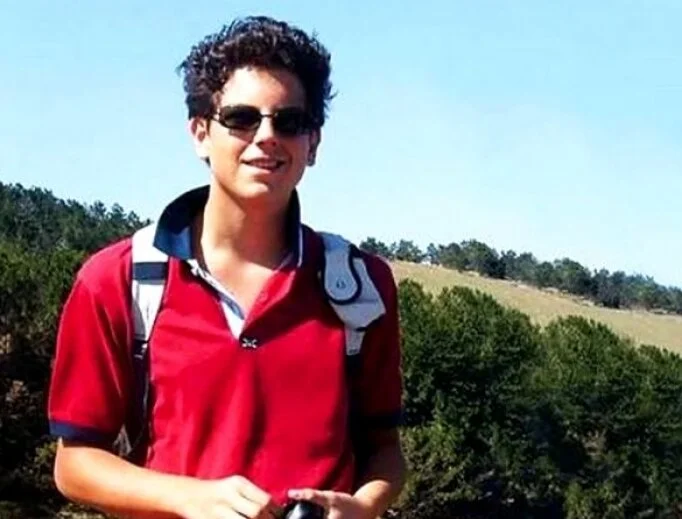
Carlo Acutis: A Model of Faith for the Digital Age

20200827020828_5f46fe98c2bf74d8ccd9e4fcjpeg.jpeg.jpg

When the images of Carlo Acutis's body were beamed across the world last week, there were a number of divergent reactions. For Protestant prolifers in the United States, it inspired feelings of revulsion, many of them failing to comprehend the enormity of the implications that resulted from asserting the holiness of the human body itself. For others, Catholic and non Catholic, there was the common astonishment that we were being presented with a boy about to be beatified in a tracksuit after earning his life of holiness through the internet.

Acutis died only aged 15 in 2006 from leukemia. The holiness of his life was such that it consisted of the old reliables, he attended Confession each week, he read the lives of the saints and he was devoted to the Rosary. Most importantly, when his illness deteriorated rapidly, he offered it up for Pope Benedict XVI and stated ‘there are those who suffer much more than me’ when asked about his pain.

Strikingly however, he also expressed his love for God online and catalogued Eucharistic miracles on a website that he built himself. For young people today, and some adults, the internet has become an impediment to their religious life, enticing them into sins unimaginable without its corrosive influence. Yet for others, the internet has led them to the Traditional Latin Mass, to videos of men like Fulton Sheen, to the great works it Augustine and Aquinas. The internet is a very powerful tool, we can hope and pray that with the intercession of Blessed Carlo Acutis that people learn to harness its power to spread the glory of our faith.

Euthanasia: Cure Sometimes, Treat Often, Kill Frequently?

Cure sometimes; Treat often; Comfort always; Kill frequently?

A Canadian perspective on Voluntary Euthanasia

As a school-kid I would wait in the car as my father visited house-bound patients in our village. Dad would tell me snippets about the local people whom he admired for their hard-working, honest character. Sometimes he quoted Hippocrates: “Cure sometimes, treat often, comfort always!”

I followed Dad’s medical footsteps to University College, Dublin and emigrated to Canada where I have been a rural family physician for over 30 years. Voluntary Euthanasia is the only state-sanctioned homicide routinely occurring across Canada. Between 2016 & 2019, 13,946 Canadians died by Medical Assistance in Dying [MAiD]. Canada has ~38 million people.

Medical Assistance in Dying

After the 2015 Supreme Court of Canada Carter decision was legislated by Parliament in 2016, it was no longer a crime to provide a poison—or to directly kill—a patient meeting the criteria. The vast majority of the ~14,000 cases have been through the direct administration of IV drugs, in other words, by Voluntary Euthanasia [VE]. MAiD includes provisions for Assisted Suicide [AS].

The Supreme Court [SCC] declared sections 241(b) and 14 of the Criminal Code “void insofar as they prohibit physician-assisted death for a competent adult person who (1) clearly consents to the termination of life; and (2) has a grievous and irremediable medical condition (including an illness, disease or disability) that causes enduring suffering that is intolerable to the individual in the circumstances of his or her condition.”

Their decision was based on the autonomy of the individual and the wish to avoid people suffering ‘intolerable’ pain. They also voiced the fear that sufferers might take their lives prematurely or be incapable of doing so at the time of their choosing.

Human Rights

The Canadian Charter of Rights and Freedoms says, “everyone has the right to life, liberty and security of the person.”

The Universal Declaration of Human Rights declares that “everyone has the right to life, liberty and security of person.” Importantly, the United Nations defines Human Rights as being "universal and inalienable…everyone is born with and possesses the same rights."

Former President of the Supreme Court of the United Kingdom, Baroness Hale of Richmond, commented on the dignity of the individual: “Democracy is founded on the principle that each individual has equal value. Treating some as automatically having less value than others not only causes pain and distress to that person but also violates his or her dignity as a human being.”


Voluntary Euthanasia

As human beings we have free will—The Freedom—to kill ourselves. I believe we do not have a Right to kill ourselves and definitely we do not have a Right to mandate a person or group to kill us on-demand. As human beings we have the responsibility to prevent someone from taking their own life in despair.

Compassion for the appellants in Carter might have blinded the Justices to the dangers of legalizing the intentional killing of a segment of the population—however willing they may be. Curiously the SCC is very opposed to Capital Punishment when the arguments against the Death Penalty hold fast against Euthanasia. MAiD/AS/VE can:

  • be coerced,

  • kill incompetent people,

  • irreversible when applied in error,

  • deny the intrinsic value of human life,

  • brutalize patients, children, family & friends, providers,

  • promote cost reduction through the premature killing of the sick,

  •  not be a “treatment”,

  • not ascertain those who “deserve” death or not,

  • glamourizes death and can cause the Werther Effect (suicide contagion),

  • kill the mentally ill rather than treat them appropriately,

  • collude with delusions rather than preventing suicide,

  • have complications from the administration of toxic medication.

Evidence from Oregon shows the most frequently reported reasons for requesting Assisted Suicide are: “Loss of autonomy (87%); Decreasing ability to participate in activities that made life enjoyable (90%); and Loss of dignity (72%).” Physical pain (or the fear of it) did not even make the top 5 reasons for requesting Assisted Suicide. In addition, the vast majority of Assisted Suicide cases in Oregon in 2019 were white people. The cultural differences need investigation because there were very few Hispanic and Asian recipients and no African-Americans, Pacific Islanders or American Indians.

Another curious statistic from Oregon is that up to 1/3 of those receiving a prescription for the fatal medication never take it. (In a private communication, it appears that few withdraw from MAiD once the application has been approved.) Patently, there is some different dynamic between killing oneself and having another person administer the poison to you.

The march of ‘Progress’

The SCC agreed with the original trial judge: “…that a permissive regime with properly designed and administered safeguards was capable of protecting vulnerable people from abuse and error.” Based on this permissive opinion, Canada mirrored much of the system from the Netherlands where Euthanasia was made legal in the 1970’s. Startling statistics from the Netherlands reported in The Province (Vancouver) showed: “In 1990…2,300 people asked doctors to kill them; 400 asked doctors to provide them with the means to kill themselves; 8,100 died when doctors deliberately gave them an overdose of pain medication to kill them (for which 4,941 patients didn’t consent); 1,040 people died when doctors euthanized them without their knowledge or consent (72 per cent of those never having given any indication they would want their lives terminated).”

There are many egregious cases. The Supreme Court of the Netherlands just exonerated a doctor who ordered the family of an elderly woman to hold her down so he could administer the lethal injection. A Dutch nun was dying painfully of cancer and her physician felt her religion prevented her from agreeing to euthanasia, so he felt both justified and compassionate in ending her life without telling her he was doing so. (Psychiatric Times). The Journal of the Canadian Medical Association has shown that up to 30 per cent of assisted suicides occur without consent in one region of Belgium.

The SCC noted that “minors or persons with psychiatric disorders or minor medical conditions” do not fall within the Carter decision. It is only 4 years since Bill C-14 and yet there are persistent calls to extend MAiD/AS/VE to Mature Minors, for psychiatric illness and by Prior Directive.

Then there is the tough issue of “intolerable suffering”. If, as shown in Oregon, the suffering is primarily “the loss of autonomy, the decreasing ability to participate in activities that made life enjoyable and loss of dignity” then people with prolonged existential distress will eventually become candidates for MAiD.

MAiD has even become a “therapeutic option.” In 2018, then 42-year-old Roger Foley from Ontario wanted to live despite having a serious neuro-degenerative disease. He was in hospital because he felt the home-care being provided was inadequate. He claims he was offered Euthanasia as the alternative to a forced discharge or the $1,800 per day charge.

If Human Rights as "universal and inalienable…universal because everyone is born with and possesses the same rights…" then logically all Canadians have a “Right to Die”. Suicide-on-Demand will be a disaster for any society.

The Dead don’t complain

By conscripting two caring professions and by making MAiD “A Right”, Parliament and the SCC avoided a lot of opposition to Euthanasia in Canada. A doctor or nurse should not be a MAiD/AS/VE provider but remain the patient’s independent advocate, counsellor and caregiver. We should be a shield against coercion and should minimize the risk of involuntary euthanasia.

Most, if not all, MAiD applicants should have palliative, psychiatric and social services consultations. A difficulty is that here an applicant can refuse all valid treatment (including curative treatment) and still be approved for MAiD.

In light of possibility suicide contagion there should be proper longitudinal studies especially of the young children of MAID recipients. (“New figures from the Netherlands have shown that suicide numbers went up by 34% in that country after assisted suicide was legalized –at a time when the numbers of deaths by suicide fell in neighbouring countries in the same period.”)

Despite the SCC stating: “Nothing in this declaration would compel physicians to provide assistance in dying” there are jurisdictions like Ontario where physicians are required to provide an “effective referral” for MAiD/AS/VE. This, when Alberta has a proven self-referral route for patients involving the patient making just one phone-call.

Humanist Dr. Donald Boudreau, McGill University, said “My personal belief is that healing and euthanizing are simply not miscible.” It is only a matter of time before job postings in Geriatrics / Palliative Care / Family Medicine (etc.) specify the need for the applicant to be a MAiD provider. Medical students are already being taught how to kill patients before they are fully taught how to heal them. Indeed, there are calls to screen Med School applicants likely to hold Hippocratic views. That could exclude many good doctors including some Humanists, Muslims, Jews, Sikhs, Buddhists and Christians, amongst others.

An Bille um Bás Dínitiúil, 2020 / The Dying with Dignity Bill, 2020

“Dignity” is an emotive argument used to support Euthanasia though it mostly refers to a lack of self-determination and a personal loss of control. It seems evident that being killed due to a perceived lack of self-worth “…violates his or her dignity as a human being.” [Hale]

Whatever their physical/mental status or position in life, we must see the dignity in every person.

Dr. Kevin Hay

Kevin is a UCD grad & now a rural Family Physician in Alberta, Canada. He has been writing on Medical Assistance in Dying in Canada for the past 3 years. This article takes information from several sources including his previous articles in The Province (Vancouver) and The Hamilton Spectator. You can follow him on Twitter @kevinhay77.

Abandoned Embryos and the Ethics of IVF

Most Catholics know that abortion kills a unique human being—even at that “clump of cells” stage of very early pregnancy. So far, this knowledge does not extend to the cryo-preserved embryo arising from In-Vitro Fertilization. 

The vast majority of biologists agree that human life starts at conception. For example Steve Jacobs found: “…that 5,337 biologists (96%) affirmed that a human’s life begins at fertilization, with 240 (4%) rejecting that view.” Then, in a 2017 article “Science, Embryonic Autonomy, and the Question of When Life BeginsAna Maria Dumitru noted that “Shahbaz and colleagues demonstrate in their study that a fertilized egg—also known as a zygote, the “product of conception,” the early embryo, or one of many other descriptive terms—is an autonomous living being. This one little cell, with its complete genetic content, can and does begin to divide and to grow, even in an experimental dish in an incubator in the closet space of some unmarked lab.” (My italics.)

To the science we must add the Church’s teachings. St. John Paul II taught us, "The human being is to be respected and treated as a person—from the moment of conception!”

After putting the science and the morality together it is distressing when people—especially some theologically-trained people—do not perceive the humanity of the abandoned embryo. Some even conclude that it is “morally licit” to remove “…these embryos from cryopreservation, thawing them, and allowing nature to take its course uninhibited.” Be clear: this is a recommendation for the intentional destruction of these unwanted embryos/new human beings. 

In-Vitro Fertilization

Just over 40 years ago, Louise Joy Brown was the first full-term baby to be born after conception through In-Vitro Fertilization [IVF]. During IVF an excess of embryos are often produced so the “spares” can be frozen for future use. If these stored embryos are not used the parent/s get to choose one of two main options—destroy the embryos or put them up for adoption. (Long-term storage is expensive so will cease once the embryo is abandoned and in most ‘civilized’ countries it is illegal to ‘farm’ babies for sale.) 


The Embryo and the Catholic Church

The Church has 150 years of consistent theology on the humanity of the embryo!

Pius IX: In 1869 Pius IX gave us some of the first guidance when he established that a human should be protected, from the moment of conception onward. 

In the aftermath of World War II, the whole world recognized the value of human life and in 1948 the United Nations produced the Universal Declaration of Human Rights. Since then there have been profound medical advances and seven Popes have responded to these complex issues. (Remembering that IVF became reality just over 40 years ago and that embryo adoption is an even more recent development.) 

Pius XII repeatedly affirmed the Catholic support of the sanctity of life. He rejected “therapeutic” exceptions to abortion. 

John XXIII said the human embryo has the same dignity as other human beings and, therefore, possesses the same rights which are “universal, inviolable and inalienable.”

Paul VI promulgated Humanae Vitae 10 years before IVF technology: “…above all, all direct abortion, even for therapeutic reasons, are to be absolutely excluded as lawful means of regulating the number of children.” 

(Louse Joy was born 1 month before Paul VI died in 1978—the Church then suffered the turmoil of a 33-day papacy due to the premature death of John Paul I.)

John Paul I was Pope for 33 days. Before being elected he wrote a series of letters which were published in the book Latissimi and took a critical perspective of abortion, arguing that it violated God's law. 

St. John Paul II promulgated Evangelium Vitae: "Nothing and no one can in any way permit the killing of an innocent human being, whether a fetus or an embryo, an infant or an adult, an old person, or one suffering from an incurable disease, or a person who is dying.”  

Benedict XVI taught that embryos developed for in vitro fertilization deserve the same right to life as fetuses, children and adults “and that that right extends to embryos even before they are transferred into a woman's womb.” 

Pope Francis, in his encyclical Laudato Si’ said: “We forget that the inalienable worth of a human being transcends his or her degree of development.” 

Theologically and biologically it is clear that every human embryo is indeed a human being.   

Double Effect and the Embryo 

Double Effect can be used by anyone needing to assess the morality of an action which has both morally positive and negative outcomes. “The Principle of Double Effect is used to determine when an action which has two effects, one good and one evil, may still be chosen without sin.” There are four criteria and all four must be fulfilled for a Double Effect to apply. 

  • The action must be morally good, or indifferent, as to object, motive and circumstances.

  • The evil effect(s) must not be directly willed, only tolerated.

  • The good effect must be caused at least as directly as the bad.

  • The good effect(s) must be proportionate to compensate for the bad effect(s).

So, applying the criteria for Double Effect to the destruction of an embryo we find: The act of intentionally destroying an embryo is not “morally good” because it causes the death of a unique human being: The “evil effect” is “directly willed” and no good effect is directly caused (there is the indirect avoidance of an artificially induced pregnancy); and finally, no good effect is directly caused so there is no proportionate compensation. 

QED: the intentional destruction of an abandoned frozen embryo is not morally licit. 

Christian Social Justice

Once we accept the humanity of the stored embryo, the first imperative is to save him or her from destruction. Then comes the tough question: What next? If embryo adoption is deemed to be morally illicit by the Church, Catholics would be in an awful moral Catch-22. “Do not kill this human being but also do not let them live their life…”

As Christians we oppose the taking of just one innocent human life. In North America alone there are hundreds of thousands of stored embryos, so there is a potential genocide if these vulnerable human beings are let die world-wide.


Is Embryo Adoption morally licit? 

Possibly! 

Embryo adoption has many moral complexities so the Church cannot really provide one single guidance on the matter. The application of Double Effect below refers only to adoption made with the intention of saving a human life. (It does not address the morality of when there is any intention or action which caused the person to exist in the first place.) 

So, applying the criteria for Double Effect to embryo adoption we find: An embryo adoption saves a life, therefore is morally good: The “evil effects” of an artificially induced pregnancy can be “tolerated” because saving life takes absolute priority: The good effect of saving a life is caused “as directly as the bad” and the good effect of saving a life is “proportionate to compensate” for the bad. 

So, it appears that the adoption of these young human beings may indeed be morally licit.  

Embryo adoption is technically difficult but it appears to be the only Christian / Pro-Life / Whole-Life / Consistent-Life Ethic option available which allows these vulnerable human beings to live their lives. There are now embryo adoption agencies around the world such as the Institut Marquès in Ireland and Snowflakes in the US.

Adoption and the Holy Family

Christians can use the example of the Holy Family for guidance! Mary answered Gabriel, "Behold, I am the handmaid of the Lord. May it be done…" and after the Virgin Birth, St. Joseph raised Jesus as his own. 

Clearly, adoption is at the very heart of Christianity.

Editor’s note: This piece is particularly timely at a time when the Irish government are hoping to unveil a lucrative IVF service in the coming year. Simon Harris launched an unprovoked attack on Tullamore Parish last year over this issue, claiming that he could ‘not get his head around the issue’, forcing the parish to apologise.

About the author

Dr. Kevin Hay is a Hippocratic Catholic family physician working in rural Alberta, Canada. He is an amateur columnist and has been writing on Life issues since Canada legalized Voluntary Euthanasia.

Keep in touch with him on Twitter


What is Truth? Sin and Black Lives Matter

105898586_602758083696863_4358144906898261164_o.jpg

To say this is a difficult article to write is an understatement. On one hand, my motive is simple: I reject the narrative pushed by far left activists, who are strongly supported by the mainstream media in their condemnation of whites everywhere as a collective of historically guilty parties. However, I know that it is easy to be misunderstood on this, especially when this same media has created a climate where any rigorous argument of self defense of whites is quickly labelled as racist, for wider political means than because of any truth.

The recent death of George Floyd sparked riots in Minneapolis, which then spread to several other US cities. The media, political class, and remarkably, even Corporate America limply excused the destruction, pillaging, and even murders which resulted from these riots, as an acceptable outlet for the perceived injustices which African Americans face from a culture deemed “systemically racist”. Aside from the fact that discussion of the treatment Floyd received just before his death was complicated by the fact that it complies with the policies of the Minneapolis Police Department, it was shocking how rapid America declined into anarchy, with several Districts Attorney refusing to indict anyone arrested by police during the riots.

What was even more remarkable was how many American civic and religious groups eagerly bought into the far-left narrative that the death of a complicated figure like George Floyd is incontrovertible proof that white America is racist, whether they know (or believe) it or not.

One priest on a popular Catholic YouTube channel remarked (twice, in case you misheard him the first time) that “George Floyd was murdered”, despite the famous “innocent until proven guilty” dictat of American law. He then relayed a story about how a black woman challenged him that he never once preached on “diabolical racism”, which showed him about “how much more he needs to listen and learn”.

When a priest preaches a homily on the sins of lying, greed, covetousness, blasphemy, or lack of charity, we understand that we are ALL liable to commit such sins, given man’s fallen nature. Human nature is immutable, and we know that everyone from children, clergy and everyone in between, are subject to the vagaries of such sin.

However, preaching on the sin of racism is an entirely different matter, given the lack of any objectively clear definition on what racism actually is.

According to Wikipedia, it is the belief that groups of humans possess different behavioral traits corresponding to physical appearance and can be divided based on the superiority of one race over another.[1][2][3][4] It may also mean prejudice, discrimination, or antagonism directed against other people because they are of a different race or ethnicity.

By this definition, a racist is therefore anyone who believes that West Africans are genetically inclined to be the best sprinters in the world, notwithstanding the fact that the Olympic winners of the 100 meter sprint are practically all of this ethnicity. It could even apply to someone such as Cardinal Sarah who has spoken against the perils of mass migration for native cultures.

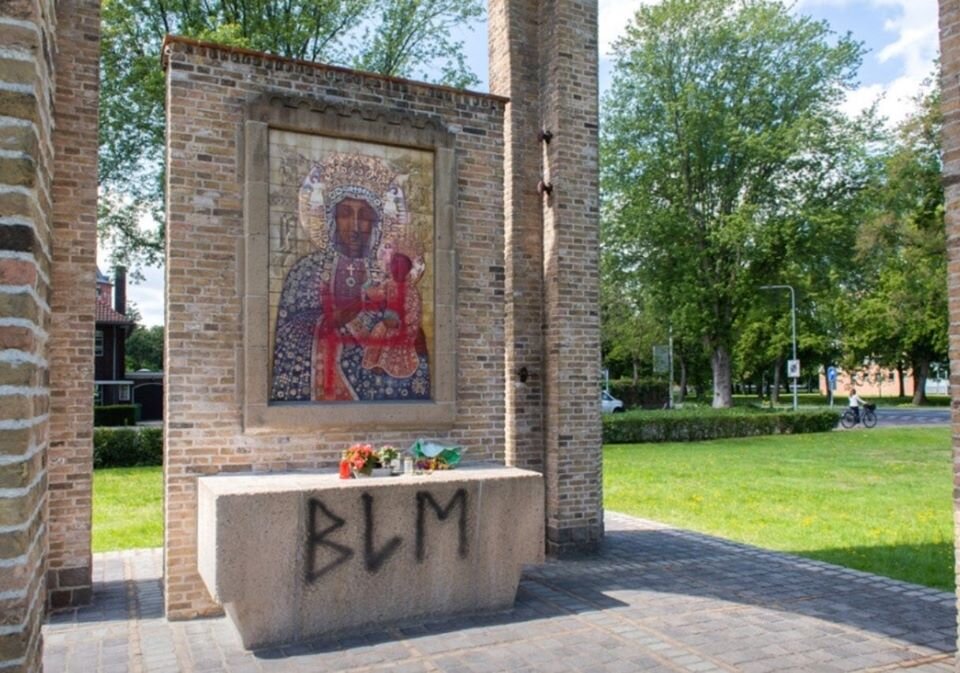
It may seem like I’m being facetious, however, perhaps the problem is in the definition, in that it is entirely subjective and so broad that is open to be applied to an alleged racist upon the slightest perceived pretext. It is therefore, counterproductive and alienating as a genuine way to deal with actual injustice or discrimination for no other reason than the race of a person suffering this injustice or discrimination.  Further, racism is for all practical purposes, an emotional rather than logical construct of leftists, and as in so many idols of the left, it has no logical end at which there is no racism, save for the elimination of the so called oppressor group. Another critical point to note is that leftists are by and large extremely intolerant (if not outright hateful) of Christianity, so pandering to such people in a vain attempt to be seen as an ally, is frankly a fools errand. This has been seen quite noticeably in the attacks on Catholic churches which have been committed by those under the banner of Black Lives Matter.

So getting back to the priest in the example above, what is the actual sin that is being committed? The danger is that many in the Church, eager not to be perceived as an aggressor in a game framed by its ideological enemies, seemed to have abandoned the very concept of truth in a desperate attempt to win favour from those who will always regard you with derision if not outright hostility.

Without a very clear definition of terms, and a specific explanation of the sin being committed, which does not condemn men for taking reasonable actions based on measurable data and experience, the Church risks taking on the nihilistically blasé persona of Pontius Pilate in his response to our Lord when He declared, “For this I was born and for this I came into the world, to testify to the truth. Everyone who belongs to the truth listens to my voice”. Pilate’s dismissive response was “What is Truth?”

Irish Bishops have recently stated in a conference with the pope, that “the evil of racism is not simply an American phenomenon.“ This is quite a slanderous fait accompli to make about white Americans, and by now it should be clear to any clear headed serious observer, that it is white people who are implied to be the solitary guilty party in any accusation of racism. This simplistic rationale does no favours to anyone, least of all those poor and needy of all races who must bear the brunt of America’s poverty, crime and drugs crises.

At the risk of speaking above my lowly station as a mere Christian, I humbly posit that Church leaders should direct their efforts on leading as many of its flock to heaven, by preaching on the dangers of specific sin, while fearlessly and volubly defending the rights of its adherents to participate in the Holy Sacraments, and defending the unborn and the holy institution of marriage from an onslaught which delights the devil. Both George Floyd and the officer involved were sinners, we should want both of them to get heaven, rather than getting caught up in a world condemning one or the other to damnation.

Submitted by: Jerome de Stridon.

If you have a piece that you would like to submit to Catholic Arena, please forward to editor@catholicarena.com

How Should We View The Despair of Judas?

Photo by gabrielabertolini/iStock / Getty Images

Photo by gabrielabertolini/iStock / Getty Images

Since we're near the end of the Holy Week, I thought to share my reflections on the Good Friday, with a special focus on Judas and the controversial topic of suicide.

Recently, we have witnessed a tendency of rehabilitating Judas' suicide, and suicide in general, by some contemporary theologians. Among them, you can find even Vatican's officials, including Pope Francis, who controversially stated: “How did Judas end up? I don’t know.

Through the analysis of this topic, I see the necessity of saying a few words on the nature of sin, hope, and mercy.

In our secularized era, the aforementioned concepts might sound as outdated or even meaningless. So, we should start by questioning the definition of sin. According to the Compendium of the Catholic Catechism, sin is defined as the deliberate action which separates one from God. So basically, sin is a 'sui generis' apostasy, and understanding the pain of despair, our weak human nature, it is natural to show a kind of compassion. Because at a certain moment of our lives, we have been like Judas; and all of us seek for [God's] mercy. But can we agree with the rehabilitation of it? What would be its effect on the faithful? Would this mean watering down the faith? Or even a total misleading thought, heresy!?

There's no need of repeating it,  the story of Judas is familiar to each of us. He betrayed Christ for 30 silver coins, gave him a false kiss, later after realizing what he had done, he felt in despair and committed suicide. With righteousness, his name has become synonymous with betrayal.

   But as Pope Benedict XVI wrote in his magnum opus, Jesus of Nazareth: Holy Week, Judas' greatest sin was falling into despair. That was the stubborn refusal of seeing the light of hope, forgiveness, Christ. That's why he chose the other way: suicide. This is a fact which shouldn't be ignored.

The very opposite of Judas is Simon Peter, the man who not only repent but accepted his weakness; dared to believe and hope of forgiveness, despite his heavy sin of "apostasy“. The best explanation of the Catholic understanding of it, I believe, has shown us the Pope emeritus in his encyclical Spe Salvi: "The one who has hope lives differently; the one who hopes has been granted the gift of a new life." This is an essential thing which we should not forget. Faith in Christ, despite the burden of pain, gives us hope in forgiveness and redemption. Suffering while having hope is what makes us Christians. In the end, as Pope Ratzinger says, that suffering is the only way of to the true conversion.

Therefore, despite the secular critiques, it's quite understandable why the Church has traditionally considered suicide as a mortal sin and should maintain as such. It does not matter what liberal theologians say, it's Biblical – "Thou shall not kill!"

Going through the darkness is difficult, but by absolving [Judas] suicide in the name of the 'mercy', we jeopardize the very essence of Christianity. Such action at the end leads to corrupting the original meaning of mercy. This is the serious problem of the postmodern understanding of mercy, because it defines it in an indifferent way, without the necessity of faith or hope, only for the sake of emotive “niceness”. But without hope, it's impossible to expect mercy, because in the Christian sense, giving up hope is equal to apostasy, it means refusing Christ as saviour, his cross and his glorious light: resurrection! That’s why charity can be found only in the Truth.

- Albert Bikaj

Homeschooling to escape the Murder Machine

‘ A soulless thing cannot teach ; but it can destroy. A machine cannot make men, but it can break them . . A machine, vast, complicated, with a multitude of far-reaching arms, with many ponderous presses, carrying out myster ious and long drawn processes of shaping and moulding, is the true image of the Irish education system. It grinds day and night, it obeys immutable and predetermined laws ; it is as devoid of understanding, of sympathy, of imagination, as is any other piece of machinery that per forms an appointed task

In 2013, the Irish Minister for Education Ruairi Quinn made a bold statement. He stated that it was up to Historians to prove that their subject had any place in the nation’s secondary schools. The left wing politican was perhaps thinking of how often the names Fianna Fail, Fine Gael and Sinn Fein appear in History books. Possibly he was thinking also of how little his own party featured in those textbooks. Or even of how they would be written about in future textbooks given their commitment to Europhilic austerity.

Most likely however, the Minister was concerned with trimming the fluff so that only skills based education could be pursued.

This is something which has marred education in Ireland and elsewhere for some time.

In 1912, Padraig Pearse delivered a speech which was later published as a pamphlet under the title ‘The Murder Machine’. In this, Pearse laid his reasons for regarding the Irish education system as a mill for reducing personality and emphasising a production line of ‘rapid and cheap manufacture of readymades’. For him, it was important to foster individuals rather than break them to fit a mould for a life of work and secular conformity.

Catholicism offered the best route to this. This might seem counter intuitive to many adults who went to Catholic schools in the later decades when corporal punishment was in vogue, but Pearse was of a stock that was forgotten about, one that was revolutionary and capable of thinking of a new Ireland that was attached to nothing of the past that was not of value. Pearse did not see potential employees in front of him when he taught as his famous school in St. Enda’s, he saw people. People with souls and eternal destinies that depended upon how they were nurtured in this life,  Education is as much concerned with souls as religion is. Religion is a Way of Life, and education is a preparation of the soul to live its life here and hereafter; to live it nobly and fully.

Pearse’s revolutionary ideas on education never really took root. There was simply not enough money to be gained from them for any government or education board to want to be invested in such a thing. But with the outbreak of coronavirus, a strange thing is happening. Parents who would otherwise have their kids sitting exams are now having to figure out how to educate or at least occupy their children from home, for a period that could last up to six months. For the parents, there will undeniably be some stress involved. There are over 200,000 children in Ireland being raised in creches while their parents work. There are over 200,000 also raising children in single parent households. While various circumstances lead to both of those, they have become the norm since the legalisation of divorce in 1995. Along with the complete erosion of the personality of teenagers though excessive use of technology (many teenagers in rural Ireland now speak with American accents), there is no doubt that society has devolved to a state where these kids are in an undesirable environment before they even set foot in the school.

Parents have an opportunity now to spend quality time with their children and to teach them in the best way possible, by conversing with them, by passing on their own skills, by listening to them and encouraging them. There is a small but not insignificant group of Catholics in Ireland who homeschool. So far it has been the exception here, but Ireland is not far behind the United States in its social problems. Around 2 million students in the States are homeschooled. And why wouldn’t they be? School shootings, drugs and social pressures all acting as reasons to be sceptical of the value of their version of the Murder Machine, where some schools have up to 8,000 students.

In these past few weeks, the veneer of the modern world’s invincibility has been wiped away by the fragility of the human body. Whereas homeschooling was once unthinkable, perhaps our students and parents are waking up to a new world where they realise that the state is not the only authority in this world. The Church are one and the family are certainly another. In these uncertain times, and in spite of attacks on them from within and without in recent decades, they are the two units that remain the best refuges for our children.

Pearse’s words about education in 1912 are as true about education in 2020. Perhaps teachers, students and families can ponder on them over these next six months.

Education should foster; this education is meant to repress. Education should inspire; this education is meant to tame. Education should harden; this education is meant to enervate.


The untold story of how 16th Century Milan overcame plague with devotion

One word that has been repeated in countless news stories covering the outbreak of coronavirus in Europe : unprecedented.

In the modern world, the current predicament seems to be an unprecedented set of circumstances.

Compared to history however, the spread of this contagious disease has many parallels with other crises from the past, even if it has its own peculiar character and idiosyncrasies like any major event in history.

One parallel that has been drawn between these past few weeks and those of the past, is with regards to how Medieval society confronted the spectre of the plague which ripped through the continent for much of the Middle Ages. Medieval Europe was , as we know, Catholic. And Catholic in a way that we have certainly forgotten how to be since, by letting their vibrant faith shape the imaginations of community, architecture and annual festivals.

When plague hit the city of Milan in 1576, it infested the the city right up until the feast of St. Sebastian in January 1578. 15% of its population died during this time, a sum total of 17,000 people. Shops were closed, hospitals filled up, the economy faced ruin. Sound familiar?

The seminal figure during these troubled times was Carlo Borromeo, the famous cardinal later to be declared a saint. Showing true leadership, he sold his possessions in order to help the sick and more importantly, he risked his own life by visiting them to tend to their needs. Perhaps most memorable however, were his provocative processions through the streets of Milan. Leading the faithful, a barefoot Borromeo wore a noose around his neck as a sorrowful penitential. The town was filled with those who were inspired by his example and wanted to follow him through the city. Some whipped themselves in penance as they processed. At one point, Borromeo cut his bare toe on a railing made of iron and kept walking as it dripped blood, desiring as he did to set an example to the sinners who looked on.

His public displays of brutal piety were not the only acts of this holy man. The spiritual elements were incredibly important too. The Holy Nail, the relic of Christ’s crucifixion, was processed to the various Churches in the city. Believing that Christ had truly become flesh and dwelt among us, this is something that has the power to transform us if we allow it to, especially in our own time. One can see the transformative power of Christ’s humanity in the spiritual wonderlands found everywhere from the healing waters at Lourdes to the field hospitals of missionaries in the depths of Africa.

Like many saints, Borromeo called on Our Lady’s help during this bleak and trying time. He sung the Ave Maria during the seven canonical hours and instructed the people of Milan to respond in kind to the bells of the same prayer, either with musical instruments or through spoken prayer. Loud enough for all to hear. The vibrancy and imagination of these actions are alien to the Church of 2020, which has grown accustomed to recoiling and hiding her true face for fear of the world’s scoffing. Without pointing fingers, most can agree that such consideration of beauty has been forgotten in the past number of years. On St. Patrick’s Day this year, many churches in Ireland rung their bells to honour St. Patrick and to honour God at a time when many cannot attend Mass. A small gesture, but one that nonetheless carried with it a reminder that bringing Christ to people need not always involve arguments or dramatic examples, just faithful witness to our own faith.

Of all these bold and sincere statements of public faith, the boldest of all was in bringing forth a visible public faith. Borromeo had seen Milan deserted by the wealthy who fled elsewhere and had been disappointed by the merchants who were more concerned with profits than with their fellow citizens. Ignoring advice to withhold processions for fear of contagion, Borromeo decided that it was more important to bring a sense of community and togetherness about, without which the plague could not be defeated. He organised food for those in need, spared no expense in selling his own possessions to make sure that people had sufficient supplies. One doctor who has initially warned against marching in the processions was so inspired by the brash display of faith that he wrote:

Those who are not in favour [of processions] think that it will avoid a great unruly multitude of people in the midst of this highly dangerous contagion. But I am of the opinion that we should not abandon the idea for that reason… Who could think, as a faithful Christian, that if the people go to worship the Holy Sacrament with devotion, weeping and praying for grace, that they would succumb to plague?

The public authorities were warning against the dangers but for the faithful, showing fidelity to Christ took precedence. There was more than one authority in this world, certainly one higher than temporal powers who come and go with the years. Publicly bringing together people like this was not done in some impulsive religious fervour, the aforementioned prayers would be assisted during quarantine from the windows by clergy, in between distributing prayer books and song sheets to follow the prayer. What transpired was a rising in spirit, a city slowly transformed by the example of their priests, from the smallest scale to the largest. As one account at the time put it:

When the plague began to grow, this practice [of singing the litanies in public] was interrupted, so as not to allow the congregations to provide it more fuel. The orations did not stop, however, because each person stood in his house at the window or door and made them from there

Just think, in walking around Milan, one heard nothing but song, veneration of God, and supplication to the saints, such that one almost wished for these tribulations to last longer.

The whole city eventually became enraptured with this hopeful spirit.

Milan might at this time have been not unfitly compared to a cloister of religious of both sexes serving God in the inclosure [sic] of their cells, an image of the heavenly Jerusalem filled with the praises of the angelic hosts

In essence, this was a simple set of decisions to perform simple acts of faith and to perform them well. Carrying relics, marching in procession and helping the faithful to pray and partake. What made it extraordinary was the faith behind it, Borromeo really believed that these actions could make a difference. The entire city was transformed by action, by prayer and by the examples set to them. During this time of great uncertainty, what is needed more than ever is a sense that the Church believes in the extraordinary healing of Christ and in the power of being a Church who prays together. We are already hearing reports of priests dying in Italy while tending to their parishioners. Footage has circulated of priests carrying the Blessed Sacrament through the streets. The strength is there and the faith is there, with Holy Week approaching, bishops and priests need not be afraid to show dramatic examples that fortify the faithful.

When the plague broke out once again in 1630, the Milanese dug up the body of Borromeo and brought it on procession with them. While we should probably refrain from that this time, there is no reason as to why we should not resurrect the spirit of Milan from the 1500s. Let our streets sound like ones filled with joyful people of faith, let our clergy resemble apostles of Christ and let our relics and holy objects be treated as they are, as physical proof of the world transformed by the Word made flesh dwelling among us.

Catholics should never be passive in the face of a crisis. Help your neighbours, feed those in need and most importantly, pray for the help of God in this hour. The same one who created both you and the world around you from nothing.

Seek ye therefore first the kingdom of God, and his justice, and all these things shall be added unto you.


3369_-_Milano,_Duomo_-_Fiammenghino,_Si_reca_in_processione_con_il_santo_chiodo_(1602)_-_Foto_Giovanni_Dall'Orto,_6-Dec-2007.jpg